Answering the need for reliable, heat-resistant repairs, this guide highlights top high temperature ceramic epoxy options. Ideal for DIYers, auto enthusiasts, and professionals tackling engine, exhaust, or ceramic surface repairs, these products are chosen for temperature tolerance, bond strength, and practical curing times. The listed syringes, putty sticks, and ceramic-specific glues suit metal, ceramic, and composite materials. Use cases cover engines, exhaust components, pipes, cookware, and ceramics. The following table summarizes the featured products to help you compare at a glance.
| Product | Best For | Why It Stands Out |
|---|---|---|
| J-B Weld HighHeat Epoxy Syringe (Dark Grey) | Metal, automotive parts | 550°F resistance; strong 4730 PSI bond; 1:1 mix |
| J-B Weld 37901 ExtremeHeat Metallic Paste | Iron/steel repairs | Up to 1000°F; permanent metal bond |
| MotorPower Care 2 x Power Bond Glue | Metal, plastics, ceramics | Up to 600°F; versatile material compatibility |
| Vigorder Ceramic Glue Repair Kit | Ceramics, porcelain | Fast cure; water and heat resistant |
| J-B Weld HighHeat Putty Stick | Engine components, exhaust | High heat tolerance; tapable and drillable |
J-B Weld HighHeat Epoxy Syringe, 550°F

Best for high-temperature metal repairs, this two-part epoxy sets at room temperature and cures fully within 24 hours, with accelerated curing at higher heat. The 1:1 mix yields a strong, chemical- and fuel-resistant bond up to 550°F. Suitable for engine blocks, exhaust manifolds, and heat-exposed surfaces. Choose this if you need a robust, long-lasting bond with proven heat tolerance.
Who it’s best for: DIYers repairing automotive components or machinery under high heat. Limitation: handling requires accurate mixing and full cure for optimal strength.
J-B Weld 37901 ExtremeHeat High Temperature Paste

Best for metal cracks, gaps, and seam connections in extreme heat environments up to 1000°F. This non-flammable paste contains no solvents or VOCs and forms a permanent bond that’s stronger than steel after curing. It’s ideal for repairs where traditional welding is impractical. Choose this if you need a metal-to-metal bond that withstands very high temperatures.
Who it’s best for: professionals and serious DIYers dealing with exhaust systems or high-temp machinery. Caution: surface preparation and cure conditions influence final strength.
MotorPower Care 2 x Power Bond Glue

Best for versatile bonding across metals, plastics, and ceramics, this kit offers high-temperature resistance up to 600°F and broad material compatibility. It’s a practical choice for multi-material repairs such as pipes, automotive components, and industrial equipment. Choose this if you need a flexible, all-around solution for high-heat projects.
Best for: mixed-material repairs in high-heat settings. Limitation: review substrate interaction to ensure maximum bond strength on unfamiliar surfaces.
Vigorder Ceramic Glue Repair Kit
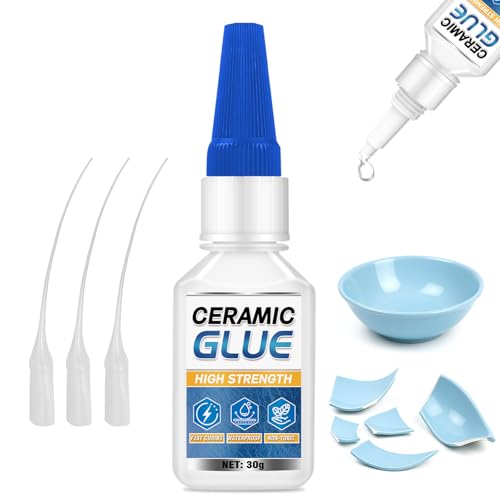
Best for fragile ceramic and porcelain repairs, this kit provides strong adhesion with water and heat resistance. It sets quickly in 15 to 30 seconds and is designed to maintain hold without whitening or brittleness. Choose this for quick ceramic fixes on dishes, mugs, and decorative items that encounter heat or moisture.
Limitation: not ideal for structural metal repairs; intended for small-to-moderate ceramic fixes with quick-set needs.
J-B Weld HighHeat 500 Degree Epoxy Putty Stick

Best for auto and industrial maintenance where a putty-like repair is needed, this two-part epoxy putty withstands continuous heat up to 450°F and intermittent heat to 500°F. It cures in about an hour and can be tapped, drilled, or machined after full cure. Choose this if you need a moldable repair that bonds to metal and high-temperature components.
Caution: ensure complete kneading for full strength; surface must be clean and dry before application.
Buying Guide: High Temperature Ceramic Epoxy Basics
What to look for when selecting
Temperature rating is paramount. Match the expected operational heat of your part to the epoxy’s maximum continuous use temperature. Consider cure time and whether you need fast setting for quick repairs or longer working time for complex applications.
Material compatibility matters. Some formulas excel on metal, others on ceramics, plastics, or composites. If you repair mixed materials, choose a versatile option designed for multiple substrates.
Bond strength and workability are key. Look for PSI strength data and whether the product can be machined, drilled, or sanded after curing if future adjustments are needed.
When to choose epoxy putty vs syringe epoxy
Putty sticks are ideal for filling gaps and rebuilding surfaces with a malleable form. Syringe epoxies are better for precise, clean bonds on small parts with consistent mixing. For high-heat applications, both should specify the maximum service temperature and post-cure hardness.
Practical application tips
- Prepare surfaces by cleaning, degreasing, and roughening as needed.
- Mix ratio and thorough kneading are essential for strength.
- Control cure conditions: heat accelerates curing, but avoid overheating delicate components unless specified.
- Allow full cure before returning to service to ensure maximum strength.
Material-specific considerations
- Metal-to-metal repairs: prioritize high-temperature pastes or syringes with strong PSI ratings.
- Ceramic repairs: prioritize ceramic-specific adhesives when moisture resistance and crack bridging are essential.
- Automotive components: choose products rated for engine or exhaust temperatures and chemical resistance.
FAQ
- What is the typical cure time for high-heat epoxies? Most offer initial set within 1 hour and full cure within 8–24 hours, depending on temperature and product.
- Can these epoxies be drilled or machined after curing? Some are drillable or machinable; check each product’s stated capabilities.
- Are these products safe for food-contact surfaces? Most high-heat epoxies are not intended for direct food contact; verify food-safe certification if needed.
- Do these epoxies resist fuels and solvents? Several formulations are chemical- and fuel-resistant; confirm resistance for your specific solvent exposure.
- Can I use these on ceramic tile or pottery? Yes, several options are designed for ceramics, porcelain, and pottery repairs with heat resistance.
- Is a primer or surface treatment required? Generally, clean and dry surfaces suffice; harsher or porous substrates may benefit from mild abrasion and degreasing.