Find the right wood and concrete form stakes for soil, garden, and construction tasks. This guide highlights five top options and explains who each stake is best for, with practical trade-offs. Use the buyer-friendly comparisons to choose fast, durable stakes for forms, garden borders, and sign posts. The selections prioritize material quality, installation ease, and outdoor longevity for American yards and job sites.
Summary table of selected products:
| Product | |||
|---|---|---|---|
| VVOKGO Rebar Stakes 16 Inches | Rebar stake | Steel, black powder coated | Heavy-duty concrete forms, fences and tarps |
| Sandbaggy 24″ Wooden Grading Stakes | Wood stake | Douglas Fir | Outdoor grading, concrete forms, construction margins |
| Sandbaggy 12″ Wooden Grading Stakes | Wood stake | Douglas Fir | Marker lines, baseline measurements, garden planning |
| Fabulas Rebar Stakes 16″ | Rebar stake | Steel, black powder coated | Driveway markers, landscape and camping uses |
| Colingmill 48 Pieces Wooden Stakes | Wood stake bundle | Wood | Plant support, sign posts, yard boundaries |
VVOKGO Rebar Stakes 16 Inches

Best for heavy-duty concrete forms and fencing projects. These 16-inch stakes have a 5/16″ diameter steel design with a chisel point that helps drive the stake into hard ground. The ribs enhance soil grip for stability in windy or uneven sites. The weather-resistant steel with black powder coating reduces rust and bending risk, making them suitable for outdoor use around concrete and timber applications.
Who it’s best for: builders and landscapers needing long, strong ground anchors for form work and garden supports. Why selected: combination of extra length, durable steel, and a sharp end that improves install efficiency in tough soils.
Limitations to consider: heavier than wooden stakes and may require effort or tools for deep installation in dense soils.
Colingmill 48 Pieces Wooden Stakes

Best for bulk, everyday garden and sign-post tasks. This bundle features 12-inch wooden stakes crafted for smooth penetration into soil and simple installation. They are suitable for plant supports, marking lines, and boundary references in yards or fields. Lightweight compared with metal stakes, they are easy to handle in large quantities.
Who it’s best for: gardeners and contractors needing economical, reusable wooden stakes in bulk. Why selected: large bundle, reasonable length, and user-friendly installation for general outdoor projects.
Limitations to consider: wood grain and nodules may vary, and you may see minor surface imperfections that do not affect function.
Sandbaggy 24″ Wooden Grading Stakes
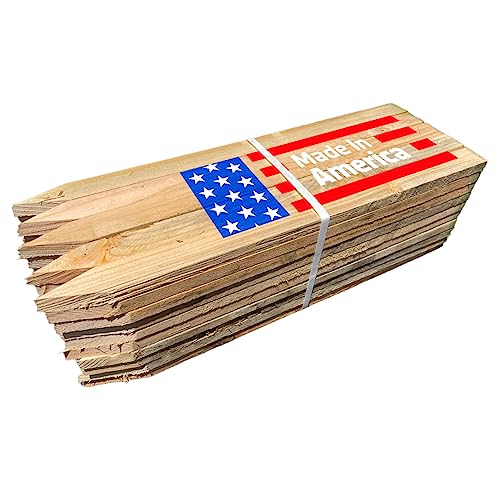
Best for long-term outdoor grading, surveying, and concrete form layout. These 24-inch Douglas Fir stakes offer dimensional stability, helping prevent warping over time. The natural resistance to decay and insects makes them a solid choice for outdoor construction and landscape marking projects that require dependable stake lines.
Who it’s best for: professionals and DIYers needing extended stakes for precise alignments. Why selected: longer length provides flexibility while maintaining durability in exposed environments.
Limitations to consider: as with any wood stake, occasional warping can occur with extreme moisture cycles; store dry when not in use.
25 Pcs Wood Stakes 12 Inch

Best for plant support, boundary marking, and garden projects in compact spaces. These 12-inch wooden stakes are designed for multiple uses such as holding up plants, delineating fence lines, and marking baselines. The 25-pack makes it easy to cover larger beds and garden sections.
Who it’s best for: gardeners and small-scale projects needing a budget-friendly, versatile stake set. Why selected: balance of size, quantity, and utility for common outdoor tasks.
Limitations to consider: wood may show minor surface irregularities; ensure proper driving to avoid bending on rocky soil.
Buying Guide: Wood and Concrete Form Stakes
What material should you choose? For heavy-duty form work or where nails and fasteners must resist bending, steel rebar stakes (like the VVOKGO and Fabulas options) offer superior strength and long-term stability. For garden, yard, or marking tasks, high-quality Douglas Fir wooden stakes (Sandbaggy and Colingmill) provide cost-effective, easy installation with good outdoor durability.
How long should stakes be? Longer stakes (16–24 inches) provide deeper soil penetration and better hold in loose soil or windy sites. Shorter stakes (12 inches) work well for light duties, neat rows, and smaller plant supports.
What about installation? Chisel-point and ribbed designs improve soil entry and grip. Powder-coated finishes on metal stakes resist rust but can still be heavier and require more effort to drive into compact soil.
Durability in outdoor conditions is key. Douglas Fir stakes are robust for outdoor use but may require monitoring for moisture exposure. Metal stakes resist bending but can corrode if coatings wear off over time. Store wooden stakes dry and away from direct moisture when not in use.
Frequently Asked Questions
- What type of stake lasts the longest outdoors? Metal rebar stakes with powder coating last longer in harsh weather, compared with uncoated wood in severe conditions.
- Are wooden stakes suitable for concrete forms? Yes, for sign posts, baselines, and temporary form layout, though they are less resistant to moisture than metal.
- How deep should stakes be driven into soil? Drive at least 2–3 inches into firm ground; deeper in loose soil or windy locations for stability.
- Can wooden stakes be cut to shorter lengths? Yes, many wooden stakes can be trimmed to fit specific needs, but cutting may introduce splinters; sand smooth after cutting.
- Which stake is best for marking baselines? Shorter 12-inch wooden stakes work well for marking baselines and garden boundaries without bulk.
- Should I use a mix of stake types? A mixed approach often yields the best results: metal stakes for heavy-duty forms and wooden stakes for marking and light-duty tasks.