For a Zone 5 garden, choose seeds that list cold-hardy growing zones and match your sunlight and planting space. The tall lupine mix is best for dramatic vertical color, while Gardeners Basics offers five separately labeled perennial varieties for planned beds. FAMILY SOWN is a straightforward choice for a perennial wildflower patch, and Eden Brothers’ mixes add broader species variety. Check each seed blend’s annual and perennial contents: a colorful mix may not return in full every year.
| Product | Best For | Key Distinction |
|---|---|---|
| Tall Lupine Mix | Vertical color | Zones 4–8; lupines to 3 feet |
| Gardeners Basics Five Varieties | Planned beds | Five labeled perennial seed packets |
| FAMILY SOWN Perennial Species Mix | Perennial flower patches | Over 2,500 seeds; stated 20-square-foot coverage |
| Eden Brothers Burst of Bloom | Broad color and pollinator planting | 20 species; annual and perennial mix |
| Eden Brothers Partial Shade Mix | Less-sunny sites | 27 species; partial-shade preference |
Sprouticus Maximus Tall Lupine Mix

Best for: Gardeners who want tall flower spikes and a focused perennial planting. This packet includes more than 50 seeds and lists suitability for Zones 4–8, which includes Zone 5.
The mix is described as producing pink, purple, yellow, and white flowers, with plants reaching up to 3 feet. Lupines are presented as pollinator-friendly, and the seller describes them as easy to grow, low maintenance after establishment, and able to grow in poor soils.
Why it stands out: Unlike broad wildflower blends, this choice centers on one distinctive, upright flower. Caution: It offers less species variety than a mixed seed collection, so it is not the choice for a varied wildflower display.
Gardeners Basics Five Perennial Varieties
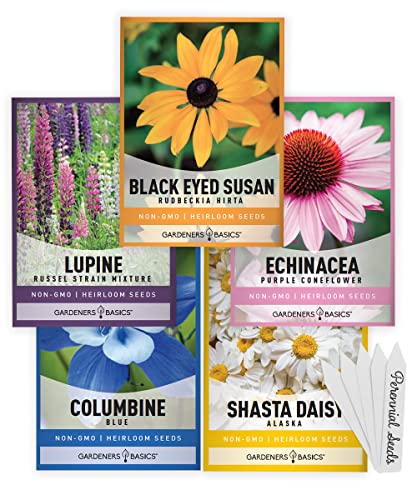
Best for: Gardeners who want to select and place several flower types separately. The collection includes Russell strain lupine, blue columbine, purple coneflower, Black-Eyed Susan, and Alaska Shasta daisy. Each variety comes in its own labeled packet.
Separate packets make it easier to plan borders, beds, and pollinator gardens by flower type. The listed packet contents range from 300 milligrams of columbine to 1 gram of lupine, with individual amounts also provided for the other seeds.
Why it stands out: It provides more control over planting layout than a pre-combined wildflower mix. Caution: The supplied product information does not give a specific hardiness-zone range for the collection, so check the needs of each flower before planting in Zone 5.
FAMILY SOWN Perennial Species Mix

Best for: Gardeners establishing a low-maintenance perennial flower patch. The 5-gram envelope contains more than 2,500 seeds, and the listing states that the quantity is intended to cover 20 square feet.
The seller describes this as a mix of hardy perennial species for borders or naturalized areas, with blooms that return year after year and flowers that attract pollinators. Its perennial focus makes it a closer fit for a lasting planting than blends that explicitly include annuals.
Why it stands out: The stated coverage helps buyers estimate how much seed to use for a defined area. Caution: The product details do not name the included species or provide a Zone 5-specific planting schedule, so review the seed packet directions before sowing.
Eden Brothers Burst Of Bloom Mix

Best for: Gardeners seeking a varied, colorful planting rather than an all-perennial bed. This mix lists 20 species and is described as suitable for Zones 3–10, so Zone 5 falls within its stated range.
Named flowers include blanket flower, Black-Eyed Susan, purple coneflower, wild perennial lupine, cornflower, cosmos, and flax. The blend includes annual and perennial varieties, prefers full sun, and is described as producing blooms through summer and fall. The listing gives a coverage estimate of 250–500 square feet.
Why it stands out: It combines multiple flower forms with a broad zone range and pollinator appeal. Caution: Because annuals are included, the full mix should not be expected to return unchanged each year.
Eden Brothers Partial Shade Mix

Best for: Buyers looking for a mixed flower planting where full sun is limited. The listing specifies partial shade and Zones 3–10, which includes Zone 5. It contains 27 species and gives a coverage estimate of 250–500 square feet.
Listed flowers include purple coneflower, foxglove, evening primrose, Siberian wallflower, and coreopsis. The blend includes annual and perennial species and is promoted for attracting bees, butterflies, and hummingbirds across spring-through-fall flowering.
Why it stands out: It addresses a growing condition that many full-sun mixes do not. Caution: Partial shade is not the same as deep shade, and the annual portion means not every flower is expected to return in later seasons.
Buying Guide: How To Choose Zone 5 Perennials
Does the seed mix list Zone 5?
Look for a stated USDA hardiness range that includes Zone 5, such as Zones 4–8 or 3–10. A range is useful guidance, but local conditions, planting dates, and care still affect establishment. If a listing does not provide a range, check the requirements for its named species rather than assuming every seed will thrive.
Should you choose single-species seeds or a blend?
Choose a focused packet such as lupine when you want a repeated flower form or a specific height. Select labeled individual varieties when you want to plan each bed deliberately. A wildflower mix is more convenient for covering a larger area, but check whether it contains annuals as well as perennials.
How much sun does the planting site receive?
Match the seed mix to the actual site. The Burst of Bloom blend lists a preference for full sun, while the Eden Brothers Partial Shade mix is designed for partial shade. Observe the area through the day before choosing; a shade-oriented mix is not necessarily suited to a spot with very little light.
How much space should you prepare?
Use the seller’s coverage estimate as a starting point, not a guarantee of a particular garden density. FAMILY SOWN states coverage of 20 square feet, while the Eden Brothers 1/4-pound blends list 250–500 square feet. Follow the packet’s sowing directions and prepare soil as recommended.
Frequently Asked Questions
Which listed product is specifically suited to Zone 5?
The Sprouticus Maximus lupine mix lists Zones 4–8. The Eden Brothers Burst of Bloom and Partial Shade mixes list Zones 3–10. Each range includes Zone 5.
Which option is best for a perennial-only planting?
FAMILY SOWN is explicitly described as a perennial species mix. Check its packet for the species list and sowing instructions, since the provided details do not identify the individual flowers.
Which product is intended for partial shade?
Eden Brothers Partial Shade Wildflower Mixed Seeds is the listed option intended for partial shade. Its product details also describe it as a mixture of annual and perennial varieties.
Will every flower in a mixed seed packet return next year?
No. Some listed mixes contain annuals as well as perennials. Annual plants generally do not return as established plants the following year, so check the mix contents and plan for possible reseeding.