When teaching kids to tell time, a clear, minute-by-minute clock is essential. This guide highlights five effective teaching clocks that help students grasp hours, minutes, and common time phrases. Best for teachers building classroom activities, parents guiding home lessons, and homeschoolers seeking hands-on practice. The selections emphasize visibility, quiet operation, and durable design to support daily use in classrooms, bedrooms, and study spaces. Below you’ll find quick-fit recommendations, a buyer’s guide, and answers to common questions.
| Product | Best For | Why It Stands Out |
|---|---|---|
| Learning Resources Big Time Mini Clock | Early learners | Hidden gears; color-coded hands for easy matching |
| Learning Resources Time Activity Set | Classrooms | Hands-on practice with realistic analog clock |
| Oyster&Pop Kids Clock | Quiet spaces | Silent movement with colorful design and eBook |
| Large Magnetic Dry Erase Learning Clock (Torlam) | Group lessons | Writable surface; large 12″ display |
| Lumuasky 10 Inch Student Clock | Visible for classrooms | Color-coded dial; silent operation |
Learning Resources Big Time Mini Clock

The Learning Resources Big Time Mini Clock is designed to build early time skills with hands-on learning. Its hidden gears help children focus on the current time as they manually spin the hands, reducing confusion from visible gearing. Color-coded hour and minute hands align with corresponding clock markings to reinforce proper time reading. Best for kindergartners or first-graders who need concrete practice with time concepts in small-group or one-on-one settings. A potential limitation is its smaller size, which may be less ideal for very large classrooms requiring multiple displays at once.
Learning Resources Time Activity Set
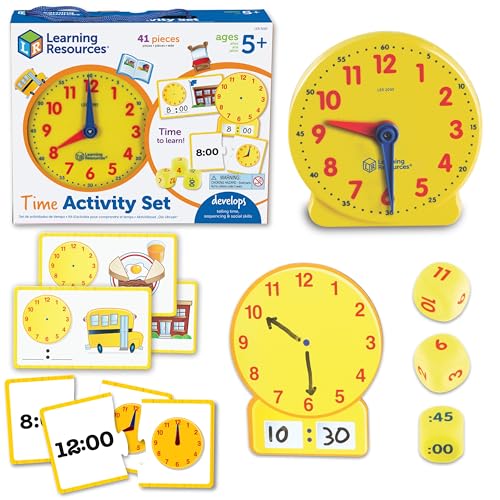
The Time Activity Set focuses on hands-on exploration of time concepts using a realistic analog clock with moving hour and minute hands. It’s designed to build time-telling skills, with students identifying hours and half-hours, among other intervals. It’s well suited for classrooms, small-group centers, or teacher-led instruction where independent use and guided practice are both needed. A consideration is that the kit’s emphasis on practice requires ongoing teacher or peer support to maximize learning outcomes.
Oyster&Pop Kids Clock

The Oyster&Pop Kids Clock is a silent, 10-inch wall clock designed for classrooms, bedrooms, and homeschool spaces. It features labeled minutes, quarters, and color cues to simplify teaching time concepts. The included free eBook offers ideas to build confidence in reading analog time. Its non-ticking mechanism makes it suitable for quiet study periods or sleep environments. A potential limitation is the reliance on a single AA battery, which requires occasional replacement to maintain performance.
Torlam Large Magnetic Dry Erase Clock
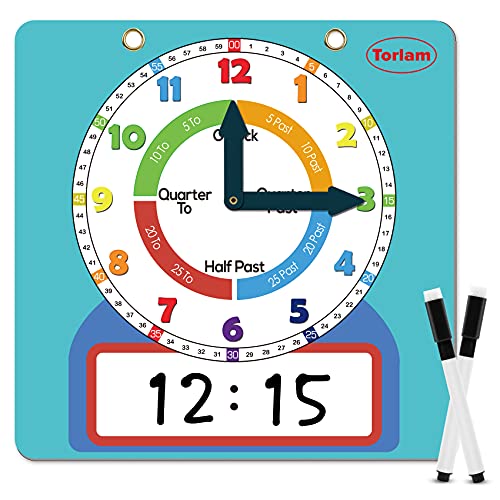
The Torlam magnetic dry erase clock is a 12-inch classroom-friendly option with a writable surface. Its large display supports visual learning of hours, minutes, and elapsed time. The dry-erase feature enables repeated practice without new materials, making it ideal for family or school use. A limitation to consider is the need to maintain the write-on surface clean for legibility after multiple uses.
Lumuasky 10 Inch Student Clock

The Lumuasky 10 Inch Student Clock emphasizes color-coded dial sections and a silent movement for unobtrusive classroom use. It supports both 12-hour and 24-hour formats, with clear minute markings to reinforce routine time-telling skills. It’s a practical choice for larger classrooms that benefit from easy visibility. A potential drawback is the lack of a dry-erase surface, which means repeated practice may require additional materials or alternatives for notes.
Buying Guide: Key Purchase Considerations
- Learning goals: Choose a clock with color-coded hands or labeled minutes if the goal is quick recognition of minutes and hours.
- Classroom vs. home use: Silent clocks suit quiet study spaces, while writable surfaces support repeated practice and activity-based learning.
- Size and visibility: Larger faces improve legibility for groups; consider wall spacing and viewing angles in classrooms.
- Durability and maintenance: Magnetic or dry-erase surfaces reduce ongoing costs and support long-term use in busy environments.
- Supplementary resources: Some clocks come with eBooks or guides to extend learning beyond the clock face.
- Battery and noise: Non-ticking options are ideal for sleep-friendly spaces; ensure battery accessibility for maintenance.
FAQ
- What age is best for teaching clocks with minutes?
– Early elementary students (ages 5-8) typically benefit most from concrete, hands-on clocks with minute markings. - Why choose a silent clock for classrooms?
– A silent clock minimizes distractions, helping students focus on the lesson and reducing auditory overload. - Are dry-erase clocks reusable for multiple lessons?
– Yes. Writable surfaces support quick practice cycles and review without needing new materials. - Is a larger clock better for group instruction?
– Generally yes. A larger face improves visibility for many students at once, especially in larger classrooms. - Should I prioritize color-coded hands over standard hands?
– Color-coded hands can reduce cognitive load by linking colors to time segments, beneficial for beginners.