Whether you’re upgrading kitchen cabinet doors or replacing worn hinges, the right swing-clear or concealed hinge can improve soft-closing performance, reduce cabinet wear, and improve door alignment. The top picks below are suitable for frameless and face-frame cabinets, with options for full or partial overlays and multiple mounting styles. This guide helps buyers choose hinges that suit door thickness, overlay, and opening angle while staying quiet and reliable. The highlighted products suit different buyer needs—from DIY installers to remodel-focused buyers seeking smooth, self-closing motion.
Summary of top products:
- TamBee 175 Degree Hinges Frameless Cabinet Doors Hinges – best for durable soft-close with easy alignment.
- DecoBasics Cabinet Hinges Brushed Nickel – best for stylish look and quiet closes at 1/2″ variable overlay.
- Chibery 4 Pack 170 Degree Soft Close Hinges – best for adjustable angles and hidden hardware.
- JinBoCheng 2 Pack 180 Degree Hinges – best for fully concealed, broad opening angles with easy installation.
- Ravinte 1 Pair 2 Packs Full Overlay Hinges – best for face-frame cabinets needing adjustable dampers.
TamBee 175 Degree Frameless Cabinet Hinges
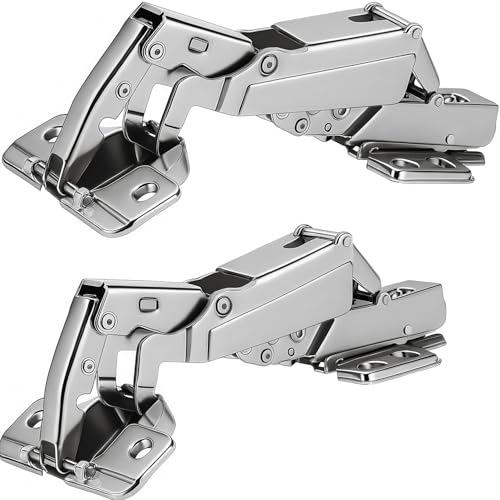
- Brand: TamBee
- Features: 48mm center-to-center hinge cup hole spacing; soft-close; adjustable; nickel-plated steel buffer dampers; suitable for kitchen corners; included pair (2 pieces)
Best for: Home renovators replacing damaged hinges on frameless or corner cabinets who need a sturdy, adjustable soft-close option. The 48mm spacing is common, but verify cup spacing before purchase. The hinges’ hydraulic dampers help doors close smoothly, reducing slams. Caution: Verify door overlay and mounting style to ensure full compatibility with your cabinet design.
DecoBasics Brushed Nickel Cabinet Hinges

- Brand: DecoBasics
- Features: Satin brushed nickel finish; self-closing with silicon dampers; 1/2″ variable overlay; surface or flush mount options
Best for: Aesthetic-conscious kitchens seeking a cohesive nickel look with quiet closing. These hinges auto-close under 30 degrees and include dampers for quieter openings. Caution: Finish matches less perfectly with non-nickel hardware; verify your cabinet finish for best compatibility.
Chibery 4 Pack 170 Degree Hinges

- Brand: Chibery
- Features: 170-degree adjustable opening; concealed hardware; slow, quiet hydraulic closure; suitable for full, half overlays and inset mounting
Best for: Cabinets needing flexible opening angles and hidden hardware for a clean look. The hinge supports multiple mounting options and includes necessary screws. Caution: Some installations may require precise adjustment to achieve the full 170-degree angle.
JinBoCheng 2 Pack 180 Degree Hinges

- Brand: JinBoCheng
- Features: 180-degree hinges with built-in dampers; nickel-plated steel; 3D adjustable (height, depth, overlay)
Best for: Large, corner, or lazy-susan style cabinets where wide-opening access is beneficial. The 3D adjustability helps align doors precisely. Caution: Ensure door thickness matches the hinge plate’s mounting pattern for best performance.
Ravinte Full Overlay Hinges

- Brand: Ravinte
- Features: Full overlay, 105-degree opening, built-in damper for soft-close; includes mounting screws and instructions
Best for: Face-frame cabinets needing reliable soft-close hinges with clear 105-degree limits. The included screws and guide simplify installation. Caution: Full overlay hinges may not suit inset or half-overlay doors without proper measurement.
Buying Guide: Key Considerations For Swing Clear Cabinet Hinges
- Overlay and mounting type: Determine if your doors are full overlay, half overlay, or inset. Choose hinges that support your cabinet’s overlay and mounting method (surface mount, flush mount, or concealed).
- Opening angle: For corner or lazy-susan cabinets, 170–180 degrees can improve access. For standard doors, 90–105 degrees is common. Verify hinge capability before buying.
- Soft-close mechanism: Look for built-in dampers that reduce door slams. Soft-close performance depends on damper quality and hinge alignment.
- Adjustment options: Three-dimensional adjustability (height, depth, and side-to-side) helps achieve precise door alignment and even gaps.
- Durability and finish: Nickel or brushed nickel finishes pair well with most metal hardware. Consider powder-coated or corrosion-resistant finishes for kitchens with high humidity or coastal environments.
- Installation complexity: Some hinges require pre-drilling or multiple mounting plates. Choose products with clear mounting hardware and included screws if you want a straightforward install.
- Door weight and thickness: Verify hinge cup diameter and mounting plate compatibility with door thickness. Heavier doors may need sturdier hinges or additional support.
Frequently Asked Questions
- Do concealed hinges require special cabinets?
- What opening angle should I choose for a corner cabinet?
- Are soft-close hinges worth it?
- Can I mix hinge brands?
- How do I adjust hinge alignment?
- What if hinges don’t fit my door thickness?
Concealed hinges are designed for frameless or face-frame cabinets that allow hidden mounting. Confirm your cabinet style and overlay before purchasing.
20-degree to 180-degree hinges exist; for broad access, 170–180 degrees is useful, but ensure mounting space and door weight support it.
Yes, soft-close hinges reduce door slams, protect fingers, and extend cabinet life when correctly adjusted.
Mixing hinges is possible if dimensions and mounting patterns match. For best results, use the same brand or a hinge with identical cup size and overlay specifications for all doors on a given cabinet.
Most hinges offer screws for height, depth, and side-to-side alignment. Use a screwdriver to make small incremental adjustments and recheck door gaps after each change.
Check diameter, screw hole spacing, and plate dimensions. If needed, choose hinges specifically rated for your cabinet door thickness.