Spray-on rust removers are designed to break down rust quickly with minimal scrubbing. This guide highlights five standout products that work well on metal tools, automotive parts, grills, and hardware. Each option is described for typical buyers: hobbyists, DIYers, professionals, and automobile enthusiasts. The following table summarizes key details to compare at a glance.
| Product | Best For | Notes |
|---|---|---|
| Rust-Oleum Rust Dissolver Gel | General metal restoration | Gel cling and quick rust dissolution |
| QUMFIXPU Rust Remover Spray | Spot treatments | Highly concentrated; fast action |
| CRC Evapo-Rust | Automotive parts and tools | Water-based, non-acidic |
| Evapo-Rust ER012 Heavy Duty | Heavy rust on larger parts | 128 oz size option |
| RUST BULLET Metal Blast | Surface prep and adhesion | Preps metal for paint |
Below are detailed product sections to help you choose quickly based on rust type, surface, and project scale. Each entry notes who it’s best for, why it was selected, and a practical caution.
Rust-Oleum Rust Dissolver Gel

Best for general rust removal on metal tools, cars, bikes, grills, bolts, and firearms. The spray gel clings to iron and steel, dissolving medium to light rust within 10 to 30 minutes. Heavier rust may require a second application. No scrubbing is needed; simply rinse and wipe to prepare for painting.
Who it’s for: DIYers and hobbyists who want an easy, no-scrub rust solution with minimal mess. Why selected: versatile gel that stays in place, reducing drips and waste on vertical or intricate surfaces. Caution: heavy rust may need repeat treatment for complete removal.
QUMFIXPU Rust Remover Spray

Best for spot treatments on car parts, tools, bolts, and grills. This highly concentrated formula works directly on rusted areas, loosening buildup so you can wipe away a cleaner, restored look with less effort. It’s designed for repeated use without bulky bottles.
Who it’s for: automotive and workshop settings needing fast, targeted rust relief. Why selected: strong concentration supports quick results on small to mid-size rust patches. Caution: use as directed to avoid overspray on non-rusted finishes.
CRC Evapo-Rust

Best for automotive parts, hardware, tools, cookware, and antiques where a non-acidic, water-based solution is preferred. Evapo-Rust removes rust without scrubbing or sanding and is safe for a wide range of metals. It leaves surfaces ready for subsequent finishing steps.
Who it’s for: users seeking a gentle, non-corrosive rust remover that minimizes odors and fumes. Why selected: versatile, easy-to-use formula that supports broader metal projects. Caution: longer immersion may be needed for deeply rusted items versus spray-only approaches.
Evapo-Rust ER012 Heavy Duty

Best for larger rust removal tasks on auto parts, hardware, and antiques. This 128 oz option mirrors Evapo-Rust’s safe, water-based approach with heavy-duty capacity. The non-toxic solution is easy to use across multiple parts and sizes.
Who it’s for: shops and DIYers tackling multiple parts or larger items. Why selected: high-volume option enables efficient rust removal across several components. Caution: ensure complete submersion or contact time for stubborn rust.
RUST BULLET Metal Blast
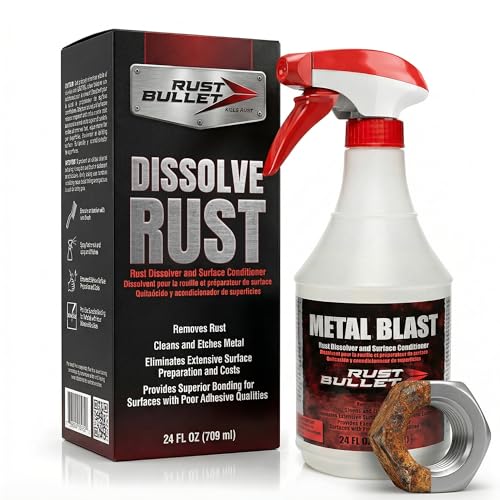
Best for surface preparation and adhesion improvement. This product not only cleans but also correctly prepares metal for paint by etching and conditioning surfaces for better primer and coat adhesion. It also helps prevent flash rust appearing after cleaning.
Who it’s for: painters, metal fabricators, and hobbyists preparing metal before coating. Why selected: combines rust removal with preparatory benefits. Caution: designed for prep work; may not remove deeply embedded rust alone.
Buying Guide
What surface are you treating?
Soft metals or painted finishes may require gentler formulas or surface-safe rust removers. For bare steel and iron, stronger rust-dissolving sprays or gels can be effective.
Is rust penetration deep or surface-level?
Surface rust often responds quickly to spray-on removers. Deeper rust might need longer contact times, multiple applications, or submersion in a rust remover solution.
Do you need a gel, spray, or liquid?
Gel formulas cling to vertical surfaces and intricate shapes, reducing dripping. Sprays offer quick treatment and ease of use on flat surfaces. Liquids may require immersion for larger parts.
Safety and environmental considerations
Look for non-acidic, non-corrosive formulas if fumes or odors are a concern. Water-based solutions are generally easier to handle and cleanup. Always follow manufacturer directions for ventilation and skin protection.
How will you finish the metal after rust removal?
Some products double as prep for painting, while others are standalone rust removers. If painting, choose a rust remover that also conditions or etches for better adhesion.
Usage patterns and project scope
For occasional repairs, spot-treatment sprays work well. For restoration projects involving multiple parts, consider larger-volume options to minimize refill frequency and downtime.
FAQ
- Q: Can spray-on rust removers work on all metals?
A: Most are suitable for steel, iron, and cast iron; always check product guidelines for compatibility with aluminum or nonferrous metals. - Q: Do I need to wear gloves or a mask?
A: Yes. Follow safety instructions; many products advise gloves and good ventilation to minimize exposure to fumes. - Q: Will rust return after treatment?
A: Some products provide a surface prep that helps prevent flash rust if followed by coating or painting as recommended. - Q: Can I use these on cookware or kitchenware?
A: Only if the product specifies safe use on cookware; avoid applying harsh chemicals to items that contact food unless explicitly approved. - Q: How long should I wait before painting after rust removal?
A: Follow the product’s instructions; most recommend a thorough rinse and drying before applying primer or paint.