Finding the right life skills worksheets and activities can support students with diverse learning needs. This guide highlights five carefully selected resources that emphasize problem-solving, social skills, spelling, and health literacy. Each product is designed for classroom or homeschooling use, with clear activities to build practical competencies.
| Product | Brand | Key Feature | Format |
|---|---|---|---|
| School Zone Thinking Skills Workbook | School Zone | 64 pages of problem-solving and logic puzzles for ages 3–5 | Workbook |
| Mark Twain Life Skills Mental Health Workbook for Kids | Mark Twain Media | Life skills, health literacy, self-awareness, and real-life scenarios | Workbook |
| Evan-Moor Building Spelling Skills, Grade 2 | Evan-Moor Educational Publishers | Reproducible spelling practice supporting literacy | Worksheet/Teaching Edition |
| Evan-Moor Building Spelling Skills, Grade 4 | Evan-Moor Educational Publishers | Spelling strategies integrated with reading and writing | Worksheet/Teaching Edition |
| KEY Education Social Skills Activities for Kids | KEY EDUCATION PUBLISHING | 15 file-folder games for social-emotional learning | Hands-on game set |
Note: The table above reflects a curated set of resources focused on practical life skills, literacy, and social-emotional development for students in special education settings.
School Zone Thinking Skills Workbook

The School Zone Thinking Skills Workbook offers a 64-page collection of preschool to kindergarten activities focused on problem-solving, logic, and reasoning. Designed to engage young learners with structured puzzles, it supports early cognitive development and critical thinking. The format is compatible with classroom centers and at-home practice, enabling teachers and parents to reinforce thinking routines alongside foundational academics.
Mark Twain Life Skills Mental Health Workbook for Kids

This updated life skills workbook guides students toward healthier lifestyle choices through real-life scenarios, puzzles, and reflective activities. Topics cover physical health, nutrition, financial literacy, and social-emotional learning, with sections that encourage self-assessment and thoughtful decision-making. It is suitable for classroom or homeschool use and can help students build routines that support long-term well-being.
Evan-Moor Building Spelling Skills, Grade 2

Evan-Moor’s Building Spelling Skills for Grade 2 presents reproducible worksheets that strengthen spelling, reading, and writing connections. This resource is useful for reinforcing foundational literacy skills in both classroom and homeschooling environments, offering practical activities aligned with typical spelling patterns and strategies for improving student accuracy and confidence.
Evan-Moor Building Spelling Skills, Grade 4

Grade 4 extends spelling practice with additional strategies and integrated reading and writing activities. The reproducible format supports targeted instruction for diverse learners, helping students apply spelling rules to more complex vocabulary and improve overall literacy outcomes in both classroom and home settings.
KEY Education Social Skills Activities for Kids
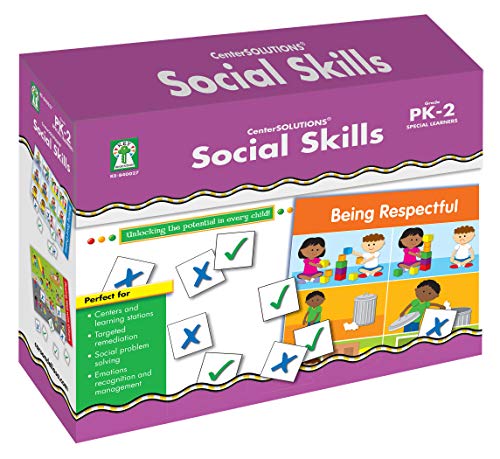
The Social Skills Activities for Kids resource provides a multi-purpose boxed set of 15 fold-open learning mats and game pieces. These activities help students practice conversations, emotion regulation, play skills, and problem-solving in a structured, interactive format. The materials are adaptable for group instruction or individual remediation, making them a versatile tool for social-emotional learning.
Buying Guide: Key Purchase Considerations
When selecting life skills worksheets and activities for special education, consider the following factors to align with student needs and instructional goals.
- Purpose and focus: Choose resources that address core life skills, including health literacy, social-emotional learning, and practical literacy (spelling and reading).
- Age and grade appropriateness: Ensure content matches the student’s developmental level to avoid frustration and maximize learning gains.
- Format and accessibility: Reproducible worksheets and hands-on games support varied learning styles and allow for flexible pacing.
- Differentiation options: Look for materials that include extension activities or adjustable difficulty to support multiple ability levels within a classroom.
- Engagement and motivation: Interactive formats, puzzles, and practical scenarios tend to sustain attention and encourage regular practice.
- Assessment potential: Resources with self-reflection tools, puzzles, and checklists help monitor progress over time.
- Implementation setting: Consider whether the product fits classroom centers, small-group instruction, or at-home practice for homeschooling families.
- Durability and reuse: Reproducible sheets or durable game components maximize longevity across a school year or multiple cohorts.