If you’re seeking effective plantar fasciitis relief from everyday footwear, these sole insoles offer targeted arch support, heel cushioning, and improved alignment. This guide compares five popular options to help you choose based on your activity, shoe type, and comfort needs. Ideal buyers: athletes or active adults needing athletic support; workers on their feet all day; and those seeking extended cushioning for boots or roomy shoes.
Summary of top picks
| Product | Best For | Key Benefit |
|---|---|---|
| SOLE Active Medium Insoles | Regular sneakers and everyday footwear | Neutral alignment with firm arch support |
| SOLE Active Thick Insoles | Boots and high-volume footwear | Maximum cushioning with sturdy arch support |
| Dr. Scholl’s Plantar Fasciitis Relief (Men) | Everyday wear and work footwear | Immediate pain relief and even pressure distribution |
| Sof Sole Plantar Fascia Insoles (3/4 Length) | Most casual or athletic shoes | Plantar relief bridge with gel heel in a shorter length |
| WalkHero Heavy Duty | Work boots and all-day standing | Rigid arch support with multi-layer cushioning |
SOLE Active Medium Insoles

Best for: regular athletic footwear and daily wear. These insoles feature a firm arch support with a deep heel cup and a zero-drop platform to promote neutral foot alignment. They are designed to reduce strain from overpronation and plantar fasciitis during walking, running, or long shifts.
Why selected: The medium thickness (3.2 mm) supports most standard shoes without crowding, and the option to compare with thinner or thicker variants helps users tailor fit. They aim to distribute pressure evenly to ease morning heel pain and arch fatigue.
Limitation: Requires replacing your factory insole and validating thickness against your footwear to ensure a proper fit.
SOLE Active Thick Insoles

Best for: boots, hiking shoes, and roomy footwear with extra interior space. The Thick profile measures 4.8 mm total with 3.2 mm cushioning, combining firm arch support and plush padding for high-impact activities.
Why selected: Designed to stay stable in larger shoes, offering better balance for individuals who need more cushion without sacrificing support during long days or outdoor work.
Limitation: Not ideal for shoes with very tight interiors; measure your factory insole thickness first.
Dr. Scholl’s Plantar Fasciitis Relief Orthotic Insoles (Men)

Best for: men’s everyday footwear and work shoes. This insole is positioned to relieve plantar fasciitis pain by distributing pressure more evenly and providing a shock-absorbing deep heel cup that supports the arch.
Why selected: It targets heel inflammation while offering arch support across various foot types, including high arches. It’s designed to help stop pain progression with consistent use.
Limitation: Brand claims focus on prevention of recurrence; user experience may vary depending on footwear fit and foot structure.
Sof Sole Plantar Fascia Insoles (3/4 Length)

Best for: shoes where full-length insoles don’t fit or when a shorter option is preferred. This 3/4 length insole provides a plantar relief bridge and a gel heel cup to ease heel strike and support arches.
Why selected: The shorter length helps fit into a wide range of casual and athletic shoes without crowding the toe box, while still offering arch support and heel comfort.
Limitation: Not suitable for people who need full-foot coverage or the maximum heel cushioning of full-length models.
WalkHero Heavy Duty Plantar Fasciitis Insoles
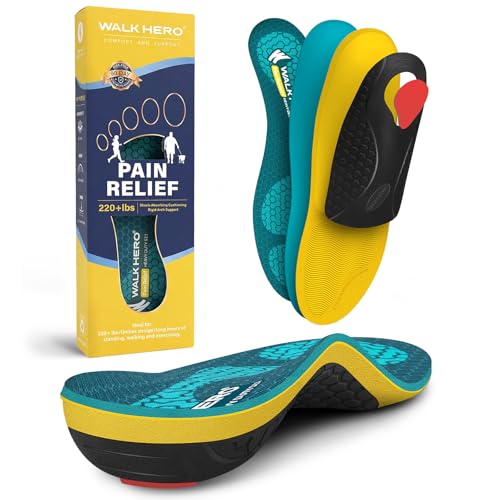
Best for: work boots and all-day standing with heavier body weight. These insoles offer strong rigid arch support and layered cushioning designed to withstand higher impact and longer wear.
Why selected: The combination of a durable arch support structure and cushioned layers targets plantar fasciitis symptoms while maintaining stability in demanding environments.
Caution: The profile may feel firmer; ensure adequate boot space and fit before prolonged use.
Buying Guide: Plantar Fasciitis Insoles
What should you look for?
Arch support strength, heel cup depth, and overall insole thickness determine how well an insole can relieve plantar fascia strain. For those with overpronation or flat feet, a firmer arch with a deep heel cup can help align the foot during gait. If you wear boots or roomy shoes, a thicker insole may provide the needed cushioning without compromising stability.
Which insole length fits your footwear?
Full-length insoles work well in most sneakers and dress shoes, while 3/4 length insoles fit many casual shoes and some athletic options. Boots often benefit from thick or heavy-duty models that offer more support and padding.
Should you buy multiple options?
Yes, if you have different shoe types. Some users prefer a medium thickness for daily wear and a thicker model for boots. In some cases, swapping insoles seasonally or based on activities yields the best relief.
How to measure for fit?
Remove your current insole and measure its thickness. Compare with the new insole thickness to ensure it will fit inside the shoe without crowding. For boots, ensure the interior remains comfortable after replacing insoles.
Common limitations
Not all insoles work equally across every foot type. Some may be too rigid for people with sensitive feet, while others may wear down faster with high-impact activities. Pairing insoles with appropriate footwear is key for optimal relief.
FAQ
- Do insoles cure plantar fasciitis? Insoles relieve symptoms by supporting the arch and cushioning the heel; they do not cure the condition but can reduce pain during activity.
- How long should I wear new insoles to assess benefit? Try wearing them for at least 1-2 weeks to evaluate fit, comfort, and pain changes during typical daily activities.
- Can I use insoles in boots and sneakers together? Yes. Choose insoles suited to each shoe type; some thicker models work best in roomy boots, while thinner options fit sneakers more easily.
- Are kinesiological or gel insoles better for plantar fasciitis? Both provide benefits; arch support and heel cushioning address the core issues. Gel in heel cups helps reduce peak pressure on heel strike.
- What if the insole feels uncomfortable at first? It’s common to need an adaptation period. Start with shorter wear times and gradually increase as comfort improves.
- Should I consult a clinician? If pain persists, worsens, or includes numbness or swelling, seek medical advice for a tailored treatment plan.