The best security guard metal detector depends on screening conditions: the Garrett Super Scanner V is the strongest choice when its listed detection distances and broad scan surface matter, while the JKUSS wand offers three alert modes. For rechargeable operation, consider the Natotinorch model with six sensitivity levels. RANSENERS and Natotinorch’s other wand offer adjustable sensitivity and sound or vibration alerts for simpler screening needs.
| Product | Best For | Standout Feature |
|---|---|---|
| Garrett Super Scanner V | Detailed security screening | Listed detection distances and 8-inch scan surface |
| JKUSS Handheld Wand | Flexible alert settings | Sound, vibration, or combined alerts |
| Natotinorch Rechargeable Wand | Rechargeable use | About 20 hours of operation per full charge, according to the listing |
| RANSENERS Security Wand | Adjustable screening sensitivity | Sound or vibration alerts |
| Natotinorch Security Scanner | Basic adjustable screening | Sound or vibration alerts and low-sensitivity mode |
Garrett Super Scanner V

Best for: Security teams that want stated detection-distance details and a wide scan surface. The listing says it detects ferrous, non-ferrous, and stainless-steel metals. Its 8-inch scan surface is designed to cover more area during a pass.
The manufacturer’s listed detection distances include a medium-sized pistol at 9 inches, a large knife at 6 inches, razor blades and box cutters at 3 inches, and foil-wrapped drugs and tiny jewelry at 1 inch. These figures are product claims, not a guarantee for every screening situation. The listing also states that the detector exceeds NIJ 0602.02.
Why it was selected: It provides more specific performance information than the other options here, which can help teams compare screening requirements. Limitation: The supplied features do not describe alert modes, power source, or battery life.
JKUSS Handheld Metal Detector Wand

Best for: Guards who need to adapt alerts to different environments. The JKUSS wand has sound, vibration, and combined alert modes. Its adjustable sensitivity can be lowered to ignore small items such as keys and coins while focusing on larger objects such as knives or handguns.
The listed detection uses include security screening, event safety, and woodworking. That range may suit buyers who want a handheld detector for more than one type of inspection, though intended use and screening procedures should be considered separately.
Why it was selected: Three alert choices offer more flexibility than models listing only sound and vibration. Limitation: The provided features do not specify battery life, charging details, or detection distances.
Natotinorch Rechargeable Security Wand
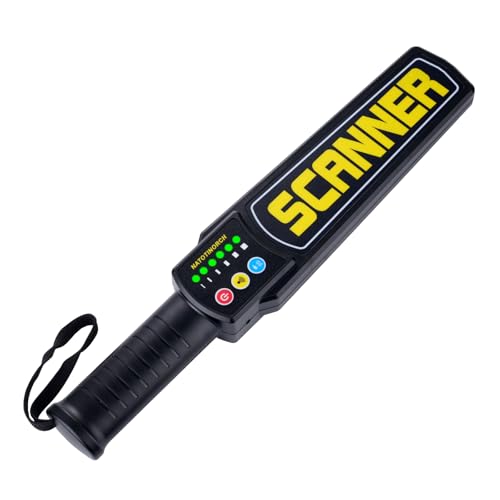
Best for: Buyers who prefer a rechargeable wand and want adjustable signal indication. The listing says its built-in battery provides about 20 hours of operation on a full charge. Six LED lights indicate signal strength, and the detector has six sensitivity levels.
A 3.5 mm headphone jack allows connection to external headphones, which are not included. Headphones may be useful in noisy surroundings or when the operator wants to limit audible alerts. Charging uses a Type-C plug; the listing says the charging head is excluded and specifies a DC5V adapter greater than 0.8A.
Why it was selected: Rechargeability, multiple sensitivity settings, and headphone support distinguish it from the other listed models. Limitation: The stated operating time is approximate, and the listing does not provide detection-distance figures.
RANSENERS Adjustable Security Wand

Best for: Guards who want sound and vibration alarms plus a way to reduce responses to small metal items. The wand’s switch changes between audible and vibration alerts. Its low-sensitivity setting is described as responding to larger objects such as knives and pistols while ignoring smaller items such as rings, keys, coins, and pins.
The listing describes the detector as suitable for security checks and says sensitivity can be adjusted if the detection distance does not meet the user’s needs. Vibration mode may be preferable in noisy settings or when an audible signal is not desired.
Why it was selected: Its alert options and low-sensitivity function address common screening preferences. Limitation: The supplied features do not state runtime or measured detection distances. The listing says a battery is included, but does not specify its type in the provided details.
Natotinorch Handheld Security Scanner

Best for: Buyers looking for a straightforward wand with selectable sound or vibration alerts and adjustable sensitivity. The listed low-sensitivity mode is intended to focus on larger metal objects and avoid alerts for small items such as keys, coins, rings, and pins.
The product description says the scanner can detect small hidden metal objects, including weapons and knives, and is intended for venues that require security checks. Its mode switch lets the operator choose an alert style for the setting.
Why it was selected: It covers core handheld-screening features without adding requirements for headphone use or rechargeable operation. Limitation: The provided details do not include battery information, detection distances, or a range of sensitivity levels.
Buying Guide: How to Choose a Security Guard Metal Detector
Which alert mode fits the screening environment?
Sound alerts are easy to notice in quieter settings. Vibration can be more discreet or useful in a noisy area. If you need both options, the RANSENERS and Natotinorch models list sound and vibration modes; JKUSS adds a combined mode. Check whether staff can operate the chosen controls quickly and consistently.
Do you need adjustable sensitivity?
Lower sensitivity can help reduce responses to small metal items when screening for larger objects, according to the relevant product descriptions. It may also mean the detector will not alert for items such as coins or keys. Select a setting that matches your written screening procedure, and do not treat a sensitivity adjustment as proof that an item is safe.
Should you choose rechargeable or replaceable-battery operation?
The Natotinorch rechargeable model lists a built-in battery and about 20 hours of use per full charge. The RANSENERS listing says a battery is included, but the supplied details do not identify its type. Compare charging access, shift length, and the need for backup power before choosing.
What performance information should you compare?
Look for stated detection distances, scan area, supported alert modes, and sensitivity controls. The Garrett listing provides specific claimed distances and an 8-inch scan surface. Other listed models describe sensitivity or alerts without comparable distance measurements, so avoid assuming their detection ranges are identical.
Frequently Asked Questions
What is a handheld metal detector wand used for?
It is used to scan for metal objects during inspections. The listed products are intended for security screening, and some also describe uses such as event safety or woodworking.
Can a security wand detect small metal items?
Product capability varies. The Garrett listing includes claims for tiny jewelry and small blades, while other products describe high sensitivity without giving measured distances. Detection depends on the object and screening conditions.
Why use vibration instead of an audible alert?
Vibration can help an operator notice an alert in noisy environments or keep the signal discreet. Some listed wands let the user switch between vibration and sound.
Does low sensitivity ignore keys and coins?
The RANSENERS and Natotinorch descriptions say their low-sensitivity modes are intended to ignore small items such as keys and coins while responding to larger objects. Follow the detector’s instructions and the site’s screening policy.
Which option lists rechargeable operation?
The Natotinorch rechargeable wand lists a built-in battery, Type-C charging, and about 20 hours of operation per full charge. Its stated runtime is approximate.