Roll up door sensors are essential for monitoring garage and industrial doors, improving security and automation. This guide highlights five durable options, each suited for different installations and needs. Choose these sensors for reliable door status alerts, easy mounting, and compatibility with low-voltage alarm systems. The top picks below are best for homeowners, small businesses, and facilities managers seeking robust magnetic contact solutions.
| Product | Brand | Best For | Key Feature |
|---|---|---|---|
| WESUA Magnetic Switch Alarm Sensor Overhead Garage Door Contacts with L Bracket | WESUA | Home garages, quick install | Alloy zinc case, epoxy sealed, L bracket |
| Garage Door Magnetic Contact Sensor, Wired NC with Adjustable L Bracket | Granatan | Residential/commercial doors, flexible mounting | Wired NC, adjustable L bracket |
| Heavy Duty Wired Alarm Garage Door Magnetic Contacts Switch Sensor NC | GAGALOR | Durable system integration | Metal zinc alloy housing, adjustable bracket |
| GAGALOR NO&NC 3 Wires Magnetic Garage Door Contacts | GAGALOR | Flexible wiring for alarms | NO & NC options, 40mm distance, adjustable bracket |
| Gebildet Wired Rolling/Doors Contact OC-55 | Gebildet | Industrial and warehouse doors | OC-55, 0–100V, 0.5A, 50–70mm range |
Introduction to top products: Each option focuses on reliability, mounting flexibility, and compatibility with alarm or automation systems. For tight spaces or frequent door passages, consider sensors with adjustable brackets and longer wire leads. If you need multiple sensors for large doors or gates, some models offer NO/NC configurations or dual-wiring for easier integration into existing security networks.
WESUA Magnetic Switch Alarm Sensor With L Bracket

Best for: Home garages needing a sturdy, corrosion-resistant sensor with simple mounting. The alloy zinc case and metal tube protection provide durability in outdoor or dusty environments. The epoxy seal offers water resistance for exposed installations.
Why selected: This model emphasizes rugged construction and a compact form factor, making it suitable for standard overhead doors with an adjustable mounting approach.
Caution: Limited data on power requirements; ensure compatibility with your alarm panel’s input type before wiring.
Granatan Garage Door Magnetic Contact Sensor With Adjustable L Bracket

Best for: Larger homes or small commercial setups needing adjustable positioning and reliable NC operation. The adjustable L bracket supports precise alignment of the magnet and switch.
Why selected: The heavy-duty zinc alloy housing is designed to endure repeated door movement, making it a solid choice for frequent roller shutter doors.
Caution: Wired NC configuration requires proper wiring to ensure the circuit remains closed when the door is shut; miswiring can cause false alarms.
GAGALOR Heavy Duty Wired Alarm Sensor With Adjustable Bracket

Best for: Security-conscious installations where a durable, easy-to-mount sensor is required for home burglar alarm systems and garage doors.
Why selected: The metal zinc alloy housing offers robust protection, while the adjustable bracket enables flexible mounting to fit various door configurations.
Caution: Data notes require confirmation of the voltage and current compatibility with your alarm system to avoid misoperation.
GAGALOR NO&NC 3 Wires Magnetic Door Sensor
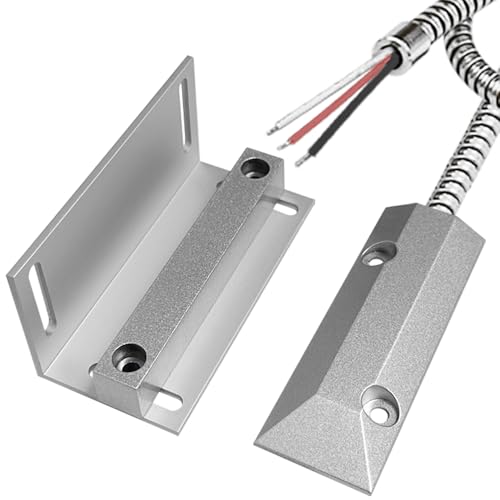
Best for: Projects requiring flexibility between normally open and normally closed states, with a longer operation distance for varied door clearances.
Why selected: The NO&NC dual wiring expands compatibility with different alarm circuits, and the included adjustable bracket eases mounting on uneven frames.
Caution: The longer operation distance means alignment is more critical for reliable signaling; test magnet position carefully during installation.
Gebildet Wired Rolling Door Contact OC-55

Best for: Industrial and warehouse applications where a higher voltage tolerance and longer switch range are beneficial.
Why selected: OC-55 design supports 0–100V and up to 0.5A with a 50–70mm action distance, making it suitable for larger rolling doors and high-traffic areas.
Caution: Applications using higher voltages require careful wiring and proper insulation to prevent inadvertent signaling or electrical interference.
Gebildet Rolling Door Contact MC-51
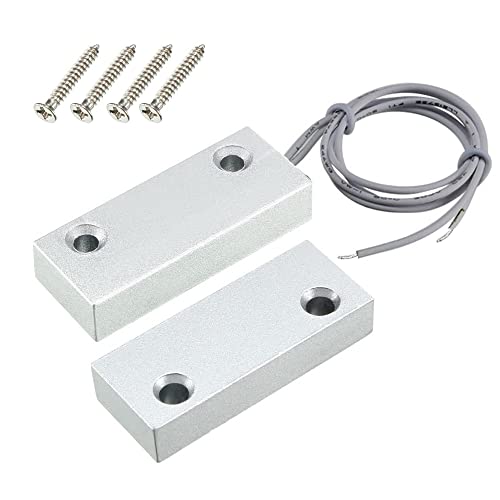
Best for: Similar environments as OC-55, with slightly different action range and wiring options for- MC-51 applications.
Why selected: The MC-51 variant provides a reliable NC option with a practical action distance, fitting many standard rolling door installations.
Caution: Ensure compatibility with your existing alarm system’s input and circuit expectations to avoid misreads or false triggers.
Buying Guide: Roll Up Door Sensor Selection
What are your installation priorities? Consider mounting flexibility, weather exposure, and the door’s size when choosing a sensor. For gateways to homes or small offices, look for adjustable brackets and robust housings. For warehouses or industrial doors, voltage tolerance and longer operation ranges may be important.
Key considerations
- Mounting options: Adjustable brackets simplify alignment on curved or irregular frames.
- Housing material: Zinc alloy provides durability for high-traffic doors; consider epoxy sealing for outdoor use.
- Wiring configuration: NO, NC, or both can affect how you wire into alarm panels or automation systems.
- Electrical specs: Check voltage and current ratings to avoid overloading circuits.
- Range and operation distance: Longer distances may require careful magnet alignment and stable mounting.
Practical questions
- What is the difference between NC and NO sensors?NC sensors close the circuit when aligned; NO sensors open when aligned. Choose based on your alarm setup.
- Can these sensors be used outdoors? Look for epoxy sealing and weather resistance in the product description.
- Do I need a separate power supply? Many sensors are passive and draw minimal current, but verify with your alarm panel requirements.
- How many sensors should I install for a large door? At least one per door segment; larger doors may require multiple sensors for reliable status monitoring.
- What maintenance is required? Check magnet alignment periodically and inspect wiring for wear or corrosion.
- What’s the best mounting height? Align the magnet and switch per the door’s typical travel path to ensure reliable switching.
FAQ
Q: Are these sensors compatible with my existing alarm system?
A: Most are designed for standard low-voltage alarm circuits. Verify the input type (NC/NO), voltage, and current requirements before wiring.
Q: Can I install these without professional help?
A: Yes, for basic door setups with straightforward wiring. Complex commercial systems may require an electrician or security installer.
Q: Do any models include pre-wired leads?
A: Several options provide 15″ to longer armored leads, which helps with difficult routing and mounting.
Q: How should I test a newly installed sensor?
A: Confirm the door’s closed position completes the circuit for NC models, and that opening the door breaks the circuit. Cross-check against your security panel or controller.
Q: Which sensor is best for high-traffic doors?
A: Models with robust zinc alloy housings, longer term durability, and adjustable brackets are preferable for high-traffic doors in both residential and industrial settings.