The best earwax removal product depends on whether you need to soften wax or are considering a tool for cleaning. Debrox drops are best for people seeking a drop-based option; the LEIPUT camera kit is for adults who want a view of the ear canal, while the KAUGIC kit uses water flow. Sticky swabs and metal picks are also listed, but inserting tools into the ear canal can cause injury. For safety, follow product directions and ask a healthcare professional before attempting removal if you have ear pain, drainage, or a history of ear problems.
| Product | Best suited for | Removal approach |
|---|---|---|
| Debrox Ear Wax Removal Kit | Softening excess wax | Carbamide peroxide drops |
| LEIPUT Ear Wax Removal Camera | Adults seeking a camera-equipped tool | Visual guidance and ear scoop |
| KAUGIC Ear Cleaner | People considering water-based cleaning | Adjustable water flow |
| SANTIFY Sticky Ear Cleaning Sticks | Adults considering adhesive-tip swabs | Sticky tip |
| Geengle Ear Pick Set | People looking at reusable curettes | Metal scoop tools |
Debrox Ear Wax Removal Kit
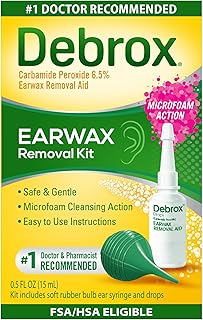
Debrox is best for adults looking for a drop-based approach to softening excess earwax. The product contains 6.5% carbamide peroxide, which the listing says creates a microfoaming action to loosen wax so it can drain. The kit also includes a bulb syringe.
The listing notes that the drops may be relevant to wax buildup associated with frequent use of earbuds, in-ear headphones, hearing aids, or earplugs. It was selected because it offers a different approach from tools that enter or direct water into the ear.
Caution: Use only as directed on the product label. Do not assume drops are appropriate for every ear condition; consult a healthcare professional if you have pain, drainage, or concerns about using ear drops.
LEIPUT Ear Wax Removal Camera

The LEIPUT kit is best for adults who want a camera view while using an ear scoop. Its listed features include a 1080P camera, six LED lights, three scoop curvatures, silicone covers, and a rechargeable battery rated for 90 minutes of use after a full charge. The otoscope, scoop, and lens are described as IP67 waterproof; the listing says not to submerge the entire device.
It was selected for buyers comparing camera-equipped devices with simple drops or manual cleaners. The camera provides a view, but it does not ensure that inserting a scoop is safe or necessary.
Caution: Do not push the scoop into the canal. Fit the silicone cover securely as directed, and stop if there is pain or discomfort.
KAUGIC Manual Ear Cleaner

The KAUGIC cleaner is best for someone comparing a water-flow device with drops or scoop-style tools. The listing describes one-hand handling, targeted water flow, adjustable pressure, and a silicone tip. Its adjustable flow is the main distinction from the other products in this selection.
This product was included because it represents a water-based cleaning approach. However, the supplied product details do not explain who should avoid irrigation or provide detailed use instructions, so buyers should review the complete directions before use.
Caution: Do not use water irrigation without professional guidance if you have ear pain, drainage, or a known ear problem. Stop if the process causes discomfort.
SANTIFY Sticky Ear Cleaning Sticks

SANTIFY’s sticks are best suited to adults comparing adhesive-tip cleaners. The listing describes a sticky tip intended to capture wax, washable reusable materials, and a 24-piece set with 5 mm tips. The reusable design and pack size distinguish this product from the single-tool kits.
It was selected to represent adhesive swabs, but the product description does not establish that placing a stick inside the ear canal is risk-free. These are not necessary for routine cleaning of the outer ear.
Caution: Avoid inserting any swab deeply into the ear. A stick may irritate or injure the canal, and wax can be pushed farther inward.
Geengle Stainless Steel Ear Pick Set

The Geengle set is best for buyers comparing reusable metal curettes. The listing says the eight-piece set includes scoop-shaped tools, a cleaning brush, and a storage box. It describes the picks as stainless steel, rust-resistant, and easy to clean.
It was included to show how manual metal tools differ from drops and irrigation. The listing claims scoop shapes can remove buildup, but that does not make deep ear-canal use safe.
Caution: Metal picks can scratch or injure the ear canal or eardrum if inserted or moved incorrectly. Avoid using them inside the canal, especially without guidance from a healthcare professional.
Buying Guide: How to Choose an Earwax Removal Product
Do you need to remove wax or just clean the outer ear?
Earwax normally helps protect the ear. Routine cleaning usually means gently washing the outer ear, not inserting tools into the canal. If you suspect a blockage, consider a product intended to soften wax and follow its label, or ask a healthcare professional what approach is appropriate.
Should you choose drops, irrigation, or a tool?
Drops use ingredients such as carbamide peroxide to soften wax. Irrigation devices use water flow, while cameras, adhesive sticks, and metal picks involve tools near or inside the canal. Compare the method—not just the accessories—and remember that a camera does not prevent accidental injury. Do not combine methods unless a clinician or the product instructions advise it.
What safety details should you check?
Read the complete directions and warnings before buying or using a kit. Check what parts can be cleaned, whether any tips or covers must be fitted, and how the device is powered. Avoid putting objects deep into the ear. Get medical advice before attempting removal if you have pain, drainage, a history of ear surgery, or uncertainty about the cause of symptoms.
Frequently Asked Questions
Are cotton swabs a good way to remove earwax?
No. Inserting a cotton swab into the ear can push wax farther inward or injure the canal. Clean only the outer ear with care.
Which product in this list uses carbamide peroxide?
The Debrox kit contains 6.5% carbamide peroxide drops, according to the product information provided.
Does an ear camera make cleaning safe?
No. A camera can show a view, but it cannot guarantee that a tool will not scratch the canal or injure the eardrum.
When should I ask a healthcare professional about earwax?
Seek professional advice if you have pain, drainage, persistent blockage, or a history of ear problems, or if you are unsure which removal method is suitable.
Can I wash the entire LEIPUT camera device?
The product information says the otoscope, ear spoon, and lens can be washed or wiped, but says not to put the whole otoscope in water.