The growing need to power and connect USB-C devices from PoE networks has led to a range of compact adapters. This guide highlights five reliable PoE to USB-C solutions that deliver power and data through a single Ethernet cable. Each option supports USB-C devices like tablets and smartphones, with varying power profiles and Ethernet speeds to fit kiosks, POS, and remote installations.
Summary of chosen products:
| Product | Brand | Power Output | Data Speed | Notes |
|---|---|---|---|---|
| Gigabit PoE To USB C Converter (10W) | PROCET PoE System | 5V/2A | Up to 1000 Mbps | IEEE 802.3af |
| PoE Texas Gigabit PoE+ To USB-C (25W) | PoE Texas | 5V–20V (PoE+) | Up to 1000 Mbps | Aluminum housing, 24/7 use |
| PoE Texas 802.3af To USB-C (10W) | PoE Texas | 5V–20V (5V/9V/12V/15V/20V) | Up to 1000 Mbps | Right-angle cable included |
| UCTRONICS PoE Splitter USB-C 5V | UCTRONICS | 5V USB-C | 1000 Mbps | Splits power and data |
| Gigabit PoE To USB C Converter (10W) | AGILEPOELINK | 5V/2A | Up to 1000 Mbps | Plug-and-play |
Note: All products listed are compatible with IEEE 802.3af/at PoE standards and are designed for plug-and-play operation with USB-C devices that can receive power and data from PoE networks.
PROCET PoE System: Gigabit PoE To USB-C Converter (10W)

Features include IEEE 802.3af PoE to USB-C output delivering 5V/2A power alongside Ethernet data. A single adapter reduces the need for separate power supplies and network connections. It supports plug-and-play use and up to 1000 Mbps Ethernet, ensuring fast network access. Compatible with Windows, Android, iOS, and other major systems for smartphones and tablets, providing a practical solution for on-the-go or fixed installations.
PoE Texas: Gigabit PoE+ To USB-C Adapter (25W)

Delivers both power and data over a single Ethernet cable to USB-C tablets, enabling gigabit speeds up to 1000 Mbps. This adapter supports PoE+ (IEEE 802.3at) and requires a PoE switch or injector (sold separately). It features aluminum housing for heat dissipation during long-term operation in kiosks, POS, and security setups. The device supports USB-C power delivery across multiple profiles (5V–20V) to accommodate various tablets while maintaining data transfer.
PoE Texas: 802.3af To USB-C Adapter (10W)

Provides PoE to USB-C power delivery and data for tablets such as iPad Mini, iPad Air, Samsung Galaxy Tab, and Google Pixel. The integrated right-angle USB-C cable fits most tablet enclosures, and it works with any 802.3af PoE switch. Includes a rugged, affordable design suitable for professional installations, reducing downtime and installation costs by leveraging existing network hardware. Not compatible with certain devices that require special power profiles, per product notes.
UCTRONICS PoE Splitter USB-C 5V
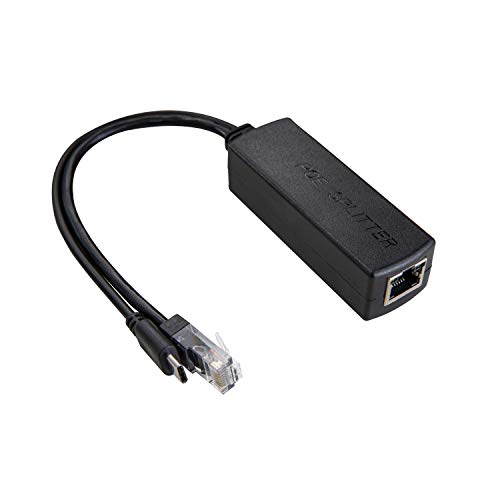
A PoE splitter that converts PoE into a 5V USB-C power supply plus gigabit Ethernet, enabling non-PoE devices to be powered over Ethernet. It extends power delivery to areas with scarce outlets and supports up to 300 feet from the PoE source. Ideal for Raspberry Pi 4 setups and other 5V USB-C powered devices using a PoE switch or injector, offering a cost-effective, plug-and-play solution for compact installations.
PROCET PoE To USB-C Converter (10W, 23W variant)

This PoE to USB-C converter expands power delivery with multiple voltage options (5V/2.6A, 9V/1.75A, 12V/1.45A, 15V/1.37A, 20V/1.15A) while maintaining Ethernet data. It supports plug-and-play operation and reaches up to 1000 Mbps Ethernet. Suitable for smartphones and tablets, it reduces the need for additional power adapters and strengthens network access in one compact device. Designed for quick deployment in professional environments.
AGILEPOELINK: Gigabit PoE To USB C Converter (10W)

AGILEPOELINK’s 802.3af PoE to USB-C adapter converts PoE to USB-C power and Ethernet data with a 5V/2A output. It offers plug-and-play usability and supports up to 1000 Mbps Ethernet for fast network access. Compatible with Windows, Android, iOS, and other systems, it is suitable for smartphones, tablets, and other USB-C devices in a simple, compact form factor.
Buying Guide: Key Considerations For Choosing PoE To USB-C Adapters
- Power delivery versus data needs: Determine if you mainly require charging (power delivery) or if data transfer speed is critical. Some adapters emphasize higher voltage ranges for charging, while others prioritize gigabit Ethernet data.
- PoE standard compatibility: Check whether the device supports IEEE 802.3af (PoE) or IEEE 802.3at (PoE+). For higher power requirements, PoE+ is often necessary.
- Voltage profiles and USB-C compatibility: Look for adapters that offer multiple USB-C PD profiles (5V, 9V, 12V, 15V, 20V) to match tablet and laptop needs.
- Form factor and installation: Consider right-angle cables, aluminum housings for heat dissipation, and whether the unit is rugged enough for kiosks, POS, or outdoor deployments.
- Length and distance: If the PoE source is far from the device, ensure the adapter supports the required distance and maintains stable power and data delivery.
- Plug-and-play reliability: Favor devices advertised as plug-and-play to minimize configuration and downtime in busy environments.
- Compatibility with devices: Confirm compatibility with the target devices (iOS/Android tablets, Windows laptops, Raspberry Pi, etc.) and with your existing PoE switches or injectors.
- Security and safety features: Look for materials like aluminum housings for heat dissipation and certifications ensuring safe operation in 24/7 environments.
When selecting a PoE to USB-C adapter, align the purchase with the intended use case—kiosks, POS systems, or mobile device charging—while ensuring the device meets power requirements and network speeds for a reliable, single-cable solution.