Plano-concave lenses are ideal for demonstrations that involve beam divergence, virtual image formation, and negative focal lengths. This guide highlights five reliable options well-suited for physics classrooms, labs, and hands-on optics projects. The selections emphasize affordability, clarity, and safe handling for students. Best for educators, students, and hobbyists who need measurable divergence and straightforward optical demonstrations.
Buyer’s quick summary of selected products:
| Product | Key Benefit | Best For |
|---|---|---|
| Eisco – Glass Plano-Concave Lens (50 mm) | Directly divergences light with a known -50 mm focal length | Individual experiments requiring a single negative focal length |
| Eisco 6pc Glass Lens Set (50 mm) | Variety of focal lengths including plano-concave options | All-in-one optics demonstrations |
| United Scientific Premium Optical Glass Lens Set (50 mm) | Well-rounded set with multiple focal lengths | Classroom demonstrations and comparison activities |
| K9 Plano-Concave Lens (10 mm) | Small-diameter options for compact optical setups | Beam expansion and collimation experiments in tight spaces |
| Amlong Crystal Premium Lens Set (50 mm) | Balanced mix of convex and concave lenses | Structured optics lessons with multiple focal lengths |
Eisco – Glass Plano-Concave Lens 50mm Diameter

Specification highlights: 50 mm diameter, -50 mm focal length, plano-concave optical lens with one flat surface and one concave face. It is ground and polished for accurate light divergence and controlled beam deflection. This lens is best for individual experiments that require a clear demonstration of ray divergence and virtual image formation. A limitation is that it represents a single focal-length option, which may require swapping lenses for different experiments.
Eisco 6pc Glass Lens Set (50mm)

This six-lens kit includes plano convex, plano concave, double convex, double concave, and concave-convex types, all with 50 mm diameter. Focal lengths include 20 cm (for converging/diverging pairs) and 25 cm in several variants. The set is ideal for building a complete optics demonstration collection in a classroom, enabling side-by-side comparisons of focal behaviors. A caution: keep edges smooth during handling to prevent chipping or injury.
United Scientific Premium Optical Glass Set (6 Lenses)

Contents include three double convex and three double concave lenses, each 50 mm in diameter. Focal lengths include 5 cm, 10 cm, 20 cm (convex) and 20 cm, 30 cm, 50 cm (concave). This set is well-suited for physics demonstrations comparing converging and diverging behavior. Benefit: premium optical glass ensures clarity for classroom experiments. Limitation: larger set may be more than needed for small experiments.
K9 Plano-Concave Lens, 10mm Diameter –20mm Focal

This small-diameter lens is designed for beam expansion and collimation experiments in tight spaces. Substrate is H-K9L glass with an effective focal length of -20 mm. It is best for compact optical benches or projects requiring precise, small-scale divergence. Consideration: the 10 mm diameter may necessitate adapters or mounts for standard optics kits.
K9 Plano-Concave Lens, 10mm Diameter –12.5mm Focal

Another compact option with a -12.5 mm focal length, also in 10 mm diameter. Suitable for studies comparing shorter focal lengths or for educational demonstrations on focal length variation. Limitation: smaller lens size may limit the amount of visible beam deflection in larger setups.
Amlong Crystal Premium Optical Glass Lens Set (50 mm)
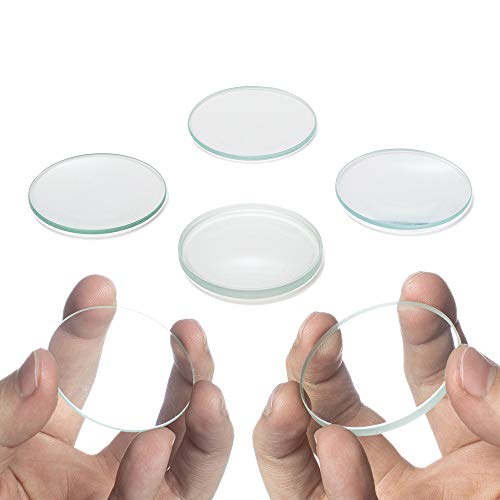
This set includes three convex and three concave lenses, each 50 mm in diameter, with focal lengths of 20 cm, 30 cm, and 50 cm for both types. It offers a balanced assortment for structured optics lessons and demonstrations on refraction, focal length, and image formation. Best for classrooms that want a ready-to-use kit with multiple focal options. A potential drawback is that the kit blends several optic configurations, which may require careful organization during activities.
Buying Guide
What drives your choice of plano-concave lenses?
Consider required focal length, diameter, and the number of lenses needed for demonstrations or experiments. For single-lens tasks, a dedicated plano-concave lens (like the 50 mm option) is straightforward. For lesson plans that cover multiple focal lengths and configurations, a set with diverse lenses saves time and enhances comparison activities.
How does lens diameter affect experiments?
Smaller diameters (like 10 mm) are excellent for tight optical benches or compact setups. They still demonstrate beam divergence but may require additional mounts. Larger 50 mm lenses provide stronger visible divergence and are easier for students to observe with standard optics equipment.
What about material quality and safety?
Optical-grade glass with precision polishing yields clearer beam behavior and safer handling. All listed options are glass-based; ensure edge bevels are smooth to minimize cuts during classroom use. Avoid lenses with rough edges and seek sets that include storage cases to keep optics protected.
Should you choose a single lens or a set?
If your course covers optics fundamentals only occasionally, a single plano-concave lens is sufficient. For ongoing optics labs, a set provides a broader learning platform, enabling side-by-side comparisons of focal lengths and lens types without purchasing additional items later.
How to pair lenses with educational activities?
Use a light source to project rays through the lens and observe divergence angles, virtual image formation, and focal shifts. Pair plano-concave lenses with converging lenses to demonstrate beam expansion and negative focal lengths. Document observations with diagrams and note how focal length influences ray paths.
What about assembly and safety?
Use proper lens mounts or holders to keep lenses secure during demonstrations. Avoid placing lenses directly on reflective surfaces or near high-heat sources. For younger classrooms, supervise glass handling to prevent accidents and ensure safe storage after activities.
Summary by product type
- Single-lens option: Eisco Plano-Concave Lens 50 mm is straightforward for one-lens demonstrations.
- Comprehensive optics kit: Eisco 6pc Glass Lens Set offers a broad range of focal lengths for experiments and comparisons.
- Classroom-ready set: United Scientific Premium Lens Set provides multiple lens types and focal lengths for demonstrations and activities.
- Compact lens: K9 10 mm diameter lenses are ideal for tight spaces and precision beam manipulation.
- Balanced mix: Amlong Crystal set combines convex and concave lenses for structured lessons requiring variety.
Frequently Asked Questions
- What is a plano-concave lens used for? A plano-concave lens diverges light, producing negative focal lengths useful in optics demonstrations and beam control.
- Which lens is best for beginners? A single plano-concave lens (like the 50 mm option) is simplest for basic divergence demonstrations.
- Can a kit replace individual lenses? Yes, a well-rounded kit saves time and offers multiple focal lengths for comprehensive lessons.
- Are these lenses safe for classroom use? Yes, provided edges are smooth and proper handling procedures are followed with protective storage.
- What setup works best for observing ray divergence? Use a light source, a stand or holder, and a projection screen or white surface to visualize rays and virtual images clearly.
- How do focal length and beam divergence relate? Shorter (more negative) focal lengths yield stronger divergence; longer negative focal lengths produce gentler beam spread.