Answering your search for an accurate pool pH test kit: these picks cover common at-home testing needs, from simple 2-in-1 kits to multi-parameter strips. They’re best for homeowners who want quick results, easy reading, and clear guidance on when to adjust pH. The top products suit different buyers—from casual pool owners needing occasional checks to DIYers tracking water balance weekly.
| Product | What It Tests | Best For | Why It Stands Out |
|---|---|---|---|
| WWD POOL Swimming Pool Spa Water Chemical Test Kit for Chlorine and Ph Test (2 Way Test Kit) | Chlorine and pH | Hands-on readers who want a basic, accurate test | Clear-view unit and included test solutions simplify reading and dosing. |
| EASYTEST 7-Way Pool Test Strips | 7 parameters including pH, bromine, alkalinity, chlorine, hardness, cyanuric acid | Bulk testing with quick checks | 150 strips provide long-term value; fast, one-dip reading. |
| Lupo 3-in-1 Pool Test Kit | Total Chlorine, Total Bromine, pH | Accurate pH and sanitizer balance for homes with two sanitizers | Trusted system with rapid results and 100 tests worth of reagents. |
| JNW 7-in-1 Pool Test Strips | Chlorine, Bromine, pH, alkalinity, hardness, and more | All-in-one quick checks for complex water chemistry | Affordable, easy-to-use strips with multiple parameters. |
| LUPO 2-In-1 Pool Test Kit | Free Chlorine and pH | Simple dual-parameter monitoring | Fast results, USA Swimming-approved method feel, 100 tests. |
WWD POOL 2 Way Test Kit for Chlorine and pH
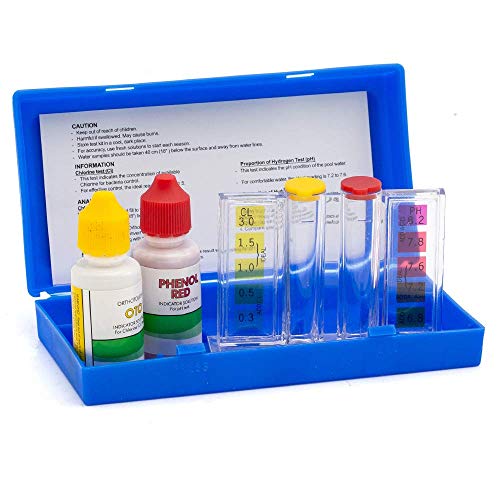
Best for: Budget-conscious homeowners who want a straightforward, two-parameter reading. This kit includes a clear-view testing unit, chlorine and pH test solutions, and a carrying case for easy storage. The dual-read design simplifies routine maintenance by focusing on the essentials: chlorine and pH balance.
Why selected: It provides direct, readable results with minimal steps, making it an accessible option for beginners and casual pool owners.
Caution: Limited to chlorine and pH readings; users with complex chemistry needs may prefer multi-parameter options.
EASYTEST 7-Way Pool Test Strips
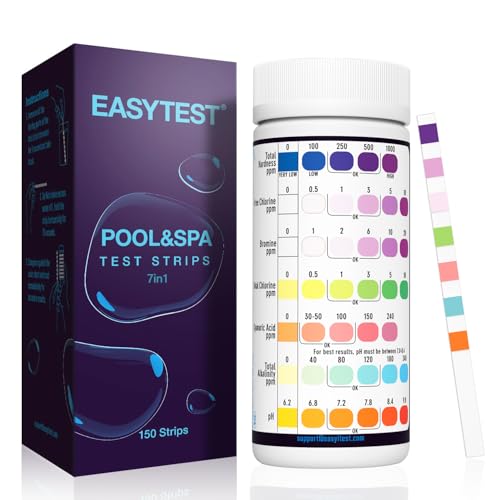
Best for: Pool owners who test weekly and want a single strip that covers many parameters. The kit reads bromine, total alkalinity, pH, free chlorine, total hardness, cyanuric acid, and total chlorine.
Why selected: 150 strips provide long-term value, and the color-chart comparison is designed for quick decisions without specialized equipment.
Caution: Relying on strips means batch-to-batch color interpretation can vary; keep strips sealed and store as directed.
Lupo 3-in-1 Pool Test Kit
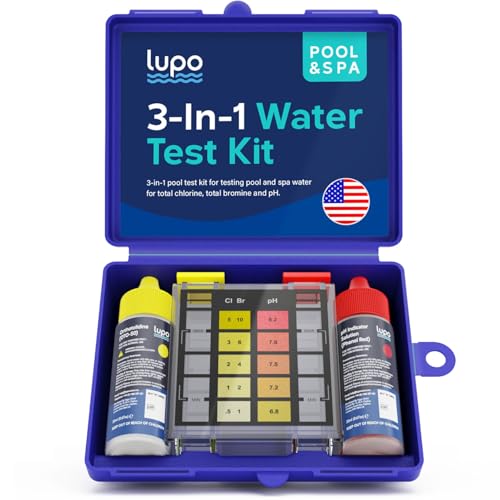
Best for: Homeowners who want fast, accurate results for three key parameters—total chlorine, total bromine, and pH—without an expensive meter. It includes enough reagents for 100 tests.
Why selected: USA Swimming-approved level of accuracy supports confident adjustments at home.
Caution: Not designed for treating water with unusual chemical mixes; for complex pools, consider a broader kit.
JNW 7-in-1 Pool Test Strips

Best for: Users who want a single, convenient strip to check multiple aspects of water quality. It covers chlorine, bromine, pH, alkalinity, hardness, and more.
Why selected: The all-in-one approach reduces the number of separate tests needed and supports routine maintenance.
Caution: Strip color interpretation can vary; avoid relying on a single parameter for critical decisions.
LUPO 2-In-1 Pool Test Kit
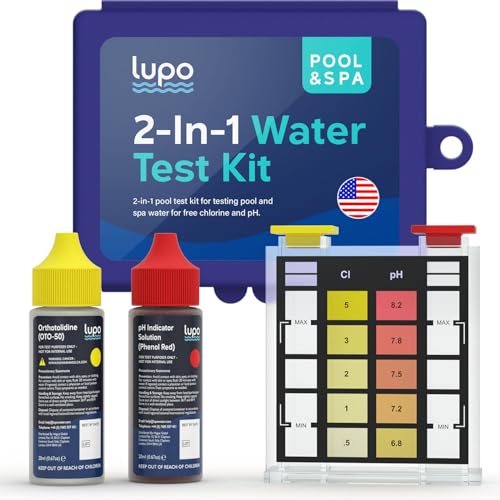
Best for: Homeowners who want a simple dual-parameter kit focused on free chlorine and pH. It provides quick results and a total of 100 tests.
Why selected: The two-parameter approach suits basic maintenance needs with reliable accuracy, suitable for standard residential pools.
Caution: Limited to two parameters; for pools with aggressive chemistry or additional concerns, a multi-parameter kit may be preferable.
Buying Guide: How to Choose a Pool pH Test Kit
- Parameters covered: If you only need pH, a 2-in-1 kit is sufficient. For more complete balance (chlorine or bromine, alkalinity, hardness), choose 7-in-1 or 6-in-1 strips.
- Readability: Look for clear color charts, reference liquids, or digital meters. Strips should use a stable color reference to minimize interpretation differences.
- Usage frequency: Casual users may prefer strips for quick checks, while serious maintainers may opt for liquid tests with more precise reagents.
- Storage and shelf life: Keep reagents sealed and store away from heat and direct sunlight to maintain accuracy.
- Budget and value: Strips offer bulk value but may require more frequent replacement; liquid tests with reusable units can be cost-efficient over time.
- Pool type and chemistry: Saltwater or spa pools may require broader parameter sets; assess whether total chlorine, bromine, and pH are enough for your setup.
Frequently Asked Questions
- What is the most important parameter to test for pH control?
Answer: pH level directly affects sanitizer effectiveness and skin/eye comfort; keep it within recommended ranges. - Should I buy strips or liquid test kits?
Answer: Strips are quick and affordable for frequent checks; liquid tests offer precise readings and are preferred by some users for accuracy. - How often should I test pool water?
Answer: For most residential pools, testing at least twice a week is recommended, with more frequent checks during heavy usage or after chemical additions. - Can these kits measure total alkalinity and calcium hardness?
Answer: Some 7-in-1 or 6-in-1 kits include alkalinity and hardness; check the product features to confirm supported parameters. - What should I do if test results are outside the recommended range?
Answer: Adjust the corresponding chemical levels according to product instructions and retest after adjustments. - Are these kits suitable for saltwater pools?
Answer: Many kits test common parameters; for saltwater pools, ensure the kit covers the necessary parameters or consider a kit designed for salt systems.