Finding clear, durable no parking signs is essential for managing access during events, construction, street work, and service operations. The following selections highlight a mix of cardboard, plastic, and metal options in various sizes and formats. Each entry includes practical features to help you choose signs that stand up to weather while delivering a visible message.
| Product | Format | Size | Pack / Notes |
|---|---|---|---|
| Temporary No Parking, Tow Away Signs – 50 pack | Printed Cardstock | 12″ x 18″ | Offset printed; Pasadena, CA USA |
| Temporary No Parking, Tow Away Signs – 25 pack | Printed Cardstock | 12″ x 18″ | Offset printed; Pasadena, CA USA |
| Smartsign “Temporary No Parking” Sign (5-pack) | Polystyrene | 9″ x 12″ | Made in USA; screen printed |
| Temporary No Parking Construction Zone Tow Away Signs (Aluminum) | Aluminum | 14″ x 10″ | Weatherproof; durable for outdoor use |
| SmartSign Rip-Out Sign Book (20 sheets) | Plastic | 10″ x 14″ | Write-on; durable for outdoor/indoor use |
Temporary No Parking, Tow Away Signs — 50 Pack

This set features 50 signs printed on 14-point cover stock with coated one-side paper. It’s designed for quick deployment at construction sites, events, tree services, road repairs, and more. The signs are produced and packaged in Pasadena, California, USA, offering local production and straightforward accessibility for large projects. The two-tone design emphasizes visibility and legibility, aiding drivers in recognizing no-parking zones promptly.
Key features include: offset printing for crisp text, suitability for outdoor applications, and a durable presentation that supports temporary usage scenarios. Consider this option if you need a bulk supply for multiple zones or long-duration events where frequent repositioning is necessary.
Temporary No Parking, Tow Away Signs — 25 Pack
This 25-pack mirrors the 50-pack’s format with 12″ x 18″ signs printed on 14pt cover stock and coated on one side. It’s well-suited for mid-sized projects, events, or temporary work zones where a clear, professional appearance is needed. The Pasadena, CA USA production remains a highlight for those who value domestically produced signage.
Sign characteristics emphasize quick recognition by drivers and passersby—high visibility messaging and robust construction for temporary outdoor use. Use these when you need a more compact quantity without sacrificing impact or readability.
Smartsign “Temporary No Parking” Sign (5-Pack)

These 9″ x 12″ signs are made in the USA, with a 5-sign pack designed for durability and longevity. Smartsign uses screen printing for enhanced sun resistance and color retention, helping text stay legible in sunny conditions. The long-standing experience of Smartsign adds a level of reliability to this option, particularly for outdoor setups with prolonged exposure.
Materials and finish contribute to better outdoor performance, making these rightsizes suitable for smaller zones, temporary lane closures, or site entries where frequent sign updates are required. The printed-on-in-USA approach provides assurance of quality control and standards consistent with professional signage.
Temporary No Parking Construction Zone Tow Away (Aluminum)

This 14″ x 10″ rustproof aluminum sign is designed for long-term outdoor use. The white-on-black text with a red accent maximizes readability from a distance, helping to deter improper parking in construction zones. The weatherproof finish and lamination treatment contribute to sustained visibility through sun exposure and precipitation.
Ideal for durable, climate-resilient locations where signs must remain legible without frequent replacement. Aluminum construction reduces warping risk and offers a clean, professional appearance that supports formal site management programs.
SmartSign Rip-Out Sign Book — 20 Sheets (10″ x 14″)
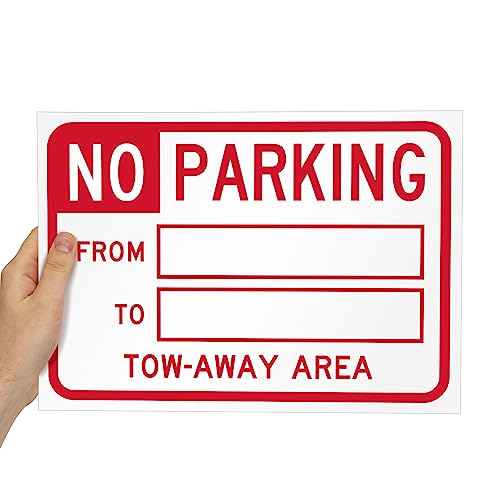
This rip-out sign book provides 20 sheets of 10″ x 14″ plastic signs with write-on, tear-out pages. The signs are noted for durability in both indoor and outdoor environments and are designed to withstand weather and chemical exposure. Digital printing offers legibility, and the tear-out format enables quick, on-site replacements as plans change.
Use these in scenarios where temporary, frequent sign updates are needed due to changing jobsite conditions, permit timelines, or varying event layouts. The compact, portable book is convenient for crews that require on-the-spot messaging and rapid deployment.
SmartSign Rip-Out Sign Book — 20 Sheets (14″ x 10″)

This 14″ x 10″ rip-out book is built for construction zones and other temporary work areas. The plastic construction ensures durability, while digital printing offers strong, fade-resistant messaging. The book format supports easy date-and-time labeling and quick updates as site requirements evolve.
Temporary No Parking Sign (12″ x 18″) — Cardboard Sign

Two cardboard 12″ x 18″ No Parking signs offer a lightweight, cost-effective option for short-term needs. While not as weather-resistant as metal or plastic, they can be suitable for indoor use or short-duration outdoor applications in shielding conditions. The SignOptima design emphasizes straightforward messaging with a practical, economical choice for limited deployments.
Temporary No Parking Sign, 12″ x 18″ Cardboard Sign (Construction Zone)

This cardboard construction-zone sign provides a simple, cost-effective option for marking restricted parking areas within a designated work zone. While more vulnerable to weather, its 12″ x 18″ size ensures visibility for passersby and drivers near the site perimeter. It is suitable for short-term use or temporary events with a controlled environment.
Buying Guide: Key Purchase Considerations
Material and durability matter for visibility and longevity. Cardboard signs are economical for short-term needs but are less weather-resistant than plastic or aluminum options. Plastic, particularly high-quality 10 mil or 14 pt stock with weatherproof coatings, offers better resilience for outdoor use. Aluminum signs resist corrosion and provide long-term service in harsher climates. Size and wording should balance legibility with placement location; larger signs are easier to read at a distance, while smaller signs work well for entry points or narrow corridors.
Sign format—flat panels, tear-out signbooks, or laminated sheets—affects deployment speed and reuse. Tear-out signbooks can be ideal for dynamic sites where dates and times change frequently. For temporary events or short projects, bulk cardboard or plastic signs can cover larger areas quickly, while aluminum signs suit permanent fixtures near construction zones or driveways.
Printing quality and visibility matter. Screen printing tends to offer longer color retention for outdoor sun exposure compared with some digital prints. High-contrast color schemes (black text on white with red accents) improve legibility. UV resistance, weatherproof finishes, and glare reduction from reflective surfaces should be considered depending on placement and typical lighting conditions.
Brand reputation and domestic production may influence reliability and lead times. For large projects, ordering from a single supplier with consistent production quality can reduce mismatch in sign appearance across zones. Consider the ease of updating, storage capacity, and whether signs are reusable or single-use for budgeting and workflow planning.
Lastly, regulatory compliance matters. Ensure sign wording clearly communicates parking restrictions, tow-away implications, and any zone designations in accordance with local rules. Where necessary, add dates, times, or specific location identifiers to avoid ambiguity and reduce the likelihood of disputes or improper enforcement.