The best neti pot sinus rinse bottle depends on the flow style and accessories you want. The NeilMed kit is a straightforward option for volume irrigation, MAOEVER is designed for controlled, squeeze-free flow, and Waterpulse includes two nozzle styles. GuruNanda offers an easy-squeeze design, while JBKhrodric includes saline packets and a bottom-button valve. Use only distilled, sterile, or previously boiled and cooled water for nasal irrigation, and follow the product’s directions.
| Product | Best For | Standout Feature |
|---|---|---|
| NeilMed Sinus Rinse Kit | Traditional saline irrigation | Volume-based rinse system |
| MAOEVER 300 mL Bottle | People who prefer controlled flow | Valve system and anti-backflow design |
| Waterpulse 300 mL Kit | Different nozzle preferences | Two comfort nozzles |
| GuruNanda 240 mL Bottle | Easy-squeeze handling | Comfort tip |
| JBKhrodric 300 mL Bottle | Buyers wanting included salt packets | Bottom-button valve and 40 packets |
NeilMed Sinus Rinse Kit

The NeilMed kit is best for buyers seeking a volume-based saline irrigation system from an established nasal-rinse brand. The listing describes it as a therapeutic saline irrigation and moisturizing system and notes that it can help with nasal allergies, dryness, and irritation from dust, pollen, smoke, and other environmental triggers.
Choose this if you want a rinse kit for regular nasal irrigation and prefer to prepare the solution using the kit’s instructions. It was selected because its stated use closely matches the need for a sinus rinse bottle. The listed package contains 50 rinse packets, though the product title notes that the count may vary.
Consideration: The supplied information does not specify bottle capacity or bottle-cleaning accessories, so check the current package details if those are important to you.
MAOEVER 300 mL Valve-Controlled Bottle

MAOEVER is best for users who want a squeeze-free way to control rinse flow. The 300 mL bottle uses a valve system that the listing says provides a steady flow through air pressure rather than manual squeezing. Its one-way anti-backflow valve is designed to prevent used water from returning to the bottle.
This option was selected for its specific flow-control and hygiene features. The listing identifies the bottle as BPA-free polypropylene and says the package includes 30 salt packets and a sticker thermometer. It is described as suitable for adults and children above age 14.
Consideration: The stated age suitability is above 14, so do not assume this model is intended for younger children. Follow the manufacturer’s directions for preparing and using the rinse.
Waterpulse 300 mL Sinus Rinse Kit
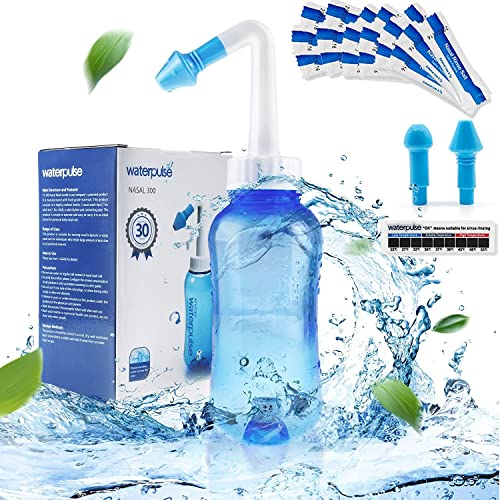
Waterpulse is best for buyers who want a gravity-flow design and a choice of nozzle styles. Its bottom valve button is described as providing a steady stream without squeezing. The kit includes a wide-spray nozzle for adult cleansing and a gentle-mist nozzle intended for children.
The product was selected because it offers two listed nozzle options in one kit and is described as BPA-free. The saline formulation is presented as drug-free, preservative-free, and pH-balanced for rinsing. Those features may appeal to households comparing rinse styles, but the listing does not provide detailed age guidance for the child nozzle.
Consideration: Do not treat the child-oriented nozzle as confirmation that the product is appropriate for every child. Check the product directions and consult a health professional when unsure.
GuruNanda 240 mL Comfort-Tip Bottle

GuruNanda is best for buyers who want a compact, manually squeezed bottle with a comfort tip. Its listed capacity is 240 mL, and its easy-squeeze design is intended to deliver a free-flowing stream. The product is described for rinsing nasal passages affected by sinus pressure, dust, pollen, allergies, and dryness.
This bottle was selected as a simple squeeze-style alternative to valve-controlled models. Choose it if you want to regulate the stream by squeezing and value the comfort-tip design. Its smaller stated capacity may also suit buyers who prefer a lower-volume bottle.
Consideration: The provided product information does not list included salt packets or a special flow-control valve. Confirm what supplies are included before buying.
JBKhrodric 300 mL Bottle With 40 Packets

JBKhrodric is best for buyers who want a bottle and a larger listed supply of salt packets in one purchase. Its 300 mL bottle uses a bottom-button automatic valve: press to release water and press again to stop it. The listing says the rinse is intended to flush mucus and irritants such as pollen from the nasal cavity.
This model was selected for its button-controlled flow and the 40 nasal-wash salt packets specified in the product title. It gives buyers a nontraditional alternative to a squeeze bottle and may be worth comparing with MAOEVER’s valve-controlled design.
Consideration: The provided features do not describe a backflow-prevention valve or material details. Review the instructions and care information before use.
Buying Guide: How To Choose A Sinus Rinse Bottle
Do you prefer squeezing or valve-controlled flow?
Squeeze bottles let users influence the stream by applying pressure. GuruNanda is the squeeze-style choice in this selection. MAOEVER, Waterpulse, and JBKhrodric describe valve or button-based flow instead. The better style depends on which control method feels more manageable; product descriptions alone cannot establish which will feel most comfortable for you.
How much capacity do you need?
Among these selections, GuruNanda lists a 240 mL capacity, while MAOEVER, Waterpulse, and JBKhrodric list 300 mL. The NeilMed kit information provided here does not state a bottle capacity. Compare the stated volume with the amount of solution you intend to use, and follow each product’s preparation instructions.
Are saline packets included?
JBKhrodric lists 40 packets, and MAOEVER lists 30. The NeilMed kit listing specifies 50 rinse packets, with a note that the count may vary. Packet inclusion is not stated in the supplied details for Waterpulse or GuruNanda. Check the package contents and use saline ingredients only as directed.
What water and cleaning practices matter?
Use distilled or sterile water, or water that has been boiled and cooled, for nasal rinsing. Do not use untreated tap water. Prepare the saline solution according to the product directions, and clean and dry the bottle after use as instructed. Replace a bottle if it becomes damaged or cannot be cleaned properly.
Frequently Asked Questions
What is a neti pot sinus rinse bottle used for?
It delivers saline solution through the nasal passages to rinse mucus and irritants. Product listings commonly mention use for dryness, allergies, and environmental irritants; follow the product directions and seek medical advice for persistent or severe symptoms.
Can I use tap water in a sinus rinse bottle?
No. Use distilled or sterile water, or water that has been boiled and cooled. Untreated tap water is not recommended for nasal irrigation.
Is a squeeze bottle better than a valve-controlled bottle?
Neither style is universally better. A squeeze bottle uses manual pressure to influence flow, while a valve-controlled model is designed to release solution through a button or valve mechanism.
Can children use these bottles?
Age guidance varies by product. MAOEVER’s listing says it is for adults and children above 14; Waterpulse lists a child-oriented nozzle but does not provide detailed age guidance in the supplied features. Check the manufacturer’s instructions and ask a pediatric health professional if uncertain.