Choosing the right microscope slides with wells can improve specimen containment, reduce evaporation, and enhance imaging for both students and researchers. This article highlights five reliable options, comparing well depth, diameter, material, and suitability for live samples, prepared specimens, and educational settings. Each product listing includes a direct Amazon link for quick access and a brief feature overview to aid decision-making.
| Product | Brand | Notable Feature |
|---|---|---|
| EISCO Microscope Slides with Single Concavity, 10/PK | EISCO | 75 x 26 mm, 15 µL capacity, 15 mm diameter concavity |
| 5mm Thick Microscope Slide Double Concave, Deep Well | Rubidia | Double concave, deeper well (2-2.6 mm), 20 mm diameter |
| AmScope BS-C12 Microscope Slides Single Depression Concave | AmScope | Single depression, 16 mm concave, 25 x 75 mm size |
| MUHWA Microscope Slide Double Concave, 5mm Thick | MUHWA | Double concave, 1.5 mm depth, 16 mm diameter, 5 mm thick |
| ZEEGOO Microscope Slides with Pre-Cleaned, Ultra-Clear Blank Slides | ZEEGOO | 45° ground edges, includes covers, universal compatibility |
EISCO Microscope Slides with Single Concavity

EISCO’s slides offer a simple concave design that concentrates liquid within a single recessed area. The slides measure 75 x 26 mm with a concavity of 15 mm in diameter and 0.6 mm deep, providing a 15 µL capacity. The glass is high quality, and the pack contains ten slides, making it suitable for routine classroom demonstrations or small-scale experiments where quick setup and reliable material are essential.
5mm Thick Microscope Slide Double Concave, Deep Well
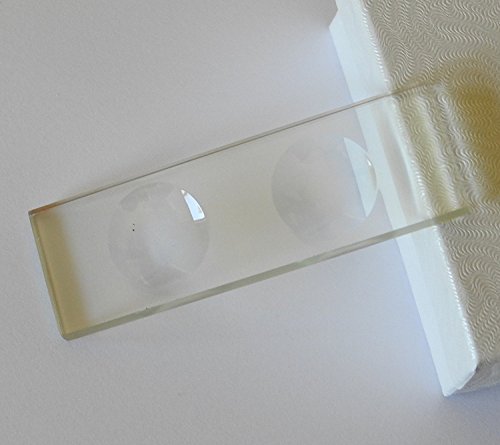
Rubidia’s deep-well slides are designed to hold more liquid and minimize evaporation when observing live aquatic specimens. The double concave design features a well depth of 2-2.6 mm with a 20 mm well diameter, enabling longer observation times for motile organisms and reducing sample distortion due to evaporation. The deeper well and clear glass support stable imaging for STEM or introductory biology activities.
AmScope BS-C12 Microscope Slides Single Depression Concave (Pack of 12)

The AmScope BS-C12 set includes 12 single-depression concave slides. Each slide measures 1″ x 3″ x 0.04″ (25x75x1 mm), with a concave area about 16 mm in diameter and 0.5 mm deep. These slides are well suited for general microscopy, teaching labs, and quick specimen preparations where uniform concavity and reliable glass quality matter for high-clarity imaging.
MUHWA Microscope Slide Double Concave, 5mm Thick

MUHWA’s double concave slides are notably thick at 5 mm, with a deeper well of 1.5 mm and a 16 mm diameter. The extra thickness can provide added stability for certain staining procedures or when handling larger specimens. The combination of a double concave design and robust glass makes these suitable for classroom demonstrations and basic research workflows where sample containment is essential.
ZEEGOO Microscope Slides with Pre-Cleaned Ultra-Clear Blank Slides

ZEEGOO offers a universal set that includes 50 blank slides and 100 coverslips, designed for compatibility with most standard microscopes. The slides are pre-cleaned and crafted from optical-grade glass with ground edges and 45-degree clipped corners to minimize cuts and friction during handling. While primarily blank, this set pairs well with prepared specimens or custom concavity designs, making it versatile for classroom labs and individual study projects.
Buying Guide: Key Purchase Considerations
When selecting microscope slides with wells, consider the following factors to align with your needs:
- Well design and depth: Deep wells help retain liquids and samples, especially for live specimens, while shallow wells can provide quicker imaging for fixed samples. Double concave wells increase evaporation control but may affect cover glass compatibility for some stains.
- Diameter and surface area: A larger well provides more space for specimen spread and liquid retention, but smaller slides can be easier to stack, store, and handle in tight spaces.
- Material and quality: Opt for optical-grade glass with uniform thickness and smooth edges to prevent artifacts in imaging and reduce the risk of cuts during handling. Non-toxic coatings and clean manufacturing reduce contamination risk for biological samples.
- Compatibility: Ensure the slides fit your microscope stage and are compatible with standard coverslips. Some brands offer sets that include coverslips or staining accessories, which can simplify workflows.
- Intended use: For live specimens, prioritize deeper wells and stable glass. For prepared slides and educational kits, consider a balanced mix of concave designs and labeling features that aid classroom use.
- Packaging and quantity: Classroom and supply kits benefit from bulk packs (e.g., 10–12 slides per pack). For occasional use, smaller packs may suffice to control cost and storage.
- Safety and labeling: Some sets include pre-labeled specimens or safety-friendly materials. In educational contexts, clearly labeled slides and disk storage can support NGSS-aligned activities and student organization.
In summary, the right choice depends on whether you prioritize liquid retention for live samples, imaging quality for fixed specimens, or a versatile set for varied teaching and lab tasks. The five products highlighted above provide a representative range of depths, concavities, and materials to support diverse applications in classrooms and labs across the United States.