If you need a reliable carbon monoxide alarm with a long-lasting battery, these models are designed to minimize maintenance while keeping your family safe. The top picks offer sealed 10-year batteries or similarly long-lasting power sources to reduce battery replacements and nuisance alerts. This guide highlights options ideal for renters, homeowners, and property managers who want dependable, low-hassle CO protection. Below you’ll find quick distinctions and a comparison table to help you choose the best long-life CO alarm for your space.
| Product | Best For | Why It Stands Out |
|---|---|---|
| First Alert SMICO110 | Homes with cooking-related nuisance alarms | 10-year sealed battery; Precision Detection reduces false alarms |
| X-Sense XP0H-SN | All-in-one CO and smoke protection | 10-year sealed lithium battery; combo unit |
| X-Sense SC07 | Basic standalone CO/Smoke with decade battery | Sealed 10-year battery; no interconnection needed |
| First Alert SMCO210 | Combo protection with slim profile | 10-year sealed battery; easy 2-in-1 installation |
| X-Sense SC01 | Compact, standalone CO/Smoke detector | 10-year sealed battery; basic but durable |
First Alert SMICO110, 10-Year Battery Combo Alarm

This model combines smoke and carbon monoxide detection in one unit with a sealed 10-year battery. It uses First Alert’s Precision Detection to minimize nuisance alarms from cooking while delivering early warning in a home emergency. The 10-year sealed battery eliminates replacements and low-battery chirps for the life of the alarm. An end-of-life warning signals replacement timing. Best for: homes where reducing nuisance alarms is a priority and long-term maintenance should be minimized. Limitation: interconnection features are not specified, so check compatibility if you want multiple units communicating.
X-Sense SC07 Smoke & CO Detector Combo
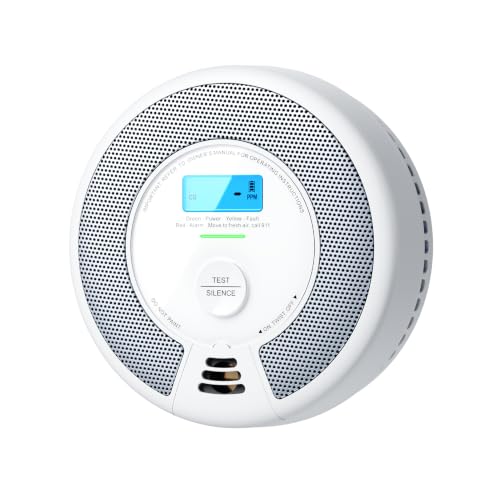
This is a basic standalone smoke and carbon monoxide detector with a built-in sealed lithium battery offering up to ten years of operation. It does not support wireless interconnection, Wi-Fi, or base stations, which makes it simple and maintenance-free. Best for: renters or small apartments needing long-term protection without network features. Caution: lacks interconnected capability, so you may want to add more units for multi-room coverage.
X-Sense XP0H-SN CO & Smoke Alarm
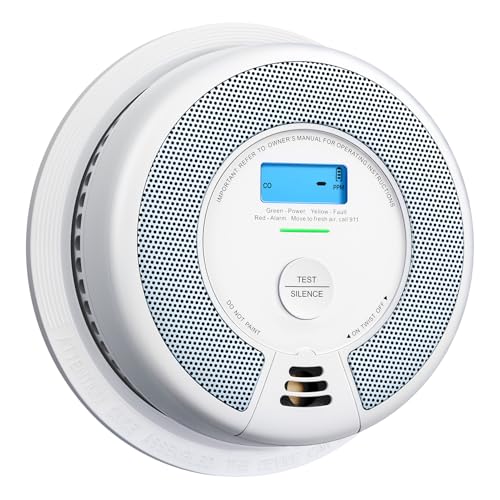
The XP0H-SN is a basic standalone combination detector with a 10-year sealed lithium battery. It provides built-in sensors for both smoke and carbon monoxide and is UL-listed for safety standards. Best for: households needing a simple, long-life detector without Wi-Fi or base stations. Limitation: does not support wireless interconnection, so you won’t get automated alerts across multiple devices unless you pair separate units manually.
Kidde CO Alarm with Digital Display
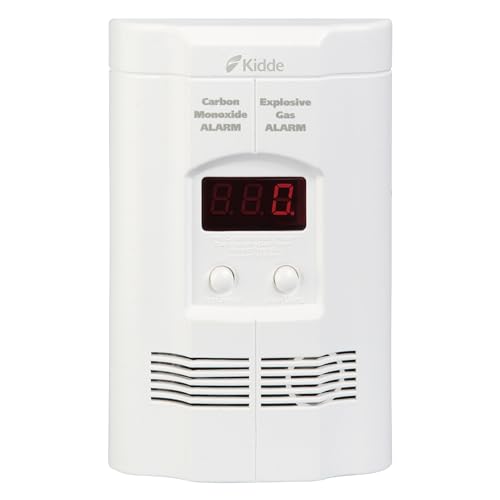
This plug-in CO alarm includes a 9V backup battery and a digital display showing CO levels or GAS when explosive gas is present. It offers a reliable power source during outages and straightforward operation. Best for: spaces where wall outlets are abundant and a clear CO readout helps monitor air quality. Caution: not a sealed 10-year unit; battery changes may be required after the backup period or power outages.
First Alert SMCO210, 10-Year Sealed Battery Combo

This 2-in-1 model provides smoke and carbon monoxide protection within a slim profile and uses a 10-year sealed battery. It follows First Alert’s Precision Detection to minimize cooking-related false alarms while ensuring early warning for true hazards. Best for: spaces where a compact, long-life alarm is desirable. Limitation: check if you need wireless interconnection; this model’s data does not specify interconnection capability.
X-Sense SC01 Smoke & CO Detector

The SC01 is a basic standalone unit with a 10-year sealed battery. It provides 2-in-1 protection against both smoke and carbon monoxide in a compact form factor. Best for: smaller rooms or budget-conscious buyers who want a long-life detector without network features. Caution: standalone design means you won’t get automatic cross-room interconnections without adding more units.
Buying Guide
- Power source: Prioritize sealed 10-year batteries to minimize maintenance and avoid mid-night battery changes.
- Interconnection: Decide if your home needs wireless interconnection between devices. If yes, verify models support wireless networks or base stations.
- Detection type: Combination detectors with both photoelectric smoke sensors and electrochemical CO sensors tend to offer balanced performance and fewer nuisance alarms.
- Placement guidance: Install detectors on each level, outside sleeping areas, and near kitchens to balance early warning with reduced false alarms.
- Maintenance: Even long-life units require occasional cleaning; follow manufacturer guidelines to keep sensors accurate.
- Battery backup: For areas prone to power outages, ensure the unit has a reliable backup power source or sealed battery to maintain protection.
FAQ
- Q: Do long-life carbon monoxide alarms require maintenance?
A: Yes, they should be tested monthly and cleaned periodically to maintain sensor accuracy per the manufacturer’s instructions. - Q: Are sealed 10-year batteries truly maintenance-free?
A: They reduce the need for battery changes but still require periodic testing and eventual replacement at end-of-life. - Q: Can I interconnect these alarms?
A: Some models support interconnection, while others are standalone. Check the product page for interconnect features before purchasing. - Q: Is a CO detector the same as a smoke detector?
A: No. CO detectors monitor carbon monoxide levels, while smoke detectors detect smoke particles. Many models combine both functions in one unit. - Q: Where should I place a CO alarm?
A: Place CO alarms outside sleeping areas and on each level of the home, especially near fuel-burning appliances and garages. - Q: Do these alarms require professional installation?
A: Most can be installed by homeowners in minutes using standard outlets or wall mounting, but always follow the user manual for proper placement.