When you need secure, vibration-resistant connections with two-direction threading, double-end threaded studs are a practical choice. This guide highlights top options for left-hand and right-hand threads, detailing ideal applications and key considerations. These selections suit builders, maintenance pros, DIYers, and hobbyists seeking reliable hardware for furniture, machinery, and metalwork. Each product profile notes who benefits most and why it stands out, plus a concise buying guide to help you compare at a glance.
| Product | Thread Type | Length | Best For |
|---|---|---|---|
| PATIKIL M6x100mm Double End | Left & Right Hand | 100 mm | General furniture hardware and light industrial use |
| PATIKIL M6x80mm Double End | Left & Right Hand | 80 mm | Compact assemblies and tight spaces |
| PATIKIL M6x90mm Double End | Left & Right Hand | 90 mm | Medium-length connections with balanced leverage |
| PATIKIL M12x90mm Double End | Left & Right Hand | 90 mm | Heavy-duty hardware and larger projects |
| TopHomer M6*70 Stainless | Left & Right Hand | 70 mm | Affordable option for hobby projects and quick builds |
PATIKIL M6x100mm Double End Threaded Stud Screw

This 100 mm double-ended stud uses 304 stainless steel with M6 threads at both ends in opposite directions. It features left- and right-hand threaded sections of 40 mm each and a hex width of 8 mm. The design allows tightening in both directions, enhancing self-locking performance in vibration-prone assemblies. Best for: general furniture hardware and light industrial fixtures where secure, anti-loosening connections are essential. Limitation: not ideal for heavy loads beyond standard hardware tasks due to its 100 mm total length and 8 mm hex size. Useful in power, ships, automobiles, and construction contexts where corrosion resistance matters.
PATIKIL M6x80mm Double End Threaded Stud Screw
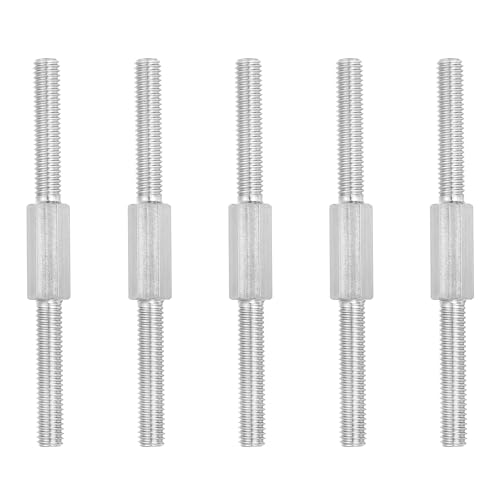
This 80 mm variant provides balanced length for tighter spaces, with the same 304 stainless steel construction and dual-thread design as the 100 mm model. It offers 30 mm left- and right-hand thread lengths and a hex width of 8 mm. Best for: small to medium assemblies, decorative hardware, or fixtures where space is constrained. Caution: shorter length may limit its use in deeper couplings or thicker components.
PATIKIL M6x90mm Double End Threaded Stud Screw

With a total length of 90 mm and 35 mm threaded sections on each end, this option sits between the 80 mm and 100 mm variants. It delivers ample grip for medium-duty connections and keeps a compact profile for tighter installations. Best for: mid-range furniture and equipment assemblies where secure, symmetrical locking is important. Limitation: still centered on 8 mm hex heads, so compatibility should be checked with compatible nuts and holes.
PATIKIL M12x90mm Double End Threaded Stud Screw

This larger 12 mm thread diameter variant offers more robust connections for heavier-duty hardware. With 90 mm total length and 35 mm left and right-hand thread sections, it suits substantial fixtures and machine-to-machine assemblies. Best for: heavy-duty furniture, machinery couplings, and industrial projects where higher shear strength is needed. Caution: heavier and bulkier, so check space and nut compatibility prior to purchase.
TopHomer 4pcs M6*70 Stainless Steel Double End Studs

This set offers 70 mm length with M6 threads and a 304 stainless steel body. The hex head width is 8 mm, and the design emphasizes self-locking through opposing thread directions, improving stability in vibration-prone assemblies. Best for: budget-conscious projects, hobby builds, and quick installations where standard M6 hardware is sufficient. Limitation: shorter length may not fit deeper components or thicker panels.
Buying Guide
What to consider when choosing double-end threaded studs
- Length and diameter: Match total length to your assembly depth and the material thickness. Larger diameters like M12 offer greater strength, but require compatible nuts and holes.
- Thread direction: Positive and negative threading provide self-locking benefits. Ensure the opposite-thread ends align with your assembly’s needs.
- Material and corrosion resistance: Stainless steel, especially 304, resists rust in humid or outdoor environments. For highly corrosive settings, consider stronger alloys.
- Hex size and availability: Check that the compatible wrench size is available in your toolkit and that nuts/bolts fit the stud’s thread pitch.
- Intended load: Choose a length and diameter appropriate for the expected load and vibration. Longer or thicker studs are better for heavy-duty tasks.
How to compare options quickly
- For compact spaces, prefer shorter lengths like 70–90 mm without sacrificing necessary grip.
- If vibration is a concern, prioritize perpendicular locking and precise threading quality as seen in the listed products.
- In furniture applications, lighter-duty variants are often sufficient, while machinery or rail-related tasks benefit from heavier diameters.
Installation tips
- Clean threads before installation to reduce cross-threading and ensure full engagement.
- Use the correct nut size and tighten evenly to avoid warping the connected parts.
- Avoid over-tightening to prevent thread stripping, especially with stainless steel under high torque.
Maintenance considerations
- Inspect for sign of wear, corrosion, or loosening over time in high-vibration environments.
- Apply anti-seize compound sparingly if disassembly is expected, to prevent galling on stainless steel.
- Store in a dry environment to maximize longevity and prevent rust.
Frequently asked questions
- What is the main advantage of double-end studs? They provide secure, symmetrical threading on both ends, which helps resist loosening in vibrating assemblies.
- What sizes are commonly available? Sizes range from M4 to M12, with varying total lengths to fit different depths.
- Are these suitable for outdoor use? Yes, stainless steel variants offer good corrosion resistance, but check exposure and load requirements.
- How do I choose between left- and right-hand threads? If your assembly experiences direction-specific loads or needs self-locking action, both directions can help prevent loosening; ensure compatibility with nuts and receiving holes.
- Can I cut these studs to a shorter length? In most cases, yes, but cutting may affect thread engagement; plan your cut carefully and re-thread if necessary.
- Do these come in multi-packs? Many sets are available in packs to cover multiple fasteners for a project, which can reduce costs and ensure consistency.
Summary for quick decision making
The PATIKIL and TopHomer options provide a range of lengths and diameters, with stainless steel construction and dual-thread design for reliable self-locking. For compact projects, the 70–80 mm TopHomer and PATIKIL 80 mm variants are practical. For mid-size assemblies, the PATIKIL 90 mm and 100 mm variants offer balanced reach. For heavier-duty tasks, the 12 mm PATIKIL variant delivers extra strength. Consider space, load, and compatibility with existing hardware when selecting your set.
These selections deliver clear, objective options for users seeking dependable left- and right-hand threaded rod adapters. They are suitable for furniture, machinery, and general hardware projects where secure locking and corrosion resistance are priorities.