Answering the question “which ear plugs deliver the highest noise reduction?” these five options offer strong noise-blocking performance for sleepless nights, loud events, or busy environments. They’re suited for different buyers: insomniacs seeking deep sleep, travelers needing quiet cabins, concert-goers protecting hearing, and professionals working in noisy spaces. Below is a quick, objective comparison to help you choose the right pair based on NR ratings, comfort, and intended use. A concise buying table is provided to summarize key details.
| Product | Brand | NRR / SNR (approx.) | Best For |
|---|---|---|---|
| Mack’s Ultra Soft Foam Ear Plugs (50 Pair) | Mack’s | 33 dB | Deep sleep, snoring, travel |
| Quality Foam Earplugs 200 Pair | Quality Plugs by Rips | 32 dB | Work, travel, sleep |
| LYSIAN Ultra Soft Foam Earplugs | LYSIAN | 38 dB | Maximum sleep and focus |
| Reure High Fidelity Concert Ear Plugs | Reure | 23 dB | Concerts, studio, travel |
| Evisoul 55dB Sleeping Ear Plugs | Evisoul | 55 dB (noise reduction) | Extreme quiet for sleeping |
Mack’s Ultra Soft Foam Ear Plugs (50 Pair) – 33 dB

Best for: Sleepers and snorers. These plugs use Comfy Cush foam for low-pressure, long-wear comfort and an NRR of 33 dB. They are a popular choice for sleeping, studying, and travel. The product is noted as a top brand for protecting hearing during nighttime noise.
Why selected: High NRR combined with soft foam reduces perceived pressure, helping users tolerate longer wear periods. The wide availability and proven track record support reliable daily use.
Limitations: Foam plugs can be less suitable for side sleepers with very sensitive ears if not inserted correctly. Ensure proper fit for optimal noise reduction.
Quality Foam Earplugs 200 Pair – 32dB

Best for: Large households, workplaces, or long-term use where low cost per pair matters. Noted for a high NRR of 32 dB, making them well-suited for loud environments like construction or shooting ranges.
Why selected: A high-pair-count offering makes these ideal for bulk purchase, ensuring consistent noise protection across multiple users or shifts.
Limitation: Foam materials may lose shape with repeated washing or long-term storage. Proper storage helps maintain fit and performance.
LYSIAN Ultra Soft Foam Earplugs – 38dB

Best for: Sleepers and light-sensitive individuals needing strong noise reduction with comfortable fit. These foam plugs advertise up to 38 dB SNR and 31 dB NRR with slow expansion for a secure seal.
Why selected: A higher noise-reduction target helps when sleeping near disruptive environments. The foam is designed to be skin-friendly and easy to insert and wear long enough for overnight use.
Limitation: As with other foam options, achieving an optimal seal requires correct insertion and may vary by ear shape. Filtration is not perfect for all frequencies.
Reure High Fidelity Concert Ear Plugs – 23dB
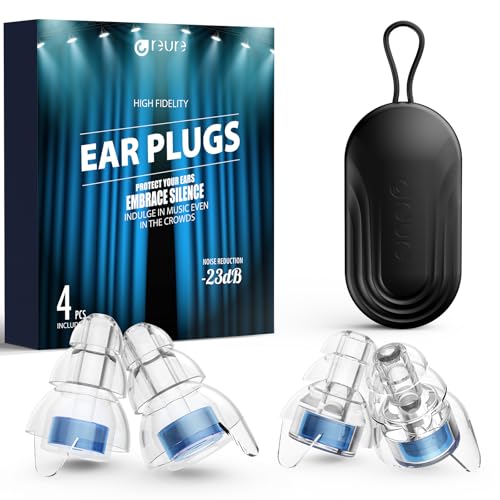
Best for: Musicians and festival-goers who want to preserve sound quality while reducing overall volume. The silicone design aims to remain comfortable over long use and is washable for reuse.
Why selected: High-fidelity filters reduce overall loudness without muffling instruments or voices, which is beneficial for frequent concert use. Reusable silicone reduces waste compared to disposable foam.
Limitation: Not as high an NRR as dedicated sleep plugs; the effect is more about balanced attenuation and comfort at live events.
Buying Guide: Key Considerations For High-Noise Ear Plugs
- Noise Reduction Rating (NRR/SNR): Higher numbers typically indicate better overall attenuation. Consider your environment’s loudness and the activities you’ll engage in.
- Material: Foam tends to be inexpensive and comfortable for many, while silicone is reusable and easier to clean but may require a better seal for some users.
- Fit And Comfort: Look for slow-release foam for reduced pressure. If you sleep on your side, a plush or low-profile design can be crucial.
- Reuse And Hygiene: Reusable options save money over time but require cleaning. Disposable options offer convenience in one-use scenarios.
- Durability And Case: A travel-friendly case helps keep plugs clean and protected while on the move.
- Intended Use: Decide if you need sleeping protection, concert listening, or worksite attenuation. Some plugs prioritize fidelity, others maximum attenuation.
Frequently Asked Questions
- What is the difference between NR and SNR in earplugs?
– NR (Noise Reduction) and SNR (Single Number Rating) both measure attenuation; SNR is often the European standard and can differ slightly from US NR values for the same product. Use the higher number as a general guide for expected quietness. - Are higher dB ratings always better?
– Higher ratings indicate stronger attenuation but can affect sound perception and comfort. Choose a rating that matches your typical noise environment and your tolerance for blocked sound. - Can foam ear plugs be reused?
– Some foam plugs are designed for single use; others are reusable if they maintain their shape and cleanliness. Follow the manufacturer’s guidance. - Do silicone ear plugs offer the same protection as foam?
– Silicone can provide excellent reusability and hygiene, but some users find foam offers a more secure seal for extended wear. It depends on ear shape and usage. - How important is a proper fit?
– A poor fit reduces attenuation. Take time to insert correctly and select a size or style that matches your ear canal. Most sets include multiple tips or sizes for this reason. - Are there ear plugs suitable for side sleepers?
– Yes. Look for low-profile foam or silicone designs that minimize ear pressure and stay in place during movement.