The best fishing rod waist holder depends on how you fish: choose a quick-draw hip holster for moving along shore or wading, or a padded fighting belt for managing a powerful fish from a boat. The FOWSRHRG is best for quick access, the Ambie is a versatile option for anglers using a standard belt, and the ASOCEA and SANLIKE belts are better suited to stand-up fish fighting. The TIHOOD adds an adjustable padded belt with a stated waist range.
| Product | Best for | Key consideration |
|---|---|---|
| FOWSRHRG Slide-in Holster | Quick rod access | Designed to hang from clothing |
| Ambie Hip Holster | Freshwater anglers using a 1.5-inch belt | Check grip and reel-style limits |
| ASOCEA Fighting Waist Belt | Boat fishing and fish fighting | 2.5-inch inner diameter |
| TIHOOD Pole Holder | Adjustable waist fit and padding | Rod diameter must be under 1.4 inches |
| SANLIKE Aluminum Fighting Belt | Stand-up fighting with varied rod butt styles | Rod head needs a compatible fit |
FOWSRHRG Slide-In Fishing Rod Hip Holster
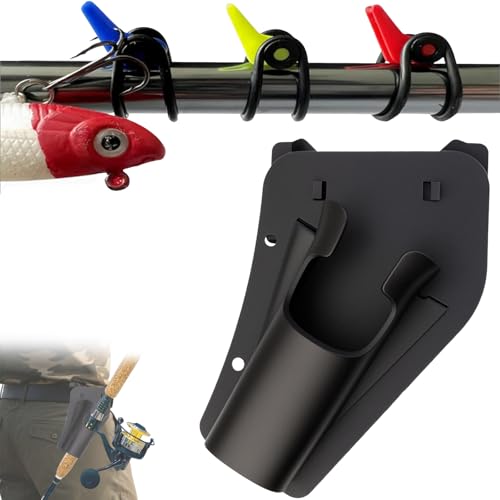
Best for: Anglers who move between casting spots and want their rod close at hand. The listed precision slot design is intended to let the user draw the rod quickly from storage into casting position.
This waist-worn holster can hang from wading pants, shorts, or jeans, so it may suit shore and wading trips where a belt-mounted fighting harness is unnecessary. It also includes three fishing hook holders, according to the product name.
Limitation: The supplied product details do not state a rod-diameter limit or a specific waist adjustment range. Check fit and attachment security before relying on it during active movement.
Ambie Reversible Fishing Rod Hip Holster

Best for: Freshwater anglers who want a compact holster that can switch between the left and right hip. The listed design works with spinning, baitcaster, spincast, and centerpin reels and uses standard 1.5-inch belts with included clips.
Choose this if you want to keep both hands available for tasks such as tying knots, changing bait, or helping a child. The product details list a 3.2-ounce weight and use cases including bank, dock, bridge, wading, and paddleboard fishing.
Limitation: It excludes pistol-grip rods and is described for lightweight rods. The stated grip guidance is 3 inches or longer and up to 1 3/8 inches, so check your rod before choosing it.
ASOCEA Offshore Fighting Waist Belt

Best for: Boat anglers who need support while standing and fighting a fish. This belt has a 2.5-inch inner diameter, a vertically rotating rod holder, and a gimbal with a stainless-steel insert pin that locks the rod butt in place.
The ABS waist section is described as impact-resistant and lightweight, while the thickened sponge pad is designed to distribute pressure against the body. These features make it a better choice for fish fighting than a simple slide-in holster.
Limitation: Its large, locked-in rod-holder format is intended for fighting fish, not for quick rod changes while walking between shore spots. Confirm that your rod butt fits the holder.
TIHOOD Adjustable Padded Pole Holder

Best for: Buyers who want a waist belt with an explicit adjustment range and padded backing. The adjustable buckle fits waists from 27.5 to 44 inches, and the EVA foam is approximately 0.4 inch thick to cushion the abdomen.
The holder measures 10.6 by 5.1 inches and is made from ABS plastic. Its stated holder diameter is about 1.4 inches, which gives buyers a concrete measurement to compare with a rod.
Limitation: The rod diameter must be smaller than 1.4 inches. Measure the section that sits in the holder before purchase.
SANLIKE Adjustable Aluminum Fighting Belt

Best for: Anglers seeking a stand-up fighting belt with an aluminum rod holder and an adjustable waist strap. The listed belt extends to about 55.1 inches, and the holder opening is approximately 2.16 inches in diameter.
The soft EVA pad is intended to cushion the abdomen. The product also lists a stainless-steel insert pin for rod heads with a groove and a rotary slot for round rod heads, giving it two stated ways to accommodate rod styles.
Limitation: Rod-head compatibility depends on the shape and dimensions of the butt. Check the fit before use, especially if your rod does not have a grooved head or a round profile.
Buying Guide: How To Choose A Fishing Rod Waist Holder
Do you need a quick-draw holster or a fighting belt?
Choose a hip holster if your priority is carrying a rod while walking, wading, or handling other gear. A fighting belt is better for standing against a fish because its padded backing and rod-locking or gimbal features are designed to transfer pressure and secure the rod butt. These are different uses, so match the style to your fishing routine.
Will your rod fit the holder?
Compare the rod section or butt that enters the holder with the product’s stated opening. TIHOOD specifies a diameter under 1.4 inches; the ASOCEA and SANLIKE models list 2.5-inch and approximately 2.16-inch openings, respectively. For holsters without a stated measurement, verify fit with the seller’s current product information.
How should you compare belt fit and padding?
Look for an adjustment range when waist fit is important. TIHOOD lists 27.5 to 44 inches, while SANLIKE lists a maximum extension of about 55.1 inches. Padding matters most when a belt is meant to brace the body during a fight; for mobile rod carrying, weight, attachment method, and easy access may matter more.
Frequently Asked Questions
Can a fishing rod waist holder keep both hands free?
Yes. A holster or belt holder can support the rod while you perform tasks such as changing bait or tying knots. The degree of security depends on the holder design and whether the rod fits properly.
Is a hip holster the same as a fishing fighting belt?
No. A hip holster carries a rod for access and portability. A fighting belt adds a more supportive waist section and a holder intended to secure the rod while managing a fish.
Can I use any belt with a fishing rod holster?
Not always. The Ambie model specifies a standard 1.5-inch belt. Other products may hang from clothing or include their own adjustable belt, so check the attachment details for the model you choose.
How do I know whether a rod will fit?
Measure the rod section or butt that enters the holder and compare it with the listed inner diameter. Also check whether the holder uses a pin or slot that requires a particular rod-butt shape.