Answering the need for safer, more private windows with less glare and heat, these film products help reduce breakage risk, UV exposure, and fading. This guide focuses on options ideal for homes and small offices where daytime privacy, energy savings, and easy installation matter. Best for renters, homeowners, and DIY remodelers seeking a non-permanent solution that can still deter break-ins and glare. The summary table below compares five top options by privacy level, UV protection, and heat control.
| Product | Privacy | UV Block | Heat Control | Install Type |
|---|---|---|---|---|
| DOWELL Window Privacy Film | One-way mirror effect (daytime) | Up to 85% | Yes, reflective | Static cling |
| KESPEN Window Privacy Film | Daytime privacy; night requires curtains | Up to 90% | Reduces heat | Non-adhesive |
| Coavas One Way Privacy Film | Daylight mirror; night needs curtains | Up to 92% | Blocks heat | No glue |
| Donox Leaf Rainbow Window Film | Moderate privacy with decorative look | High UV blocking | Helps block heat | Static cling |
| SUMAGITIN Clear Security Film | Transparent with added safety | Blocks UV | Insulates | Self-adhesive |
DOWELL Window Privacy Film

The DOWELL film is a silver, static-cling option designed to reduce UV and IR exposure while maintaining outward visibility. It provides a daytime privacy mirror effect, making it best for rooms that receive strong sunlight. Nighttime privacy can decline, so pairing with curtains after dark is recommended. This film aims to lower cooling costs by reflecting solar heat and protecting interior furnishings from fading.
Best for: homeowners who want a non-adhesive solution that improves comfort on sunny facades and works well with living rooms or home offices. Choose this if you prioritize UV protection and glare reduction with a simple, reusable installation. A potential limitation is reduced privacy after dark without window coverings.
KESPEN Window Privacy Film
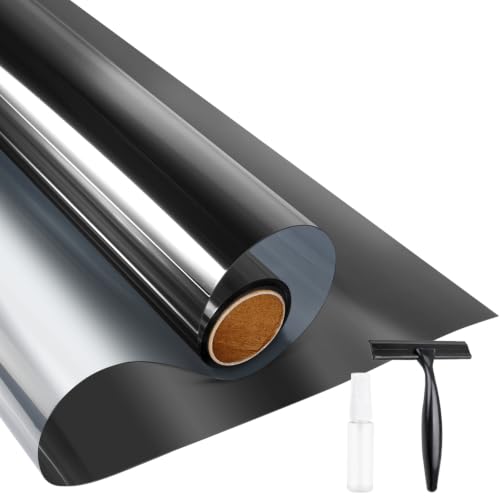
KESPEN offers a daytime privacy solution with a silver-black look. It provides strong infrared and UV blocking, helping to protect interiors from fading. The film is non-adhesive, designed to reflect heat away and reduce glare. However, at night the reflective effect fades if interior lighting surpasses exterior light, so curtains are advised after dark.
Best for: offices or street-facing rooms where daytime privacy and UV protection matter most. Better for spaces that can accommodate curtains at night or when you can adjust lighting. Limitation: nighttime visibility can be reduced if lights inside are bright.
Coavas One Way Privacy Window Film

Coavas uses a non-adhesive, static-cling design that turns windows into a one-way mirror during daylight, while preserving exterior views of nature. It blocks 92% of UV rays and 95% of sun heat, helping to guard interiors and trim energy costs. It is reusable and renter-friendly, but full privacy generally requires nighttime curtains due to light differences.
Best for: renters and homeowners who want an easy, glue-free install and strong UV protection. Choose this if you prioritize reusability and minimal residue. Caution: night-time privacy depends on interior lighting, so plan for additional window coverings after dark.
Donox Leaf Rainbow Window Film

Donox offers a decorative privacy option with a leaf rainbow design. It blocks UV and reduces harsh sunlight while allowing natural light to filter through. This film is easy to install with a no-glue method, relying on electrostatic adsorption. It provides aesthetic value alongside privacy and sun protection.
Best for: spaces where decor matters and you want a distinctive look without permanent changes. Caution: decorative patterns mean privacy can vary with lighting and viewing angle; test visibility before applying to large panes.
Buying Guide
What level of privacy do you need?
Daytime privacy varies by film. One-way mirror styles offer strong outward visibility while reflecting interiors in daylight. For true night privacy, plan for curtains or blinds to ensure comfort after sunset.
How much UV protection is required?
Most options block at least 82–96% of UV radiation, helping protect skin and furnishings from fading. If furniture or artwork sits near windows, higher UV protection is advantageous.
Do you prefer adhesive or non-adhesive films?
Non-adhesive (static-cling) films are renter-friendly and leave no residue, but may require reapplication after removal. Adhesive films provide a more permanent bond and can offer stronger impact resistance, depending on the product.
Energy savings and heat control
Films that reflect or absorb solar heat can reduce cooling loads in summer and sometimes retain warmth in winter. Look for high heat-blocking percentages and low Emissivity numbers for best performance.
Installation considerations
Non-adhesive films are easier to reposition. All films benefit from a clean, dry glass surface. For textured or uneven panes, use a film designed for rough surfaces or consider professional installation.
Safety and security implications
Some films add a layer of safety by holding glass together if shattered. These films are typically clear or lightly tinted and can augment home security without altering window appearance.
Best practices for measuring and applying
- Measure each pane precisely, adding a small tolerance for trimming.
- Cut the film slightly larger than the pane and trim after application for a snug fit.
- Apply with soapy water to avoid air bubbles; squeegee from center outward.
- Allow time for the film to cure and for any adhesion to set before cleaning.
Frequently asked questions
- What is the difference between adhesive and non-adhesive window films? Adhesive films require glue to bond permanently, while non-adhesive films use static cling and can be repositioned or removed.
- Can these films block all sunlight? No, most films reduce glare and UV while still allowing natural light; some daytime visibility can be reduced at night without curtains.
- Are these films easy to remove? Non-adhesive films are generally easier to remove and reuse; adhesive films may require careful peeling and cleaning of residue.
- Will window films reduce energy costs? They can help by reducing heat transfer, especially in hot climates, which may lower cooling needs.
- Do films affect window warranty? Some films are designed to be renter-friendly and non-damaging, but it’s best to check your window warranty and landlord policies before application.