When enduring reliability matters, an extended-life carbon monoxide detector is essential. This article highlights five top options with long-lasting power or long-life sensors, helping you pick the best match for households, offices, and travel. Best for families needing steady, low-maintenance protection are models with decade-long batteries or sealed power sources. Best for portable use are compact units with long battery life. Below, find clear, comparison-friendly details to guide your decision.
Summary table of selected products
| Product | Best For | Key Benefit | Limitations |
|---|---|---|---|
| X-Sense SC07 Smoke & CO Combo | Homes needing simple, non-networked protection | 10-year sealed battery, fast sensing | No wireless interconnection |
| Klein Tools ET110 CO Meter | Professional or on-the-job safety | Accurate CO measurement, portable with STEL alarm | Dedicated meter, not a home alarm |
| Kidde Carbon Monoxide Detector (AA Battery) | Budget-friendly, portable backup | Battery-powered operation during outages | No 10-year sealed battery |
| SITERWELL Plug-in CO Detector (10-Year Battery) | Home or travel use with fixed outlet | 10-year battery, plug-in convenience | In-wall plug dependence |
| BW Technologies MCXL-XWHM-Y-NA 4-Gas Detector | Industrial or field safety | CO plus other gases with one device | More complex; not a single-residence alarm |
X-Sense Smoke Detector Carbon Monoxide Detector Combo, SC07
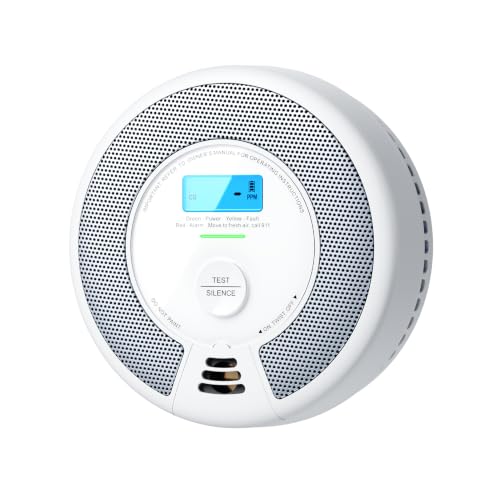
The SC07 is a basic standalone unit designed for simplicity and reliability. Best for buyers who want a 10-year sealed power source with minimal maintenance. The device features a photoelectric smoke sensor and an electrochemical CO sensor for faster response to slow-smoldering fires and carbon monoxide hazards. It does not support wireless interconnection or base station connections, so choose this if a straightforward, long-life unit is your priority.
Who it’s best for: households needing a low-maintenance, decadal power life without smart features. Why selected: the sealed 10-year battery reduces upkeep and eliminates frequent chirps. Caution: no wireless interconnectivity means limited network-style hazard notification.
Klein Tools ET110 CO Meter

The Klein Tools ET110 is a dedicated carbon monoxide detector designed for precise measurement in professional or safety-focused settings. It includes a built-in short-term exposure limit alarm and a dual alarm system with low and high CO thresholds. This is a portable tool ideal for job sites, vehicles, or temporary safety checks where exact readings matter more than home-wide notification. Best for: professionals needing accurate CO levels on the go. Limitation: not a residential alarm device with fixed placement.
Kidde Carbon Monoxide Detector (AA Battery Powered)
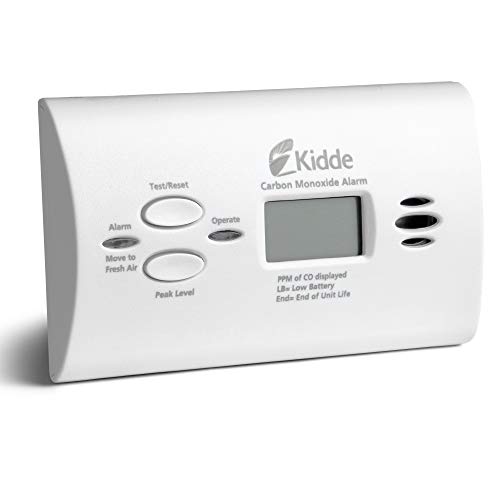
This compact, battery-powered CO detector operates on two AA batteries and continues to function during power outages. It features an electrochemical sensor for CO detection and is designed for easy wall mounting or tabletop placement. Best for: renters or travelers who need portable protection or a simple backup device. Caution: battery replacements are required over time, unlike sealed 10-year models.
SITERWELL Plug-in CO Detector (10-Year Battery)

The SITERWELL CO detector plugs into a 120V outlet and packs a 10-year battery for reliable operation when power is interrupted. It uses an electrochemical sensor for accurate CO detection and provides audible alerts at critical levels. Best for: homes or travel spaces that require a long-life, plug-in solution. Limitation: dependent on a working outlet; not a standalone battery device.
BW Technologies MCXL-XWHM-Y-NA GasAlertMicroClip XL 4-Gas Detector

Although primarily a four-gas detector for industrial or field use, this device includes CO detection among other gases. Best for: professionals requiring comprehensive gas monitoring in variable environments. It is more complex than consumer home detectors, and not intended as a single-home alarm. Caution: higher cost and operational complexity compared to home models.
Buying Guide
What features matter most in an extended-life CO detector?
- Power longevity: Look for sealed 10-year batteries or long-life sensors to minimize replacements and maintenance.
- Sensor type: Electrochemical CO sensors offer accurate detection; synergistic combos with photoelectric smoke sensors reduce nuisance alarms.
- Alarm behavior: Consider 85 dB or higher audible alarms, and whether the device supports interconnection or is standalone.
- Portability vs. fixed placement: Determine if you need a wall-mounted unit, a plug-in model, or a handheld CO meter for inspections.
- Power outages: Battery-backed operation or sealed power sources ensure continued protection during outages.
How to choose between types?
- Home and apartment: Favor 10-year sealed-battery or plug-in detectors with CO and smoke sensing for reduce cooking-related false alarms and long maintenance intervals.
- Travel or rental safety backups: AA battery-powered detectors provide portability and simple replacement, though require more maintenance.
- Industrial or professional use: A multi-gas detector with CO sensing supports broader safety needs in work environments.
Practical considerations
- Placement: Install detectors on every level of the home, away from cooking areas and vents to avoid false alarms.
- Maintenance: Even long-life units may need periodic testing and sensor checks; verify the manufacturer’s testing interval.
- Interconnection: For larger homes or multi-room setups, consider interconnected detectors for simultaneous alerts.
FAQ
- Q: Do these detectors work during a power outage?
- Q: Is a 10-year battery better than a replaceable battery?
- Q: Should I buy a multi-gas detector for home use?
- Q: Can I interconnect detectors across rooms?
- Q: What sensor type is most reliable for CO?
- Q: How do I know when to replace a detector?
A: Yes, models with sealed batteries or backup power continue to operate during outages.
A: For low-maintenance homes, a 10-year sealed battery reduces service calls and ladder climbs.
A: Multi-gas detectors are better for professional or industrial environments; for homes, CO-focused units are usually sufficient.
A: Interconnected units provide synchronized alerts, which can improve safety in larger spaces.
A: Electrochemical CO sensors are widely recognized for accuracy and stability in household detectors.
A: Follow the manufacturer’s guidance; typically, detectors have a lifespan of 5 to 10 years depending on the model and usage.