Dark leaves on a crape myrtle can be normal, but leaves that turn unusually dark, sticky, spotted, or black may indicate stress, sooty mold, or another problem. First inspect the plant and identify the cause; fertilizer is not a universal treatment. The products below include two flowering-tree fertilizers and three live crape myrtles for gardeners choosing a plant. The fertilizers may support growth when feeding is appropriate, but none is specifically described as a treatment for dark or black leaves.
| Product | Best suited for | Relevance to dark leaves |
|---|---|---|
| TPS Nutrients Liquid Crape Myrtle Fertilizer | Gardeners seeking liquid plant food | Supports growth and flowering; does not diagnose leaf discoloration |
| Nelson NutriStar 10-15-9 | In-ground or container flowering trees | Provides listed nutrients; not a leaf-disease treatment |
| Tonto Crape Myrtle | Small landscapes and hedges | A plant option, not a remedy for an existing tree |
| Dynamite Crape Myrtle | Gardeners seeking a red-flowering starter plant | A plant option; care conditions still matter |
| Proven Winners Center Stage Coral | Gardeners choosing a coral-flowering shrub | A plant option, not a treatment |
TPS Nutrients Liquid Crape Myrtle Fertilizer
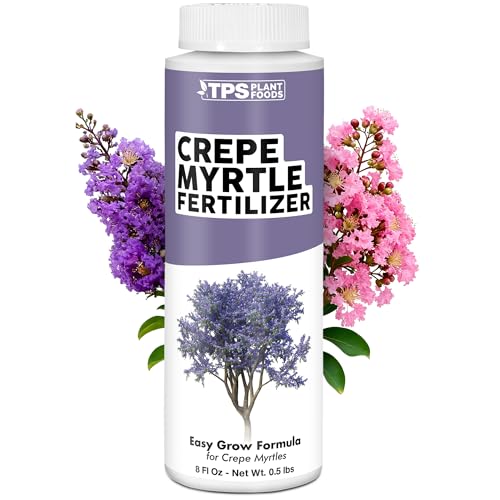
This 8-ounce liquid plant food is formulated for crape myrtles and is described as supporting colorful blooms, healthy growth, and root development. It is best for gardeners who have identified a reason to feed an outdoor crape myrtle and want a product marketed specifically for this tree.
Choose this if your goal is general growth and flowering support, not direct treatment of dark leaves. The listed features do not identify a nutrient analysis, application schedule, or a remedy for blackened foliage. Follow the product label, and investigate pests, disease, watering, and environmental stress before adding fertilizer.
Nelson NutriStar Flowering Tree Fertilizer

This granular fertilizer lists an NPK analysis of 10-15-9 and includes sulfur, copper, iron, manganese, and zinc. Its listed uses include crape myrtles and other flowering trees, both in the ground and in containers. It is best for a gardener seeking a multi-purpose flowering-tree fertilizer with the nutrient composition stated.
Choose this over a crape-myrtle-only product if you also feed other listed flowering trees. The product is intended to support flowering, not to cure dark leaves. Avoid applying fertilizer simply because foliage looks dark; excess or unnecessary feeding can be unhelpful. Use label directions to determine the amount and timing.
Tonto Crape Myrtle For Compact Landscapes

Tonto is described as a fast-growing dwarf variety that matures about 8 to 10 feet tall and wide. The listing notes dark green foliage and dark watermelon-red summer-to-fall blooms. It is best for buyers planning a compact landscape plant or privacy hedge and is selected because its foliage and flower color are clearly described.
This live plant is not a solution for discoloration on an existing crape myrtle. The listed mature size still requires room, and rapid growth means it may need space and routine care. Choose it for its stated size and blooms, not as a way to correct dark or damaged leaves.
Dynamite Red Crape Myrtle Starter Plant

This established plant is listed at 8 to 16 inches tall and arrives in a grower’s pot. Its features include summer-through-fall flower clusters, fast growth, and drought tolerance once established. It is best for gardeners who want a small starter plant for a patio container, hedge, or yard focal point.
The listing says it grows best in full sun. That condition matters when choosing a planting location, but the product is not presented as a treatment for dark leaves. A young plant may need time to establish, and the listed drought tolerance applies once established rather than immediately after planting.
Center Stage Coral Crape Myrtle Shrub

This Proven Winners shrub is listed for USDA zones 6–10 and full sun to partial shade. Its stated mature dimensions are 96 inches wide and 72–144 inches tall. It is best for buyers seeking a coral-flowering crape myrtle and a product with growing-zone and mature-size information.
Choose it after checking that its listed zone and mature dimensions fit your garden. The supplied features do not explain its leaf color or identify any use for treating dark leaves. It is a new planting option, not a corrective product for an established tree.
Buying Guide: What Do Dark Crape Myrtle Leaves Mean?
“Dark leaves” can describe several different conditions. Naturally dark green foliage may be normal for a plant, while leaves that become black, develop spots, or feel sticky may indicate a problem. Look at the whole plant: check whether discoloration is limited to certain leaves, whether a black coating wipes away, and whether insects are present on stems or leaf undersides.
Could black leaves be sooty mold?
A black coating on foliage can be sooty mold, which commonly grows on sticky honeydew left by sap-feeding insects. Inspect for insects such as aphids or scale. Addressing the insect source is more relevant than adding fertilizer. If the leaves are spotted, distorted, or dropping, or the cause is unclear, consult a local extension service or qualified plant professional.
Should I fertilize a crape myrtle with dark foliage?
Not automatically. Dark color alone does not establish a nutrient deficiency. These fertilizer products are described as supporting growth or flowering, not as treatments for leaf discoloration. Check the label and consider a soil test or local gardening guidance before feeding. Applying a product without a demonstrated need may not solve the underlying issue.
How do I choose between the two fertilizers?
TPS Nutrients is a liquid product marketed specifically for crape myrtles. Nelson NutriStar is a granular flowering-tree fertilizer with a stated 10-15-9 analysis and several listed micronutrients. Compare the product form, labeled directions, and your plant’s actual needs; the available descriptions do not establish that either is better for dark leaves.
Can a new crape myrtle fix an existing plant’s leaves?
No. The live plants are options for establishing a new landscape plant, not remedies for another tree’s foliage. Diagnose the existing plant first. When selecting a new one, compare mature size, flower color, growing zone, and light requirements from the product information.
When should I seek help for dark leaves?
Seek local guidance if discoloration spreads, leaves fall, branches decline, or you cannot identify the cause. Provide clear photos of the whole tree and affected leaves, along with information about watering, recent weather, and any products applied. This helps distinguish normal foliage color from pest, disease, or care issues.