Finding the right copper to PVC adapter is essential for durable, leak-free plumbing connections. This guide highlights top options from trusted brands, focusing on ease of installation, compatibility, and long-term performance. Whether you’re upgrading an old system or installing new piping, these adapters help bridge copper and PVC with confidence.
| Product | Brand | Type | Key Benefit |
|---|---|---|---|
| Magic Plastics 1.5 Inch Copper to PVC Adapter | Magic Plastics | Copper to PVC Adapter | Sturdy Buna-70 seal with stainless steel gripper |
| CMP Adapter 2 in. Copper to 2 in. PVC | Custom Molded Products | Copper to PVC | Direct 2″ to 2″ transition |
| CMP Adapter 1.5in. Copper to 2 in. / 1.5in. PVC | Custom Molded Products | Copper to PVC | Connects 1.5″ copper to 1.5″ or 2″ PVC |
| SharkBite 1 Inch PVC x 1 Inch MNPT Adapter | SharkBite | PVC to Copper/Copper-ready | Push-to-connect with no tools |
| SharkBite 3/4 Inch CTS x 3/4 Inch PVC Transition Coupling | SharkBite | PVC to Copper Transition | Color-coded for easy installation |
Magic Plastics 1.5 Inch Copper To PVC Adapter

The Magic Plastics 1.5 Inch Copper to PVC Adapter (0606-15) provides a smooth transition from copper to PVC pipe. It features Buna-70 O-rings for a watertight seal and an internal stainless steel gripper ring to prevent pipe pull-out, ensuring a solid connection. Available in 1½” IPS sizes, this fitting is designed for reliable, long-lasting performance in residential and commercial plumbing projects.
SharkBite 1 Inch PVC x 1 Inch MNPT Adapter

The SharkBite 1 Inch PVC x 1 Inch MNPT Adapter is a versatile transition piece that connects PVC to other pipe types, including copper. It uses push-to-connect technology, delivering a watertight seal without tools, glue, or soldering. Suitable for use in wet lines, it’s ideal for quick repairs or retrofits in areas with limited access.
SharkBite 3/4 Inch CTS x 3/4 Inch PVC Transition Coupling
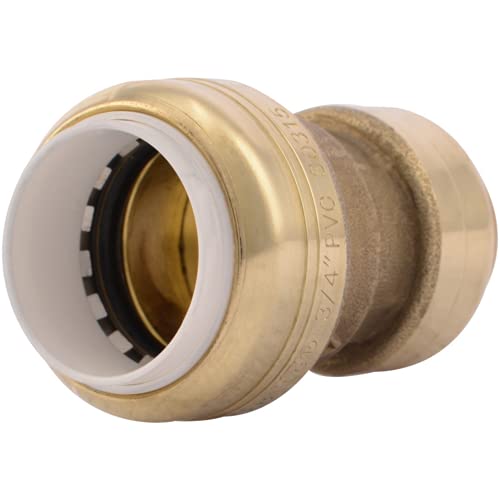
This PVC transition coupling is designed to transition between PVC and other pipe materials using a push-to-connect mechanism. It features color-coordinated collars that indicate compatibility: white for PVC and tan for copper, PEX, CPVC, and similar materials. It provides a straightforward, tool-free installation and works well in wet-line applications.
CMP Adapter 2 in. Copper to 2 in. PVC

The CMP 2″ Copper to 2″ PVC adapter (21098-200-000) provides a direct copper-to-PVC transition. It’s designed to offer a secure, leak-resistant connection suitable for standard 2″ pipe runs. This adapter is a practical choice for swapping or extending copper lines into PVC systems, aligning with common plumbing specs in residential installations.
CMP Adapter 1.5in. Copper to 2 in. / 1.5in. PVC

This CMP adapter connects 1.5″ copper pipe to 1.5″ or 2″ PVC, enabling flexible configuration in mixed-material systems. Note that for 2″ PVC connections, a separate 2″ slip x slip coupling is needed (not included). The component is suitable for projects requiring copper to PVC transitions without extensive re-piping.
Buying Guide: Key Considerations For Copper To PVC Adapters
- Material compatibility: Ensure the adapter’s O-rings and seals are rated for drinking-water or non-potable use as required, and that the connection supports copper to PVC transitions without compromising seal integrity.
- Size and Schedule: Match the pipe size (e.g., 1.5″, 2″) and the schedule type (for PVC) to avoid undersized or oversized fittings.
- Connection type: Decide between push-to-connect (no tools) and threaded or slip-fit connections. Push-to-connect options simplify installation in tight spaces and wet lines.
- Seal and retention features: Look for Buna-70 or equivalent O-rings and a robust retention mechanism (e.g., stainless steel rings) to minimize pull-out risk.
- Installation environment: Underground, behind walls, or exposed installations may have different requirements for durability and compression seals.
- Code and approval: Verify local plumbing codes and manufacturer approvals for transitions between copper and PVC in your area.
- Leak testing: After installation, perform a leak test to ensure the transition remains watertight under pressure and temperature variations.
- Availability and warranties: Choose brands with documented warranties and widely available replacement parts to support long-term maintenance.
When selecting a copper to PVC adapter, prioritizing reliable seals, easy installation, and compatibility with your pipe sizes will help ensure a durable and leak-free connection. The listed options cover common residential and commercial scenarios, from simple copper-to-PVC transitions to versatile push-to-connect fittings that streamline repairs and retrofits.