Teaching children to tell time benefits from interactive, durable clocks that align with classroom needs. The following selections are designed to simplify hours, minutes, and elapsed time using color coding, movable hands, and engaging visuals. Each option below helps young learners connect analog and digital concepts, whether in a classroom, homeschool setting, or learning corner at home. The list focuses on five reliable clocks that support hands-on practice and gradual skill-building.
| Product | Brand | Type/Focus | Amazon Link |
|---|---|---|---|
| Learning Resources Big Time Mini Clock | Learning Resources | Hands-on teaching clock with hidden gears | View |
| Large Dry Erase Magnetic Teaching Clock | WISE HEDGEHOG | 10.7″ classroom clock for analog and digital time | View |
| Time Activity Set – Teaching Clocks | Learning Resources | Comprehensive teaching system with clocks, cards, and dice | View |
| Oyster&Pop Learning Clock | Oyster&Pop | Award-winning silent 10″ wall clock with teaching labels | View |
| hand2mind Plastic Mini Geared Clock | hand2mind | Color-coded movable hands for easy time-telling practice | View |
The selections below present five core options, each with features that aid comprehension of time concepts, from hour and minute relationships to elapsed-time activities. Read on to compare design attributes, hands-on benefits, and classroom suitability for diverse learners.
Learning Resources Big Time Mini Clock

The Learning Resources Big Time Mini Clock is designed to help young learners grasp the basics of telling time. It features a hidden gear mechanism that advances the hour hand only as the minute hand moves, reinforcing the link between hours and minutes. Color-coded hands align with hour and minute markings to minimize confusion during practice sessions. This compact teaching clock is suitable for small-group demonstrations or individual practice, offering a tactile, visually guided approach to early time skills.
Key benefits include hands-on manipulation, intuitive color cues, and a durable build that withstands classroom use. The clock supports introductory lessons on time-telling and can be paired with simple activities like matching digital times or sequencing events. Teachers and parents can leverage its design to scaffold more complex tasks as students gain confidence in reading analog clocks.
Large Dry Erase Magnetic Teaching Demonstration Clock

This large teaching clock emphasizes both analog and digital time, featuring a spacious 10.7 x 10.7 inch face. The clock’s magnetic surface supports reusable marking of the digital time beneath the analog display, enabling quick checks of understanding during instruction. The vibrant, easy-to-read design helps students stay focused, and the clock can be used for whole-class demonstrations or one-on-one guided practice. A free eBook is included to extend learning with practical activities for parents and teachers alike.
With clearly marked hour and minute indicators and a bold color scheme, this clock minimizes distractions while maximizing engagement. Its size improves visibility from a distance in traditional classrooms or homeschool settings. Educators can time activities, prompt quick checks, and gradually introduce more advanced time concepts thanks to its straightforward layout and durable construction.
Time Activity Set – Teaching Clocks
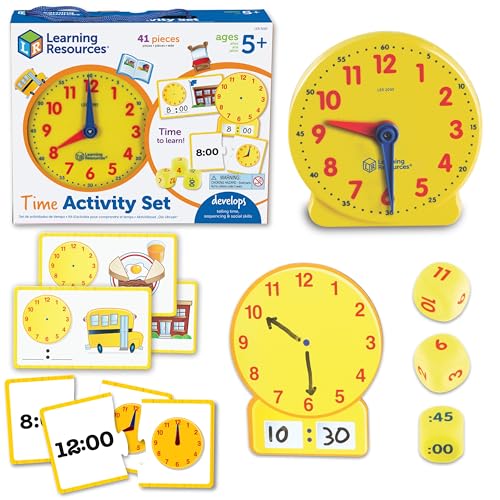
The Time Activity Set from Learning Resources is a comprehensive teaching system tailored for elementary learners. It includes a durable teaching clock with synchronized hour and minute hands, two-sided activity cards, a dry-erase surface, matching puzzles, foam dice, and other manipulatives. This multi-sensory approach helps students map the relationship between hours and minutes through interactive play, games, and independent practice. It is well-suited for classrooms seeking a robust, all-in-one solution for time-telling instruction.
Educators can structure lessons around color-coded hands, dice-based challenges, and puzzle activities to reinforce time concepts. The set encourages collaboration and guided discovery, while also offering a straightforward path to independent mastery. The inclusion of durable components ensures longevity through repeated classroom use and heavy handling by students of varied ages and abilities.
Oyster&Pop Learning Clock

The Oyster&Pop Learning Clock is a 10″ wall clock designed for classrooms, bedrooms, and study spaces. It features labeled minute hands and quarter indicators to help children understand how time is structured. The clock emphasizes a rainbow, kid-friendly design and comes with a free educational e-book packed with activities to boost confidence in reading analog time. It is non-ticking, reducing distractions in quiet spaces, which supports focused learning during independent study or night-time routines.
Its silent operation and approachable visuals make it a solid option for early learners who need clear, non-intrusive cues. The clock’s labels help children connect the analog face to the corresponding digital concepts they may encounter in classroom assignments. Parents and teachers can use it as a visual anchor for daily routines, transitions, and timed activities, without interrupting classroom flow with noise.
hand2mind Plastic Mini Geared Clock
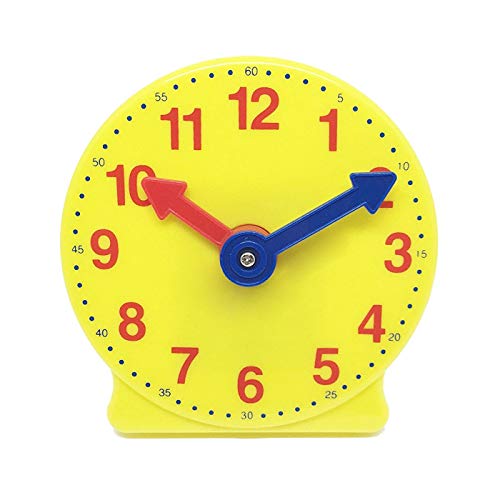
The hand2mind Plastic Mini Geared Clock provides a kid-friendly, yellow-toned teaching clock with color-coded, movable hands. Designed for classroom use, the clock helps children see the relationship between hours and minutes as the hands move together. The straightforward design supports guided practice and independent work, enabling students to practice telling time in increments that align with early math objectives. The kit’s durable plastic construction makes it a practical choice for daily classroom activities, centers, or homeschooling lessons.
With large hour numbers and a clear layout, this clock is particularly suitable for beginners who require extra visual support. Teachers can guide students through set times, storytelling activities, or elapsed-time problems using the clock as a tangible reference. The color-coding enhances quick recognition of which hand represents hours and which represents minutes, reducing cognitive load during early-time learning.
Buying Guide: Key Considerations For Choosing Time-Telling Clocks
- Age and Skill Level: Choose clocks with adjustable difficulty—from basic hour-minute recognition to more complex elapsed-time activities—to accommodate learners as they progress.
- Hands and Color Coding: Movable hands should be easy to manipulate; color-coding helps differentiate hours and minutes, reinforcing cognitive associations.
- Visual Design: Large numerals, high-contrast faces, and clean labeling improve readability, especially from a distance in classrooms.
- Durability and Materials: Classroom-use clocks should withstand frequent handling. Look for sturdy plastic or laminated surfaces and secure mounting options.
- Teacher Resources: Some sets include activity cards, dice, or digital-time exercises that extend learning beyond the clock face.
- Digital Integration: Some clocks pair analog teaching with digital time demonstrations or built-in guides, which can support diverse learning styles.
- Noise Level: For quiet study spaces, opt for non-ticking or silent clocks to minimize distractions during focused tasks or naps.
- Size and Portability: Larger faces are better for group instruction, while smaller clocks may fit in activity centers or tote bags for on-the-go lessons.
- Maintenance and Reusability: Dry-erase or wipe-clean surfaces enable repeated use with minimal prep, saving time for busy educators and parents.
- Curriculum Alignment: Select products that align with common time-telling objectives in early childhood and elementary curricula to ensure relevance.
When selecting a teaching clock, consider how it will fit your instructional routines, whether in a full classroom, small-group center, or home learning setup. A mix of clocks—one large demonstration model for demonstrations and several hands-on practice clocks for individual or partner work—often yields the best results. Finally, evaluate whether the clock supports both analog interpretation and digital time conversion to build a well-rounded understanding of telling time.