Whether you’re building a classical repertoire, seeking approachable pieces for beginners, or exploring advanced solo performances, the right sheet music can shape practice and performance alike. The following selections highlight timeless cello favorites and structured studies that suit a range of stages. Each entry includes key features to help you compare options at a glance and find editions that align with your goals on the instrument.
| Product | Brand | Pages | Instrumentation |
|---|---|---|---|
| 101 Classical Themes Cello Sheet Music | Hal Leonard | 88 | Cello |
| First 50 Songs You Should Play on Cello | Hal Leonard | 64 | Cello |
| Bach – Six Suites for Violoncello Solo | G. Schirmer, Inc. | 56 | Cello |
| Julius Klengel: Technical Studies for the Violoncello Vol. 1 | G. Schirmer, Inc. | 44 | Cello |
| 101 Hit Songs for Cello | Hal Leonard | 160 | Cello |
These selections cover a spectrum from curated classical themes to foundational technique and popular melodies adapted for the cello. They are from reputable publishers, designed for private study, lesson use, and recital preparation. The list includes both unaccompanied works and easy-to-access arrangements, offering options for ongoing growth and enjoyment.
101 Classical Themes Cello Sheet Music

This Hal Leonard edition compiles 88 pages of classical themes arranged for solo cello. It serves as a compact repertoire folio that can be used for performance sets, recital programming, and daily practice. The selection emphasizes melodic variety, making it suitable for developing phrasing and tone across Baroque, Classical, and Romantic-era pieces. The format supports reliable practice with clean notation, clear page layouts, and practical pagination for study sessions. The anthology’s focus on instrumental solo work makes it a strong choice for players seeking a consolidated collection of favored pieces in one volume.
Key features include: a dedicated cello arrangement emphasis, extensive pages for depth, and a range of approachable to intermediate-level arrangements. It is well-suited for players aiming to expand their classical repertoire with consistent edition quality from a trusted publisher.
First 50 Songs You Should Play on Cello
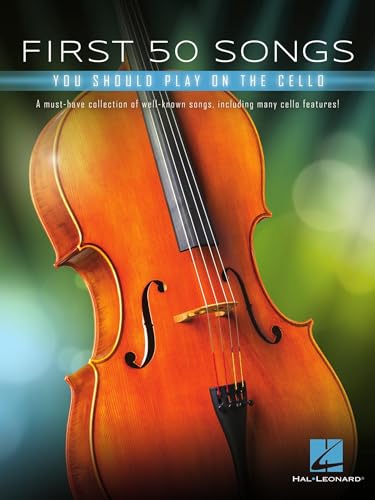
This Hal Leonard collection targets beginners and early intermediate players with a mixed repertoire of popular and classical melodies. Songs like Hallelujah, The Swan, and What a Wonderful World are paired with traditional favorites, offering approachable arrangements that reinforce essential technique, rhythm, and intonation. The 64-page book provides concise, manageable pages that fit well into short practice sessions and monthly milestones. It’s a practical starting point for students building confidence and sight-reading skills while enjoying recognizable tunes.
Key advantages include: accessible melodies, a practical page count for learners, and a broad appeal that helps sustain motivation. This edition supports structured practice plans, while exposing players to a variety of keys, phrasing styles, and dynamics appropriate for early development on the instrument.
Bach – Six Suites for Violoncello Solo

Schirmer’s edition of Bach’s Six Suites for unaccompanied cello is a cornerstone of repertoire for intermediate and advanced players. The collection showcases Bach’s contrapuntal writing, expressive phrasing, and technical depth. Edited by F. Gaillard, the edition is a standard scholarly resource that supports accurate musical interpretation and stylistic awareness. While the suites demand commitment, they are organized to facilitate progress from comfortable to challenging movements, making them a long-term cornerstone of a cello library.
Highlights include: authoritative editorial notes, clear engraving, and reliable pagination. For players seeking to study the Baroque master’s unaccompanied cello literature, this edition provides a solid foundation for technical growth and musical maturity in a recital-ready format.
Julius Klengel: Technical Studies for the Violoncello Vol. 1
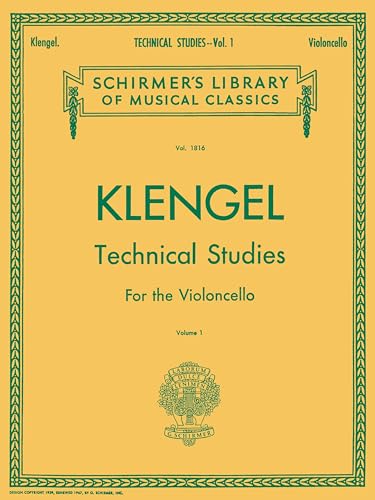
Klengel’s Technical Studies occupy an important place in cello pedagogy, especially for developing tone quality, left-hand agility, and bowing control. Volume 1 offers a structured approach to etudes that target fundamental technique while remaining musically engaging. The edition is a practical resource for intermediate players who are building technical facility and expressive capacity. It provides progressive challenges designed to shape a strong technical base that supports later repertoire accomplishments.
Important aspects include: clearly notated studies, a logical progression from easier to more demanding passages, and alignment with traditional technique pedagogy. For teachers and players focusing on durable technique foundations, this collection is a valuable reference in regular practice and exam preparation.
101 Hit Songs for Cello

This Hal Leonard anthology gathers contemporary and popular hits adapted for solo cello. With 160 pages, it presents a wide range of melodies that resonate with modern audiences while still offering substantial practice value. The arrangement variety supports ensemble-friendly practice, phrasing, and alignment with contemporary listening expectations. It’s a practical choice for players who want to blend technical drills with recognizable tunes, expanding repertoire options beyond strictly classical material.
Key attributes include: a broad selection of songs, scalable difficulty across pieces, and a balance between accessibility and musical challenge. This book can function as a flexible practice partner, recital-friendly repertoire, and a way to diversify a cello library with genre-spanning material.
Buying Guide: How to Choose Classical Cello Sheet Music
- Skill level and progression: Assess whether the edition targets beginner, intermediate, or advanced players. Start with collections that steadily build technique before advancing to complex repertoire.
- Notation quality and clarity: Look for clear engraving, legible notation, and helpful editor notes. This supports accurate intonation and reliable interpretation, especially for longer works.
- Edition and editor reputation: Reputable publishers and editors provide reliable sources for tempo markings, phrasing, and historical context. This matters for both study and performance accuracy.
- Repertoire balance: A well-rounded collection mixes classical masterworks with accessible contemporary pieces and thematic studies. This helps maintain motivation while broadening stylistic awareness.
- Format and practicality: Consider page count, binding, and whether the edition lays flat for practice. For recital use, verify whether the edition includes multiple movements or separate parts as needed.
- Instrumentation and arrangement: Some books are unaccompanied solo works, while others include simplified arrangements. Ensure the edition matches your instrument setup and whether accompaniment is desired in practice.
- Progress tracking and pedagogy: Books with progressive exercises and guided practice notes can help learners measure improvement over time and structure lessons effectively.
- Edition-specific features: Look for composer notes, performance suggestions, and historical context that enhance musical understanding and interpretation.
- Cost and value: Compare page counts and content quality across editions. A larger, well-edited collection often offers greater long-term value for ongoing study.
Across these selections, the best choices balance repertoire breadth, technical depth, and practical usability. For continuing development, combine a core set of Bach suites or Klengel studies with a broader anthology of themes or modern hits to maintain motivation while refining technique. Always align your purchase with current skill level and recital goals to maximize the learning outcome.