The best budget fly tying vise depends on how you plan to mount it, which hook sizes you use, and whether you want a rotating head. The pedestal-base model is best for a portable, clamp-free setup and hooks sized 12–24; the bench-clip vise suits anglers who want adjustable positioning and a table clamp. The other picks offer basic steel construction or 360-degree rotation, with different levels of detail in the listed specifications.
| Vise | Best For | Key Feature |
|---|---|---|
| Carbon Steel Pedestal Vise | Portable tying | Pedestal base; hook sizes 12–24 |
| Bench Clip Vise | Adjustable bench setup | Hardened tool-steel jaws |
| Portable Steel Vise | Basic fly tying | Steel construction and base |
| Super AA Vise | Rotary tying | Full 360-degree rotation |
| Colorado Anglers 102 Supreme | Jigs and heavier hooks | Rotation and cast-iron clamp |
Carbon Steel Pedestal Vise

This vise is best for beginners and hobbyists who need a stable setup without attaching a clamp to a table. Its pedestal base sits on a workbench or desk and can be moved or stored, making it a practical choice for a shared or travel tying area.
The listing specifies a hardened carbon-steel jaw and a hook range of sizes 12–24. That range is intended for small to medium hooks used for dry flies, nymphs, and streamers. Choose this model if those sizes match the patterns you tie and you prefer a freestanding base.
Limitation: The stated hook range is 12–24, so it may not suit anglers who need a vise for hooks outside that range. The product description does not specify rotary operation.
Adjustable Bench Clip Vise

This bench-clip vise is best for tiers who want an adjustable metal tool secured to a table edge. Its listed materials are stainless steel and brass, while hardened and tempered tool-steel jaws are described as holding hooks securely. Multiple adjustments are specified for tying teasers and jigs.
A deep rabbet is designed to engage rounded table edges and help keep the vise from rocking. This makes the model worth considering if your tying surface has a rounded edge and you want a clamp-style mount rather than a separate pedestal base.
Limitation: A bench clip depends on having a suitable table edge. The listing does not state a hook-size range, so check the product details if you regularly tie very small or heavy-gauge hooks.
Portable Steel Fly Tying Vise
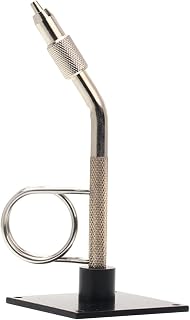
This option is best for buyers seeking a straightforward fly-making tool with a base and portable design. The listing describes high-quality steel construction intended for sturdy, durable use, and says the vise can hold hooks while tying flies.
Choose this model if your priority is a basic vise that can be moved between tying locations. Its description focuses on portability and general fly tying rather than specific adjustments or a stated hook-size range, so compare those details with your intended patterns before choosing.
Limitation: The available product features do not specify hook-size capacity, jaw design, or rotary function. Those omissions make it harder to assess suitability for specialized tying needs.
Super AA Rotary Vise

The Super AA is best for buyers who specifically want full 360-degree rotation. The supplied description calls it an all-purpose vise and identifies rotation as its key feature. A rotating head can be useful to tiers who want to turn a clamped hook while working around it.
Consider this model if rotation is more important to your choice than a detailed list of materials or mounting features. The product information provided is brief, so it offers less basis for comparing hook capacity or construction with the other options in this guide.
Limitation: The listed features do not provide a hook-size range, base type, or jaw material. Confirm those details before buying if they determine whether a vise will fit your bench or patterns.
Colorado Anglers 102 Supreme

This vise is best for tiers who want 360-degree rotation, multiple adjustments, and a clamp-style mount. Its features include a cast-iron clamp and the ability to hold a heavy-gauge hook while flaring bucktail. The listing also identifies teasers and jigs as uses for its adjustable setup.
Choose this model if you tie a mix of flies and teaser or jig patterns and want rotation while the hook is clamped. Its stated heavy-hook capability distinguishes it from options whose descriptions do not mention heavier hooks.
Limitation: The supplied features do not state a full hook-size range. If your work centers on very small hooks, verify that the jaws suit them before selecting this vise.
Buying Guide: How To Choose A Budget Fly Tying Vise
Should you choose a pedestal base or a clamp?
A pedestal vise rests on a flat surface and does not require a table edge. It can be easier to move or store, but the listing should describe the base clearly. A clamp-style vise attaches to a work surface and may save bench space; confirm that your table edge and thickness work with the clamp. Among these picks, the carbon-steel model specifies a pedestal base, while the bench-clip and Colorado Anglers models list clamp-style mounting.
What hook sizes do you tie?
Match the vise’s stated capacity to your patterns. The carbon-steel pedestal model lists hooks sized 12–24. The other supplied descriptions do not provide a specific hook-size range, so do not assume they cover every size. If you tie both very small and heavy-gauge hooks, check the product details for jaw capacity and secure grip.
Is a rotary vise necessary?
Rotation is a useful feature when you want to turn the hook while working around it. The Super AA and Colorado Anglers 102 Supreme list 360-degree rotation. If you do not need a rotating head, compare mounting style, jaw information, and hook range instead of treating rotation as essential.
Which features matter most for a first vise?
For a beginner, prioritize a suitable mounting method, jaws that hold your hook securely, and a clearly stated size range. A simpler vise may meet basic needs, while adjustments and rotation can support more varied tying tasks. Sparse specifications are a reason to verify details, not proof of a particular limitation in performance.
Frequently Asked Questions
What is the best cheap fly tying vise for beginners?
The carbon-steel pedestal vise is a suitable starting point for beginners who tie hooks sized 12–24 and want a base that does not require a table clamp.
Can I use a fly tying vise for jigs?
Some listings specifically mention teasers and jigs. The bench-clip vise and Colorado Anglers 102 Supreme describe adjustable use for those applications.
Do all of these vises rotate?
No. The Super AA and Colorado Anglers 102 Supreme explicitly list 360-degree rotation. The other supplied descriptions do not specify rotation.
What is the difference between a clamp and a pedestal vise?
A clamp attaches to a work surface, while a pedestal vise stands on a flat surface. Choose based on your bench setup and whether you want to move the vise easily.
Which listed vise states its hook-size range?
The carbon-steel pedestal model lists hooks sized 12–24. The other product descriptions provided do not give a specific size range.