Finding affordable, reliable sand bags for flood defense, landscaping, or equipment stabilization can be challenging. This guide highlights cost-effective options that balance durability, capacity, and ease of use. Each product below is designed to perform in a variety of settings without breaking the bank.
| Product | Brand | Capacity | Pack Size |
|---|---|---|---|
| DURASACK Heavy Duty Sand Bags (Black) | DURASACK | 50 lbs | Pack of 10 |
| DURASACK Heavy Duty Sand Bags (White) | DURASACK | 50 lbs | Pack of 20 |
| Rindion 2 Pack Sand Bags | Rindion | Up to 10 kg per bag | 2 Bags |
| Aimosen 4 Packs Sandbags | Aimosen | Empty (fill as needed) | 4 Packs |
| IFKDNR 2 Packs Sandbags | IFKDNR | Up to 15 lbs per bag | 2 Packs |
Note: All options listed are shown with their key features and typical uses, emphasizing affordability while still covering essential performance for wind resistance, flooding, and equipment stabilization.
DURASACK Black Heavy Duty Sand Bags

These woven polypropylene sand bags are built to endure exposure to sunlight and the elements. Each bag is treated with a UV inhibitor to maintain integrity during extended sun exposure. Designed for flood control, they are portable and easy to fill to a 50 lbs capacity, making them suitable as quick-dam building blocks or temporary flood barriers. The pack is intended for year-round disaster preparedness and versatile applications, including landscaping, construction, and anchoring canopies or umbrellas. Built-in tie strings provide simple control over placement and use.
Key considerations: UV resistance supports outdoor use, 50 lbs fill weight offers solid ballast, and bundle size suits multiple quick-set projects. Potential drawbacks include the need for dry, fill material and ensuring the bags are fully sealed after filling to prevent leakage.
DURASACK White Heavy Duty Sand Bags

This pack mirrors the Black version’s rugged construction and UV-treated design, but comes in white and includes a larger 20-pack count. Like its sibling, it’s engineered for flood control and versatile outdoor use, with a 50 lbs capacity per bag and built-in tie strings for quick deployment. The white color can be advantageous for visibility and reflective properties in sunny conditions.
Key considerations: larger pack size offers bulk savings and readiness, but more storage space is required. UV protection supports long-term outdoor storage, and the included tie strings enable straightforward setup. Ensure proper sealing after filling to maximize performance.
Rindion 2 Pack Sand Bags

The Rindion bags are designed for heavier weight as portables for equipment or outdoor setups. They come as a pair with aluminum clips and PE bags included to contain sand or other fill material. The bags use oxford fabric that is UV-resistant and wear-resistant, with Velcro-style closures to help seal the bag, and reinforced stitching to prevent tearing. Note that sand is not included.
Key considerations: the kit includes clips and PE bags for spill prevention, making setup and cleanup easier. The maximum load depends on fill material, so performance varies; ensure appropriate weight for your application and consider field conditions such as wind or uneven ground.
Aimosen 4 Packs Sandbags For Setup Flexibility

These sandbags are sold as empty units, ready to be filled with sand or other fillers. They feature a dual zipper design on each bag for accessible filling and sealing, along with Oxford fabric construction for durability. Aluminum clips are included to secure the bags, and the set includes 8 PE sealed bags to reduce dust and leakage. This configuration emphasizes photography and light-stand applications, with versatile weights as needed.
Key considerations: empty design provides customization for fill material, but buyers must supply sand. Dual zipper design enhances resilience against wear, while the included clips and PE bags improve organization and longevity in field use.
IFKDNR 2 Packs Sandbags With Buckle Straps
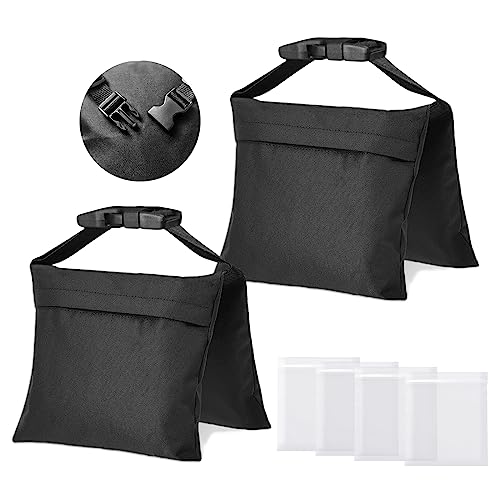
IFKDNR offers a two-pack set with buckle straps designed for simple hanging and usage without hooks. Each bag is empty, intended to be filled with sand or small rocks, and includes four PE bags to prevent leakage or soil contamination. The design emphasizes easy setup, portable storage, and reliable sealing to reduce filler escape during movement or wind.
Key considerations: buckle-straps simplify attachment and use, though the unit requires a separate filler material. The included PE bags help maintain bag cleanliness and minimize leakage.
Buying Guide: Key Purchase Considerations and Comparisons
Purpose and environment: Identify where the bags will be used (flood defense, landscaping, canopy stabilization, photography equipment, or general weight). Outdoor exposure demands UV-resistant materials and durable stitching to extend life under sun, wind, and moisture.
Material and construction: Woven polypropylene and oxford fabrics are common for sand bags. Look for UV inhibitors, reinforced stitching, and tie strings or buckles that simplify deployment and retrieval. Consider tear resistance if bags will be moved often or loaded with heavy materials.
Fill capacity and weight: Most standard sand bags hold around 50 lbs when filled with dry material. If you need lighter or heavier setups, confirm per-bag capacity and total system weight. Some products ship empty and require you to supply sand or gravel, which affects cost and logistics.
Pack size and storage: Larger packs (such as 20-count or 50-count options) offer value and readiness, but they require more storage space. For casual use, smaller packs may be more cost-effective and manageable.
Sealing and leakage control: Bags with dual zippers, Velcro seals, or PE liners help prevent leakage and keep the fill material contained. This is especially important for wind-prone or high-traffic environments where movement can loosen contents.
Accessories and compatibility: Some sets include clips, PE bags, or buckles. Evaluate whether these extras improve setup speed and stability for your preferred use case, such as photography stands, tent anchoring, or umbrella bases.
Budget and availability: The selections featured balance affordability with utility. When comparing options, account for total cost per use, including filler material and expected lifespan in your specific climate and usage patterns.
Storage and maintenance: After use, ensure bags are fully dry before storage to avoid mold or mildew. Regular inspection for torn seams or fading from sunlight helps determine replacement needs before a failure occurs.
Environmental considerations: Reusable and durable bags reduce waste compared with single-use options. Opt for products with UV protection and sturdy stitching to maximize longevity and minimize discard frequency.