The best electric scooter helmet should fit securely, provide suitable impact protection, and help other road users see you. For scooter riders who want turn signals, the JDBMAOYE smart helmet is the most feature-specific option in this group; the Docgari and asteron models emphasize customizable LED displays. The HOMEDISIAC adds a rear light and detachable eye protection, while the Favoto is a simpler choice for riders who prefer a mountain-bike style. Check the helmet’s fit and applicable safety labeling before riding.
| Helmet | Best For | Standout Feature |
|---|---|---|
| JDBMAOYE Smart Helmet | Riders wanting signals and listed safety standards | Remote-controlled lights and adjustable fit |
| Docgari LED Helmet | Scooter commuters seeking visible turn and stop signals | DIY LED display |
| asteron LED Helmet | Riders who want customizable display patterns | App-controlled display and turn signals |
| HOMEDISIAC Helmet | Riders who want a rear light and eye protection | Magnetic goggles and three light modes |
| Favoto Mountain Bike Helmet | Riders preferring a non-display helmet design | Visor and magnetic buckle |
JDBMAOYE Smart Helmet With Turn Signals
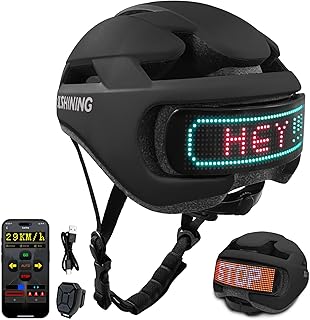
This is the best fit for electric scooter riders who want a helmet explicitly described for scooter use, plus visibility features. The product listing states that it meets CPSC, ROHS, and ASTM standards and uses an EPS liner with a PC shell. Its adjustable inner fit is listed as 58–61 cm, and remote-controlled lights can signal turns and stops.
The customizable display offers more than 100 graphics through an app. Choose this model if you value both signaling functions and the stated safety-standard information. Its listed fit range is limited, so measure your head and confirm the helmet sits securely before use.
Docgari LED Helmet For Scooters

The Docgari is best for riders seeking a scooter-oriented helmet with a display that communicates turns and stops. The listing names scooters, bicycles, skateboards, and electric bikes as intended uses. It describes an LED screen with customizable patterns, impact-resistant materials, ventilation, and adjustable side and chin straps.
The stated head circumference range is 22.83–24 inches. Choose it if you want display-based signaling and a fit within that range. The product information does not list a specific safety certification, so verify applicable safety labeling before relying on it for road riding.
asteron Helmet With Custom LED Display

This helmet is best for riders who want a highly customizable display for commuting or group rides. Its listed features include automatic left and right turn signals, a stop light, speed indicators, more than 100 display patterns, app customization, and a wireless remote. These functions distinguish it from simpler helmets that provide only a rear light.
Choose this model if display customization is a priority. The listing focuses on visibility and personalization but does not provide a specific fit range or safety-standard information. Confirm sizing and safety labeling before purchase, and do not treat lights as a substitute for hand signals or attentive riding.
HOMEDISIAC Helmet With Rear Light

The HOMEDISIAC is best for riders who prefer a conventional rear warning light over an LED message display. It has a rechargeable taillight with steady, slow-flash, and fast-flash modes; the listing states up to 10 hours of operation. Detachable magnetic goggles and a sun visor are included, and the dual-adjustment fit system is listed for head circumferences of 22–24 inches.
Choose it if eye protection and a rear light are more useful to you than turn signals. The listed fit is intended for ages 14 and up, but its size range may not suit every adult. Check fit carefully before riding.
Favoto Mountain Bike Helmet With Visor

The Favoto is best for riders who want a mountain-bike-style helmet without a built-in LED display. Its listed features include a dual-shell PC structure, a magnetic buckle designed for one-handed use, a visor, and an elastic cord to hold cycling glasses. These details may suit riders who also use their helmet on trails or during daytime commutes.
Choose it if a straightforward helmet design and glasses storage matter more than electronic signaling. The provided product details do not state a head-size range, rear light, or certification, so confirm fit and safety information before selecting it for electric scooter use.
Buying Guide: How To Choose An Electric Scooter Helmet
Does the helmet fit your head?
Measure your head circumference and compare it with the product’s stated range. A helmet should sit level and feel secure, with straps adjusted so it does not shift easily. The JDBMAOYE, Docgari, and HOMEDISIAC listings provide size ranges; the asteron and Favoto details provided here do not. Look for the manufacturer’s sizing guidance when dimensions are missing.
Do you need lights or turn signals?
A rear light improves visibility but does not communicate direction by itself. A display helmet may add turn and stop signals, while customizable patterns are primarily a personalization feature. Compare the controls and light functions you will actually use. Keep in mind that electronic lights do not replace safe lane positioning, hand signals where appropriate, or attentive riding.
What safety information should you verify?
Check the product label and manufacturer documentation for safety standards relevant to your location and riding activity. Among these five listings, JDBMAOYE specifically states CPSC, ROHS, and ASTM standards. Do not assume that another model meets a particular standard just because it is marketed for scooters or bicycles.
Which comfort and visibility features matter?
Ventilation, adjustable straps, a visor, goggles, and a rear light can affect daily comfort and visibility. For eye protection, compare whether eyewear is included and detachable. For low-light rides, consider whether a rear warning light is sufficient or whether turn indicators are important to your route and riding habits.
Frequently Asked Questions
Can I use a bicycle helmet on an electric scooter?
Some bicycle helmets are marketed for scooter use, including several models listed here. Check the manufacturer’s stated intended uses, fit range, and safety information before riding.
Which option lists CPSC safety information?
The JDBMAOYE listing states that the helmet meets CPSC, ROHS, and ASTM standards. Verify the product labeling and documentation for the specific helmet you receive.
Are helmet turn signals a replacement for hand signals?
No. Helmet signals can help communicate, but riders should still follow local traffic rules and use safe riding practices. Do not rely on a display as your only way to signal.
How should I choose a helmet size?
Measure your head circumference and compare it with the manufacturer’s sizing range. Adjust the straps and retention system so the helmet stays level and secure without painful pressure.
Is a rear light enough for night riding?
A rear light can improve visibility from behind, but it does not guarantee that drivers will see you. Consider your full visibility setup, route conditions, and safe riding practices in low light.