The best border between grass and gravel depends on whether you need a visible edge, a flexible no-dig strip, or a deeper barrier against spreading grass roots. Grass Barrier is the most relevant choice for root separation, while RLINGX suits a taller no-dig border and Gardzen offers a moderate 3-inch edge. EasyFlex is designed for a pound-in installation, and Aifanss provides a long 100-foot option for larger boundaries.
| Product | Best For | Listed Size |
|---|---|---|
| Grass Barrier | Below-ground root separation | 10 inches deep, 80 feet |
| RLINGX | Taller no-dig border | 4 inches tall, 33 feet |
| Gardzen | Everyday gravel containment | 3 inches tall, 40 feet |
| EasyFlex | Pound-in DIY installation | 20 feet, 4.5 inches |
| Aifanss | Long custom boundaries | 100 feet, 1.5 inches |
Grass Barrier 10-Inch Deep Edging

Best for: Buyers who want to separate grass roots from a gravel area as well as define the visible boundary. This product is 10 inches deep and 80 feet long. Its listed purpose is to form a below-ground wall against invading grass and other roots, while the above-ground portion can help retain gravel, mulch, or soil.
Choose this option when root spread is a central concern, not just loose gravel moving into the lawn. The greater depth distinguishes it from the shorter surface borders in this list. Limitation: Its root-blocking design requires a deeper installation than a simple low-profile edging strip.
RLINGX 4-Inch No-Dig Edging

Best for: Buyers who want a taller visible border without digging a trench. The kit includes 33 feet of 4-inch-tall PE edging and 30 spikes. The edging can be shaped into straight or curved lines, and the instructions describe securing it with spikes every two to three holes.
Choose RLINGX when a taller edge and adaptable layout matter more than a deep underground root barrier. Its stated design is intended to hold pebbles, mulch, or other landscaping material in place. Limitation: The 4-inch height is not the same as a 10-inch-deep root barrier, so it is not the closest match for buyers prioritizing deep root separation.
Gardzen 3-Inch Edging With Spikes

Best for: A moderate-height border for keeping gravel and other landscape materials distinct from grass. Gardzen provides 40 feet of 3-inch-tall edging and 40 spikes. Its weather-resistant plastic is described as flexible and sturdy, and the no-dig setup uses stakes placed every two to three holes.
This is a practical middle ground between a low edging strip and a taller border. Choose it if you want a defined edge without an especially prominent above-ground profile. The listed uses also include tree edging, mulch retention, and weed control. Limitation: At 3 inches tall, it offers less visible height than the 4-inch RLINGX option.
EasyFlex Pound-In Lawn Edging
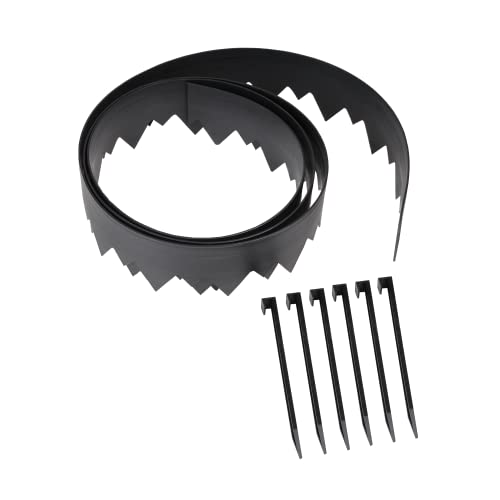
Best for: DIY buyers who prefer to pound edging into the soil rather than stake a no-dig strip on the surface. This kit provides 20 feet of 4.5-inch, straight-top edging with bonus anchoring stakes. The recycled plastic is described as flexible enough for straight lines or tight curves.
Installation involves scoring the soil and gently tapping the edging into place with a rubber mallet. Choose EasyFlex for a defined lawn border and a pound-in installation method. Limitation: The 20-foot length may require additional sections for a long grass-and-gravel boundary.
AHEONLAR 100-Foot Flexible Edging

Best for: Buyers with a long boundary or several areas to edge. The listed product is 1.5 inches tall and 100 feet long, with spiral stakes described as 6 inches long. Its flexible plastic can form curves, circles, or custom shapes, and the no-dig installation uses stakes every two to three holes.
Choose this kit when coverage is the priority and a low-profile border suits the design. The listed features say it can hold gravel, mulch, or soil. Limitation: Its 1.5-inch height is lower than the other surface edging choices here, so it creates a less prominent visible separation.
Buying Guide: How To Choose Edging Between Grass And Gravel
Do you need to block grass roots or just contain gravel?
For root control, compare the product’s below-ground depth rather than relying only on its visible height. Grass Barrier is listed as 10 inches deep and specifically describes a below-ground wall against invading roots. A shorter surface border can define the boundary and help contain loose material, but the supplied product details do not describe the same depth.
Should you choose no-dig or pound-in edging?
No-dig options such as Gardzen, RLINGX, and AHEONLAR use stakes to secure the edging. EasyFlex uses a pound-in method: score the soil, then tap the edging with a rubber mallet. Pick the installation approach that fits your soil preparation preference and project layout.
How much height and length do you need?
Measure the boundary before choosing a kit, and compare the listed length with the total run. For a taller visible edge, RLINGX is 4 inches high and Gardzen is 3 inches high. AHEONLAR is only 1.5 inches high but provides 100 feet. EasyFlex includes 20 feet, while Grass Barrier provides 80 feet.
Will the border follow curves?
Several listed plastic options are described as flexible and suitable for curves. Check the product details for the installation method and included stakes, then plan the shape before securing the edging. For a clean grass-to-gravel transition, keep the border line consistent and position it where you want the materials to meet.
Frequently Asked Questions
What is the best edging for stopping grass from invading gravel?
Grass Barrier is the most directly suited product in this selection for root separation because it is 10 inches deep and is described as blocking invading roots below ground.
Can landscape edging keep gravel from spreading into grass?
Edging creates a physical boundary between the lawn and gravel. Several listed products are described as helping hold gravel or other landscape materials in place.
Is no-dig edging suitable for a curved border?
Some no-dig plastic edging in this selection is described as flexible enough to form curves. Secure it according to the product instructions, including the specified stake spacing.
How do I estimate how much edging to buy?
Measure the full boundary line and compare that total with the kit’s listed length. For irregular layouts, measure each section and add the lengths together before selecting a product.
Does taller edging stop roots better?
Not necessarily. Above-ground height and below-ground depth are different measurements. If root blocking is the priority, look for a product that specifically lists substantial below-ground depth and root-barrier use.