The best blue liquid food coloring depends on how much you need and what you plan to color. McCormick Culinary is a practical choice for regular kitchen or professional use, while DecorRom and Limino offer larger bottles for varied baking and craft projects. LorAnn suits bakers seeking a more concentrated liquid in a small bottle, and Shank’s is designed for bulk coloring needs.
| Product | Best For | Size Or Format |
|---|---|---|
| McCormick Culinary Blue | Consistent coloring for frequent use | 16 fl oz bottle |
| DecorRom Blue | Baking and multipurpose projects | 5.5 fl oz |
| Limino Blue | Coloring baked goods and crafts | 6 fl oz |
| LorAnn Blue | Small batches and controlled tinting | 1 oz squeeze bottle |
| Shank’s Blue | High-volume coloring | 1 gallon jug |
McCormick Culinary Blue Food Coloring
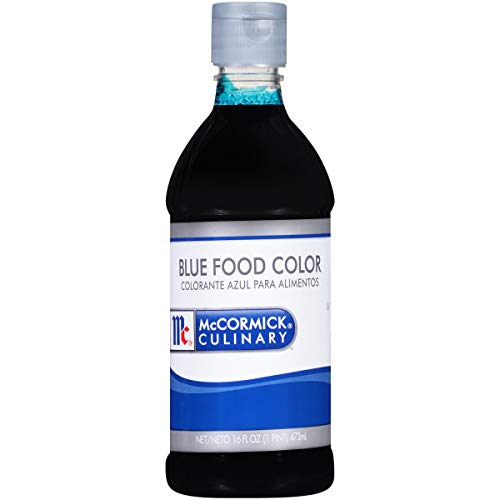
Best for: Bakers, kitchens, or food-service users who want a larger bottle of blue coloring for repeated use. The 16-fluid-ounce size is more suitable for frequent coloring than a small squeeze bottle.
McCormick Culinary describes this coloring as producing a deep, vibrant blue in cakes, cookies, icings, fillings, and cocktails. The brand also states that it provides a consistent hue without influencing taste. It is selected for buyers who prioritize a single-color product and a substantial bottle size.
Consider: This is a dedicated blue coloring, not a multicolor set. Choose another option if you need red, yellow, or green dyes as well.
DecorRom Blue Liquid Food Coloring

Best for: Home bakers who want blue coloring for desserts and also plan to use dye for nonfood crafts. The listed 5.5-fluid-ounce size offers more product than a small 1-ounce bottle without moving to a bulk jug.
DecorRom identifies this as a water-based liquid coloring that disperses readily. Its listed uses include buttercream, frosting, fondant, sugar paste, and cake decoration. The product description also names slime, play dough, soaps, and bath bombs. It is described as dairy-free, nut-free, sugar-free, and gluten-free.
Consider: The product is blue only, so it will not replace a set of assorted colors. For edible projects, follow the package directions and use it as food coloring rather than relying on its craft uses.
Limino Blue Liquid Food Coloring

Best for: Buyers who want a larger bottle for decorating and a range of edible and DIY projects. The product is listed as 6 fluid ounces and is intended for baking, airbrushing, Easter eggs, and crafts.
Limino describes the coloring as concentrated, with each drop intended to produce vivid color. Listed food uses include cakes, cupcakes, fondant, buttercream, frosting, cookies, and macarons. The brand says the dye is food grade and free from dairy, gluten, soy, peanuts, eggs, nuts, and flavors, and that it does not affect recipe texture or taste.
Consider: It is a single-color product. Because the description emphasizes concentration, add it gradually to reach the desired shade instead of pouring in a large amount at once.
LorAnn Oils Blue Liquid Food Color

Best for: Bakers who want a small bottle and prefer to build color a few drops at a time. The 1-ounce squeeze bottle is a compact option for occasional use or recipes that call for measured additions.
LorAnn says this professional-strength liquid coloring is more concentrated than typical grocery-store liquid food coloring. The product is described as producing softer levels of color, and the usage guidance is to add it by the drop until the desired color is reached. Those details make it a useful choice when gradual tinting matters.
Consider: The bottle is much smaller than the other dedicated-blue options here. It may be less suitable for users coloring large batches regularly.
Shank’s Blue Food Coloring

Best for: High-volume users who need blue coloring for many batches. The one-gallon jug is the largest listed format in this selection, making it the bulk-oriented choice for large-scale baking or cooking needs.
Shank’s says its blue dye can be used in piping gel, icing, fondant, batters, doughs, and beverages. The description says it can create shades from delicate sky blue to deep underwater tones and characterizes the coloring as tasteless and odorless. It is selected for buyers who need a versatile blue product in a bulk container.
Consider: A gallon is a large quantity. Avoid this format if you only need coloring for occasional small recipes or do not have a use for bulk supply.
Buying Guide: How To Choose Blue Liquid Food Coloring
How much coloring do you need?
Match bottle size to how often you bake. A 1-ounce bottle is suited to occasional use, while a 16-ounce bottle supports more frequent coloring. The gallon format is intended for high-volume needs. Larger containers are not automatically the best choice if you will use only a little.
What are you coloring?
Check the listed applications before buying. The products here name uses such as frosting, buttercream, fondant, cakes, cookies, dough, and beverages. DecorRom and Limino also list nonfood craft uses. For a recipe where added liquid could affect consistency, introduce liquid coloring in small amounts and adjust gradually.
Do you want a soft tint or a stronger blue?
LorAnn specifically describes its product as producing soft levels of color and recommends adding it drop by drop. Limino describes its coloring as concentrated. Since the products’ formulations and directions differ, begin with a small amount and increase the color in stages.
Is a blue-only bottle or a color set better?
A dedicated blue bottle makes sense when blue is the main color you use. A multicolor set may be more practical if you also need other shades. Check the package contents carefully: the products reviewed above are blue-only, while assorted sets include colors beyond blue.
Frequently Asked Questions
Can liquid blue food coloring be used in frosting?
Several listed products name frosting or icing as an intended use. Add coloring gradually, especially when the recipe’s consistency is important.
How do I get a darker blue?
Add a small amount, mix thoroughly, and repeat until the color reaches the desired depth. Follow the product’s directions; LorAnn specifically recommends adding its coloring by the drop.
Does blue food coloring change the taste?
McCormick Culinary says its blue coloring does not influence taste. Limino also states that its dye does not affect taste or texture. Check each product’s own label for its specific guidance.
Can food coloring be used for crafts?
DecorRom and Limino list crafts such as slime or play dough among their uses. Use coloring for edible recipes only as directed on the product packaging.
Which bottle size is best for occasional baking?
A smaller bottle, such as LorAnn’s 1-ounce option, may be easier to manage for occasional use. Choose a larger bottle when you expect to color batches regularly.