If you want a succulent with substantial, fleshy foliage, compare the plant’s described leaf shape and mature size before buying: the listings here do not identify a classic large-leaf rosette such as an agave or paddle plant. The live Calico Hearts is a compact option with thick leaves, while the spiral Albuca stands out for curly foliage. The remaining picks are soil and feeding supplies that can support succulent care, rather than big-leaf plants themselves.
| Product | Best For | What To Know |
|---|---|---|
| Calico Hearts | Compact, patterned foliage | Small, slow-growing succulent |
| Spiral Albuca | Unusual curly leaves | Needs bright light and draining soil |
| Miracle-Gro Cactus & Succulent Mix | Container soil | Formulated for drainage |
| Slow-Release Fertilizer Pellets | Less-frequent feeding | 13-11-11 formula |
| Liquid Succulent Fertilizer | Watering-day feeding | Requires dilution |
Sprout N Green Calico Hearts

This live Adromischus triflorus ‘Calico Hearts’ is the closest listed match for a buyer seeking succulent foliage with substance. Its thick, heart-shaped to obovate leaves are silvery green with purple-red markings. The listing describes a compact plant reaching about 8–10 centimeters tall and 8–12 centimeters wide, so it is not a large floor plant.
Best for: A small display where leaf pattern and fleshy texture matter more than overall size. It was selected because its live leaves are specifically described as thick and substantial.
- Provide bright light; the listing recommends protection from intense summer midday sun.
- Water when soil is mostly dry and use fast-draining, gritty soil.
- Limitation: Its listed mature dimensions make it a poor choice if you want a genuinely oversized succulent.
1am Succulents Spiral Albuca

Albuca concordiana is a live succulent bulb plant selected for its unusual curled leaves, not for broad or oversized foliage. The listing says it forms green spirals, prefers bright light and well-draining soil, and needs minimal watering. It may also produce yellow flowers with a light vanilla scent in season.
Best for: Buyers who want an unusual sculptural succulent and are flexible about what “big leaf” means. Its distinctive foliage gives it visual presence, even though the leaves are described as curly rather than broad.
- Choose this if you can provide bright light and avoid keeping the soil consistently wet.
- Limitation: The listing specifies one bulb or plant only and does not provide mature dimensions.
Miracle-Gro Cactus And Succulent Mix
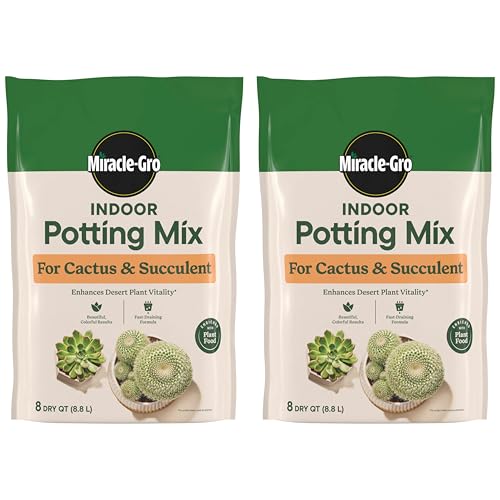
This potting mix is a care supply, not a plant. Its listed ingredients include forest products, sphagnum peat moss, sand, and perlite, formulated to promote fast drainage for indoor container succulents and cacti. The mix is also enriched with Miracle-Gro plant food.
Best for: Buyers potting a succulent indoors who want a ready-made mix intended for drainage. It is a relevant companion for the live plants in this selection, although plant-specific soil needs can vary.
- Consider it when choosing a container mix for a desert-type succulent.
- Limitation: The product listing does not give a specific mix ratio or guarantee that it suits every succulent species.
Leaves & Soul Slow-Release Pellets

These 13-11-11 fertilizer pellets are intended for succulents and other listed plants, including cactus, aloe, jade, and echeveria. The manufacturer describes a timed-release formula that feeds for up to 180 days. That makes this a feeding product rather than a way to enlarge a plant’s leaves; light, watering, species, and growing conditions also affect growth.
Best for: Succulent owners who prefer a pellet format and less-frequent applications. The stated release period is useful when comparing it with liquid fertilizer that is mixed into water.
- Check the package directions before applying fertilizer to a particular plant.
- Limitation: The listing does not specify an application amount in the supplied product information.
Leaves & Soul Liquid Succulent Fertilizer

This 3-1-2 liquid concentrate is listed for indoor and outdoor succulents, including jade, aloe, echeveria, haworthia, and sedum. The product directions say to mix 1–2 teaspoons with 8 cups of water and apply during every other watering cycle. It offers a different feeding routine from slow-release pellets.
Best for: Buyers who want to measure fertilizer into watering water and follow a recurring feeding schedule.
- Follow the dilution instructions rather than applying the concentrate undiluted.
- Limitation: This product requires measuring and repeat application; it is not a low-effort pellet format.
Buying Guide: Choosing A Succulent With Substantial Leaves
How can you tell whether a succulent is genuinely big-leafed?
Look for a listing that names the species and gives mature leaf or plant dimensions. Terms such as “fleshy” and “thick” describe texture, not necessarily size. The Calico Hearts listing gives compact plant dimensions, while the Albuca listing describes spiral foliage without giving mature measurements. Neither listing claims oversized leaves.
What growing conditions should you compare?
Check the plant’s light and watering needs before buying. The supplied Calico Hearts information calls for bright light, mostly dry soil between waterings, and fast-draining gritty soil. The Albuca listing also calls for bright light, minimal watering, and well-draining soil. These care notes are more useful than assuming every succulent has identical requirements.
Should you choose pellets or liquid fertilizer?
Pellets suit buyers who prefer a timed-release product; this option is described as feeding for up to 180 days. Liquid fertilizer suits buyers who are comfortable measuring concentrate into water and feeding on a recurring schedule. Fertilizer supports plant nutrition but does not guarantee larger leaves.
What soil matters for a potted succulent?
Drainage is a key consideration for the live plants described here. The Miracle-Gro mix is formulated for fast drainage and includes sand and perlite. If a plant listing calls for a grittier blend, compare the ingredients and follow the plant’s specific care guidance.
Frequently Asked Questions
Which listed plant has the thickest described leaves?
The Calico Hearts listing describes thick, heart-shaped to obovate leaves. It is compact, however, and is not presented as a large-leaf specimen.
Is the spiral Albuca a big-leaf succulent?
The listing describes curly, spiral leaves, not broad or oversized leaves. Choose it for unusual form rather than leaf size.
Can fertilizer make a succulent develop large leaves?
Fertilizer supplies nutrients, but the listings do not claim that either fertilizer enlarges leaves. Species, light, water, and growing conditions also influence plant growth.
Which product is a plant rather than a care supply?
Calico Hearts and spiral Albuca are live plant listings. The potting mix and two fertilizers are care supplies.
Which fertilizer is easier to apply less often?
The slow-release pellets are described as feeding for up to 180 days. The liquid concentrate must be diluted and used according to its recurring application directions.