The best ant bait for killing the queen is one worker ants will eat and carry back to the colony. TERRO Liquid Ant Killer is a strong fit for common indoor household ants, while Ortho Orthene offers ready-to-place bait stations and Atticus Savitri is a gel option for targeted application. Match the bait to the ant species and placement area, and follow the product label for use.
| Product | Best for | Format |
|---|---|---|
| TERRO Liquid Ant Killer | Common indoor household ants | Liquid stations |
| Ortho Orthene Ant Killer | Convenient indoor placement | Bait stations |
| Atticus Savitri Ant Gel | Targeted indoor or outdoor baiting | Gel syringe |
| Raid MAX Liquid Ant Killer | Ready-to-use liquid bait | Liquid stations |
| Combat Ant Killing Gel | Listed common ant species | Gel |
TERRO Liquid Ant Killer Bait Stations

Best for: People dealing with common household ants indoors who want prefilled liquid stations. TERRO lists acrobat, crazy, ghost, little black, odorous house, and pavement ants among the ants targeted.
The borax-based liquid attracts worker ants, which consume the bait and carry it back to the colony. The product information says ant activity may decrease within days as the bait is shared. This colony-transfer approach is intended to reach ants beyond those visible near the station, including the queen.
Why it was selected: It combines a ready-to-use station format with a clearly described bait-transfer mechanism and a broad list of common household ant types. Limitation: The listed use is focused on indoor household ants; check the label before using it for other species or settings.
Ortho Orthene Ant Killer Bait Stations
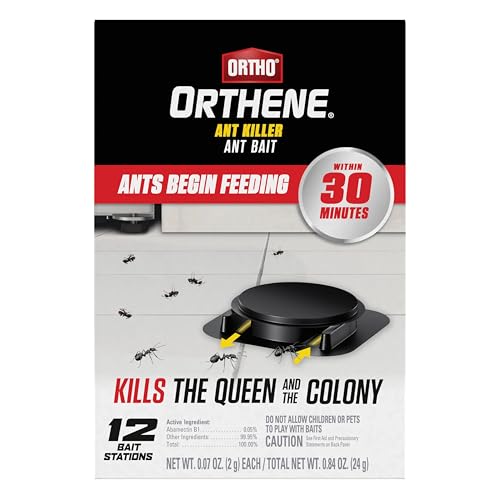
Best for: Buyers who want enclosed, ready-to-place indoor bait stations. Ortho says foraging workers find the bait and share it with the colony, targeting the queen as well as other ants. The product information says users may see fewer ants in three to seven days.
Suggested indoor placement areas include baseboards, room corners, cabinets, around pipes, pantries, window sills, doorways, and areas near garbage cans. These locations can put bait near active ant routes without requiring a gel application.
Why it was selected: It provides practical placement guidance and a stated colony-targeting purpose. Limitation: The product is not labeled for fire, carpenter, or harvester ants, so choose another labeled option for those pests.
Atticus Savitri Ant Gel Bait
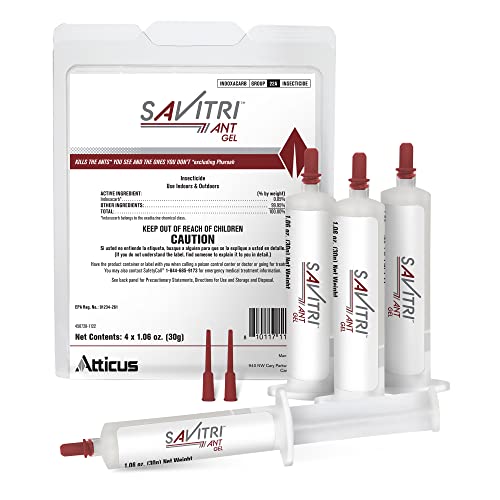
Best for: People who need to place bait directly near an ant trail or nest site, indoors or outdoors. The gel contains 0.05% indoxacarb and comes in prefilled syringes for dispensing as spots or a thin line.
Atticus lists common house ants as well as pavement, carpenter, and red imported fire ants among the species controlled; consult the label for its complete list. Check bait locations and reapply as the gel is consumed. Its targeted application can suit areas where a station is awkward to position.
Why it was selected: The syringe format allows controlled placement, and the product information describes broad species coverage. Limitation: It requires monitoring and possible reapplication, unlike a set-and-place station.
Raid MAX Liquid Ant Killer Baits

Best for: Buyers seeking a prefilled liquid bait labeled for indoor and outdoor use. After ants consume the bait, workers carry it back and transfer it to the queen, other workers, and larvae, according to the product information.
This colony-transfer method makes the bait relevant when visible ants may be only part of a larger nest. Its ready-to-use format avoids dispensing gel manually.
Why it was selected: It offers a convenient liquid station format and explicitly describes transfer to the queen and colony. Limitation: The listed exclusions include fire ants, carpenter ants, harvester ants, and pharaoh ants. Check the label for the full list of target species and directions.
Combat Ant Killing Gel

Best for: Buyers wanting gel bait for a range of listed common ant species, including Argentine, ghost, odorous house, pavement, and little black ants. Combat says foragers carry the bait back to the nest, affecting larvae and the queen.
The product information describes a fipronil formula that attracts ants and begins working within hours, with control stated in three to five days. A gel can be placed near activity where permitted by its directions, making it an alternative to stations.
Why it was selected: It pairs a broad named-species list with a stated colony-control mechanism and a reported timeframe. Limitation: Confirm that the ant species and intended placement are covered by the product label before application.
Buying Guide: How To Choose Ant Bait That Targets The Queen
How does bait reach the queen?
Worker ants find and consume bait, then carry or share it within the colony. This transfer can expose the queen and other nest ants. Bait is different from a contact spray, which is designed to kill ants directly where it is applied and may not reach hidden colony members.
Should you choose liquid stations or gel?
Liquid stations are prefilled and convenient to place along indoor ant routes. Gel allows more targeted placement near trails or nest sites, but it needs to be checked and may need replenishing. Choose based on where ants travel and the directions on the label.
Why does ant species matter?
Products do not all target the same ants. Check the listed species before buying. For example, the Ortho stations above exclude fire, carpenter, and harvester ants, while Raid MAX lists exclusions that include fire, carpenter, harvester, and pharaoh ants. Do not assume a bait controls an unlisted species.
Where should bait be placed?
Look for active trails and follow the label’s placement instructions. Ortho suggests indoor locations such as baseboards, corners, cabinets, and window sills. Keep bait in approved areas and avoid placing it where people, pets, or food could contact it, consistent with label directions.
Frequently Asked Questions
Does ant bait kill the queen immediately?
No. Bait works through worker ants carrying or sharing it with the colony. The time needed for control varies by product and situation.
Why are more ants gathering around bait?
Workers may be feeding on the bait before carrying it back to the colony. Follow the label and allow the bait time to work rather than removing it solely because ants are present.
Can I use bait and spray at the same time?
Check both product labels before combining treatments. Spraying near bait may interfere with ants reaching or feeding on it, depending on the products and directions.
What if the bait does not attract the ants?
Ants may not accept a particular bait, or the station may not be near an active route. Verify the species coverage, try a placement permitted by the label, and consider a different bait format.
How long should I leave bait out?
Use the product label for replacement and removal directions. Some baits need to remain available while workers carry them to the colony; gel products may require checks and reapplication as consumed.