Answering the common question “which 80/20 strings should I choose?” this guide compares top 80/20 bronze sets ideal for steel-string acoustic players seeking bright projection and classic tone. Best for players who want clear, articulate highs and strong mids, especially in bluegrass, folk, and bright-sounding guitars. The top picks span standard-light to medium gauges, with options that emphasize durability, coating, or price. Use the summary table below to compare core differences at a glance.
| Product | Gauge | Wrap | Best For |
|---|---|---|---|
| D’Addario EJ11-3D (Light) | Light 12-53 | 80/20 Bronze | Bright beginners, fingerpicking, open-string resonance |
| D’Addario EJ11 (Light) | Light 12-53 | 80/20 Bronze | Bright, versatile practice and performance |
| Elixir 80/20 Bronze NANOWEB (Light) | Light 12-53 | 80/20 Bronze w/ NANOWEB | Consistent tone, longevity, smooth feel |
| Ernie Ball Earthwood 80/20 (Medium Light) | 12-54 | 80/20 Bronze | Balanced projection with brighter attack |
| D’Addario EJ12 (Medium) | 13-56 | 80/20 Bronze | Brighter attack for bluegrass and flat-picking |
Notes: “80/20” means copper-wrapped bronze on a high-carbon steel core, yielding a bright, crisp tone with strong sustain. Coated options improve longevity but can slightly alter feel or brightness. Gauge choices affect tension and playability; consider replacement schedules based on playing style and environment (humidity, sweat, and handling). All selections below are standard six-string sets suitable for most steel-string acoustics.
D’Addario EJ11-3D: 80/20 Light Set

Reference: Precision wound over a hexagonal high-carbon steel core delivers a bold, bright sound with crisp room-filling projection. This is the original 80/20 bronze string design, crafted since the 1930s. Best for players who want a classic, bright acoustic voice right away. Limitations include potential brightness fatigue for very aggressive picking over long sessions.
Best for: Beginner to intermediate players seeking immediate brightness and easy playability in a traditional light gauge. Choose this if you want a bright, punchy tone with reliable intonation for open chords and fingerstyle.
D’Addario EJ11: 80/20 Light
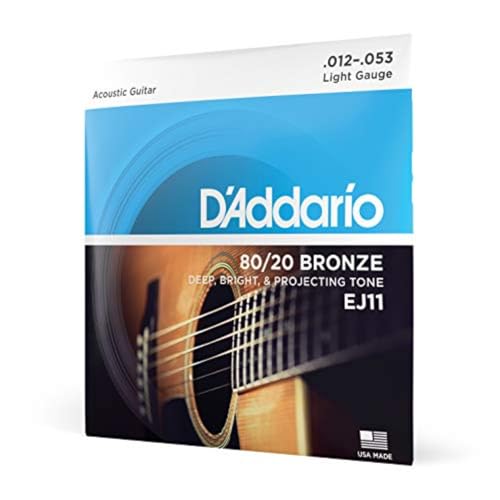
Reference: Same 80/20 bronze composition and core design as the EJ11-3D, offering the original acoustic string tone with bright projection. The single-pack option is ideal for stocking up or for players who replace strings individually. Caution: standard packaging may be less convenient for frequent string changes in humid conditions.
Best for: Players who want the classic D’Addario tone in a single-pack format, with straightforward replacement and dependable brightness for most playing styles.
Elixir 80/20 Bronze NANOWEB Light

Reference: 80/20 bronze wrap with NANOWEB coating for extended life, while maintaining bright articulation. The strings offer a smooth feel and reduced squeak, with resistance to sweat and humidity. Limitation: coating can slightly alter brightness and tension feel for players who prefer truly uncoated strings.
Best for: Stage performers and long-playing sessions who want consistently bright tone without frequent re-stringing, plus a comfortable feel for fast picking and sweeps.
Ernie Ball Earthwood 80/20 Medium Light

Reference: Medium Light gauge combines bright 80/20 bronze wound strings with a balanced projection, ideal for players seeking easy fretting and a robust acoustic voice. These wound strings use 80% copper, 20% zinc around a high-carbon steel core. Caution: slightly more tension than light gauges, which can affect finger comfort for beginners.
Best for: Players who want a brighter attack with a touch more tension, suitable for strumming and flat-picking styles on standard-tension guitars.
D’Addario EJ12: 80/20 Medium

Reference: 80/20 bronze strings with a 13-56 gauge, delivering a brighter attack and robust projection for players who favor more tension and volume. Original acoustic string design emphasizes a classic bright tone. Caution: heavier gauge may be harder for beginners or players with a light touch.
Best for: Players seeking a stronger, more pronounced tone and richer sustain, especially suitable for flat-picking and strumming in bluegrass or folk settings.
Martin Authentic 80/20 Bronze Medium

Reference: Martin’s up-front design uses high-tensile strength and tin-plated core wire to deliver a bright, balanced tone with quicker response and improved tuning stability. Made from 80/20 bronze, this set is favored for its clear attack and sustained brightness. Caution: George-sized packaging or availability may vary by retailer.
Best for: Players looking for a premium bright tone with strong projection, particularly during live performance or studio tracking where consistent tuning matters.
Buying Guide: Key Considerations For 80/20 Bronze Sets
What gauge should you choose?
Light gauges (roughly 12-53) are easier to press and good for beginners or fingerpicking. Medium gauges (13-56) offer more volume and brighter attack but require greater finger strength. Choose based on playing style and comfort.
Coated vs uncoated: does coating matter?
Coated strings last longer and resist corrosion, which is ideal for players who sweat heavily or play often. However, coatings can slightly mute brightness and alter feel. Uncoated sets deliver crisp brightness but wear faster.
Tone goals: brightness vs longevity
80/20 bronze strings naturally emphasize brightness and projection. If you need longer life for gigs or travel, consider NANOWEB-coated Elixir or other coated options, which preserve brightness while extending tone life.
Play style and genre alignment
Bluegrass and flat-picking players often prefer brighter, quick-response strings (higher tension in medium gauges). Folk and pop players may favor balanced brightness and easy playability from light gauges. Fingerstyle players should evaluate tension and intonation stability across frets.
Durability and environmental factors
Humidity, sweat, and handling affect string life. Bronze strings corrode faster in humid environments. Coated options mitigate this, while uncoated strings require more frequent changes in such settings.
Stocking and replacements
Multiple-pack options help maintain supply for frequent players and gigs. Choose sets that match your current gauge and tension to minimize string-ting changes and intonation shifts.
FAQ
- Are 80/20 strings better for bright tone than phosphor bronze? Yes, 80/20 bronze typically deliver brighter, crisper highs and more pronounced overtones than phosphor bronze. Phosphor bronze strings tend to have a warmer overall feel.
- Which 80/20 set lasts longest? Coated 80/20 options, such as NANOWEB versions, generally last longer by resisting corrosion and contaminants.
- Do heavier gauges break easier? Heavier gauges require more finger strength and can be harder to press, but they offer louder, more powerful tone with less fretting noise in some styles.
- Should I switch from uncoated to coated if I play live? Coated strings are advantageous for longevity on stage; decide based on brightness retention and feel preference.
- Can I mix gauges for different strings? Mixing gauges is possible but can alter tension balance and intonation; many players prefer matching gauges for consistent feel.