The best 60-day habit tracker is one you can use consistently for two months, whether that means marking a daily streak, recording several routines, or reviewing progress each week. The PIOOJK undated calendar suits people tracking several habits, while the hipkiwi journal adds daily prompts and reflections. For a visible streak, the Curiosity Driven 90-day chart can be used to track the first 60 days of a goal.
| Tracker | Best For | Format |
|---|---|---|
| PIOOJK Habit Tracker Calendar | Tracking multiple routines | Undated calendar |
| hipkiwi 75-Day Soft Challenge Planner | Daily wellness prompts | Journal |
| Clear Mind Concepts Habit Tracker Hero | Flexible daily and weekly tracking | Tear-off sheets |
| Curiosity Driven 90-Day Scratch-Off Tracker | One visible daily streak | Wall chart |
| AidenYolo 31 Days Planner | Repeating shorter tracking cycles | Tear-off pages |
PIOOJK Habit Tracker Calendar

This spiral-bound, 11.7-by-8.5-inch tracker is designed for people who want to monitor several routines at once. Its undated layout lets you begin a 60-day effort at any point in the year, without needing to align the start with a calendar month.
The journal includes 12 pages for tracking up to 12 daily habits, four weekly habits, and four monthly habits. That mix makes it useful for fitness, study, diet, or other routines with different schedules. It is a strong choice for buyers who want a broad overview rather than a journal prompt for every day.
Best for: People tracking multiple daily and weekly habits. Limitation: The listed layout provides 12 tracking pages, so it is not described as a dedicated, continuous 60-day journal.
hipkiwi 75-Day Soft Challenge Planner

The hipkiwi planner is a better fit for buyers who want gentle structure alongside habit checkboxes. Its undated 75-day format can accommodate a 60-day challenge, with extra days available if the routine continues. The product description emphasizes small actions and consistency rather than demanding a perfect streak.
Daily pages include a focus, a tiny action step, trackers for Move, Nourish, Hydrate, and Mind, a mood check, three priorities, and a short reflection. These prompts can help users connect habit completion with energy, mood, and daily priorities.
Best for: Buyers who want wellness prompts and reflection as well as tracking. Limitation: The 75-day structure is longer than a 60-day plan, and the listed example habit categories may not match every user’s goals.
Clear Mind Concepts Habit Tracker Hero

This A4 landscape desk pad offers 24 undated tear-off sheets. Each sheet provides more than 30 days of habit tracking, plus dedicated weekly and monthly sections. For a 60-day goal, users can work across two sheets and begin whenever they choose.
The format is well suited to people who prefer a visible page on a desk over a bound journal. The listed 160gsm paper is described as supporting a smooth writing experience and helping prevent ink bleed-through. Daily, weekly, and monthly sections allow progress to be considered at more than one interval.
Best for: Desk-based tracking with daily and broader check-ins. Limitation: It is a loose tear-off pad, not a portable bound notebook; the product information does not specify a dedicated 60-day layout.
Curiosity Driven 90-Day Scratch-Off Tracker

This 11.7-by-16.5-inch chart is designed around one goal and one daily scratch-off square. Its visual streak format may suit people who want a simple reminder on display instead of a journal with multiple fields. The squares reveal short motivational messages as they are scratched off.
Although it covers 90 days, a buyer following a 60-day plan can use the first 60 squares and leave the remainder unused or continue tracking afterward. The single-goal setup makes it easier to focus on one routine, such as a morning habit or daily wellness practice.
Best for: People motivated by a large, visible record of one daily goal. Limitation: It is a 90-day chart rather than a tracker made specifically for 60 days, and it is not designed to record several habits separately.
AidenYolo 31-Day Planner
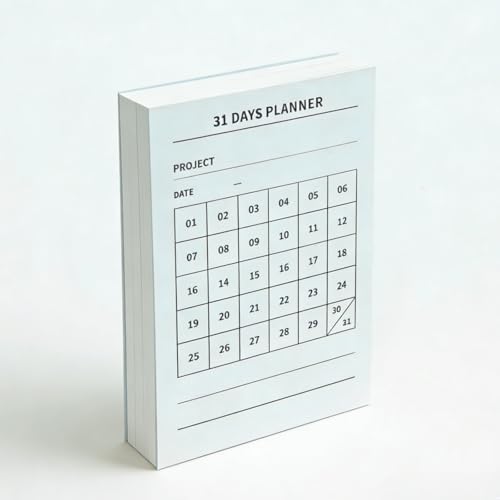
The AidenYolo planner uses 31-day tracking pages and includes 150 tear-off pages. For a 60-day goal, users can track one month and then begin a second page for the remaining days. Its compact 4.72-by-3.15-inch size is intended to fit on a desk, in a drawer, or in a bag.
The product is positioned for daily goals such as fitness, study, and productivity. It is a practical option for buyers who prefer to divide a longer challenge into shorter cycles, making it easier to review progress at the end of each month-like period.
Best for: Portable tracking with repeatable 31-day pages. Limitation: It does not provide a single continuous 60-day page, so users need to carry progress over when starting the next sheet.
Buying Guide: How to Choose a 60-Day Habit Tracker
Do you want to track one habit or several?
Choose a single-goal chart if the main aim is to build one daily streak. Choose a multi-habit calendar or a journal with separate trackers if you want to monitor several routines at once. Before buying, check whether the product’s listed layout supports the number and frequency of habits you plan to record.
Does the tracker need to cover exactly 60 days?
Some products in this group use 31-, 75-, or 90-day formats rather than a dedicated 60-day span. A 31-day pad can be used over two pages, while a longer challenge planner or chart can cover the first 60 days. Undated formats are useful if you want to begin immediately rather than wait for a particular date.
Would you use a journal, desk pad, or wall chart?
A journal is better suited to written prompts and reflections. A desk pad offers a broad writing surface and tear-off sheets. A large scratch-off chart keeps a single goal visible. Consider where you plan to track progress and whether you need portability or a display-friendly format.
What should a useful tracking page include?
Look for fields that match your routine. Daily checkboxes help record completion; weekly or monthly sections support broader reviews; prompts can add context about mood or priorities. Avoid choosing a complex layout if you only need a simple daily mark.
Frequently Asked Questions
Is a 60-day habit tracker better than a 30-day tracker?
A 60-day tracker gives you a longer period to observe consistency and adjust a routine. A 30-day format can still work if you use a second page for the next month-like cycle.
Can I use a 90-day tracker for a 60-day goal?
Yes. Track the first 60 days and leave the remaining squares unused, or continue the habit beyond the initial goal. Check whether the format supports your preferred number of habits.
Should I track every habit on one page?
That depends on your goals. A multi-habit page is convenient for comparing routines, while a single-goal chart can keep attention on one daily behavior.
Are undated habit trackers useful?
Undated trackers let you start when you are ready and avoid fixed calendar dates. They can suit a 60-day challenge that begins outside the start of a month or year.
What is the simplest way to use a habit tracker?
Choose a specific behavior, mark each day you complete it, and review the record regularly. Keep the tracking method simple enough to maintain throughout the full 60 days.