If you need reliable low-pressure water regulation for RVs, camping setups, or household lines, these 5 psi-focused regulators help protect pipes and appliances while maintaining steady downstream pressure. This guide highlights products best suited for low-pressure needs, with clear reasons to choose each option and any important limitations. The top picks are ideal for buyers seeking safe, predictable performance at or around 5 psi, especially in limited-space or plumbing-sensitive applications.
| Product | Brand | Best For | Key Feature |
|---|---|---|---|
| Senninger 3/4″ Hose Thread Pressure Reducer-PSI:10 PSI | Senninger Irrigation Inc. | Landscape irrigation with moderate flow control | 0.5–7.0 gpm range, low hysteresis |
| Dwyer Series MPR Miniature Regulator | Dwyer | Compact, light-weight low-pressure needs | 0–5 psi range |
| Cash Acme 3/4 Inch EB75 PRV | Cash Acme | Tight spaces, simple relief valve | 5 psi setting, easy installation |
| RVGUARD RV Water Pressure Regulator Valve | RVGUARD | RV, camper, trailer plumbing | 3/4″ garden hose thread, gauge, lead-free brass |
| Ficstar RV Water Pressure Regulator | Ficstar | Camper/Travel trailer with adjustable dial | Adjustable scale, inlet screen filter |
Senninger 3/4″ PSI:10 PSI Pressure Reducer

The Senninger PSI:10 regulator is designed for installations that need lower flows, typically 0.5 to 7.0 gpm. It is 100% pressure tested to ensure quality and provides very low hysteresis and friction losses. Best for landscape irrigation setups where moderate flow accuracy is essential. Choose this if you require dependable, field-tested regulation with minimal ripple in pressure.
Best for: Irrigation zones that require stable pressure with moderate flow, where downstream devices demand consistent performance. Not ideal for very high-flow sprinkler systems.
Caution: While designed for reliable performance, verify compatibility with your hose and fittings to avoid misalignment or leaks at connection points.
Dwyer Series MPR Miniature Regulator

The Dwyer Series MPR is a compact regulator suitable for both air and water, delivering 0–5 psi regulation. Its lightweight design and low cost make it a practical choice for small-scale projects or where space savings matter. Best for: tight installations or hobby projects where a small, inexpensive regulator is sufficient. Limitation: not designed for heavy-duty, high-flow systems.
Cash Acme 3/4 Inch EB75 5 PSI PRV

The Cash Acme EB75 PRV delivers targeted 5 psi regulation and is designed for tight spaces and wet-line installations. It emphasizes easy maintenance through a simplified valve cartridge design. Best for: spaces where a compact regulator is needed and where a straightforward replacement process is preferred. Caution: Not intended for potable water applications in all configurations; confirm suitability for your specific system before use.
RVGUARD RV Water Pressure Regulator with Gauge
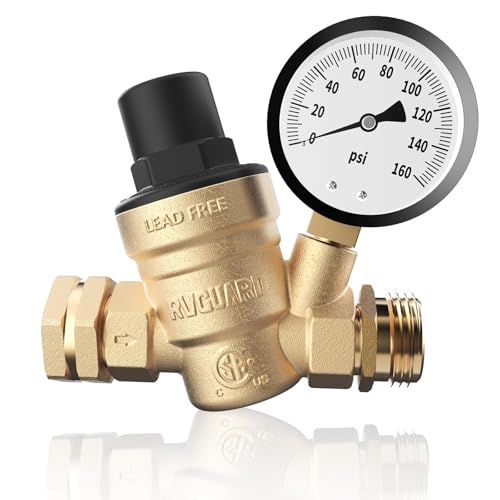
RVGUARD provides a lead-free brass, CSA-approved regulator with a 3/4″ garden hose thread and an inlet screen filter. It includes a gauge for visible pressure monitoring and is designed for RVs, campers, and travel trailers. Best for: RV enthusiasts or small mobile installations seeking a regulator with built-in monitoring. Limitation: The gauge adds a minor potential point of failure if not protected from impact or freezing conditions.
Ficstar RV Water Pressure Regulator

Ficstar’s regulator features an adjustable dial with clear markings to preset the desired pressure, protecting RV plumbing by reducing incoming pressure to safe levels. It includes a double-layer sediment screen for debris filtration at the inlet. Best for: campers and travel trailers needing precise, adjustable control and added filtration. Limitation: The filtering screen requires periodic cleaning to maintain optimal performance.
Buying Guide: Key Considerations for 5 Psi Water Pressure Regulators
- Purpose and environment: RVs, travel trailers, and residential irrigation each have different flow and pressure needs. Choose a regulator that targets low-pressure, steady output for your use case.
- Pressure range and adjustability: Some regulators are fixed at around 5 psi; others offer adjustable ranges up to 160 psi. For 5 psi-focused needs, prefer products with explicit low-end regulation and straightforward adjustment mechanisms.
- Material and durability: Lead-free brass bodies and corrosion resistance extend regulator life in potable and non-potable environments. In wet spaces, ensure compatibility with wet-line installation guidelines.
- Filtration and screens: Inlet screens help protect downstream components from debris. Consider models with built-in filtration if your water source is unfiltered.
- Installation space: Tight spaces benefit compact regulators designed for small footprints. Verify fitting sizes (e.g., 3/4″ garden hose thread) and connection types before purchasing.
- Monitoring features: Gauges offer visibility into current pressure, enabling quick adjustments. Decide if you need a gauge for ongoing monitoring or a simple, no-gauge regulator.
- Safety and standards: Look for regulators with CSA or NSF/ANSI approval when used in RVs and potable water lines. Confirm compatibility with your local water source and usage guidelines.
Frequently Asked Questions
Q: What is the typical purpose of a 5 psi water regulator?
A: It protects plumbing and devices by limiting incoming pressure to a safe, low level, reducing leaks and bursting risk in sensitive lines.
Q: Can I use a 5 psi regulator for all house plumbing?
A: Not generally. Residential plumbing often requires higher pressures; a 5 psi unit is usually best for specific low-flow applications or RV setups.
Q: Do all regulators require regular maintenance?
A: Regulators with inline filters or gauges may need cleaning or recalibration to maintain accuracy and flow. Follow manufacturer guidelines for maintenance intervals.
Q: Is a gauge essential on a regulator?
A: Not always, but a gauge helps monitor pressure, making adjustments easier and safer for downstream devices.
Q: Are lead-free brass regulators safer for drinking water?
A: Yes. Lead-free brass reduces lead exposure risks and aligns with safety standards for drinking water components where applicable.