Choosing the right 3 by 5 index cards can simplify study routines, improve organization, and support quick jotting of ideas. This guide highlights five high-quality options and explains how each card type fits common tasks such as flashcards, notes, and lists. Below, you’ll find a quick product summary and deeper details to help you select the best 3×5 cards for your needs.
| Product | Type | Card Size | Pack Size | Best For |
|---|---|---|---|---|
| Amazon Basics Paper Flash Ruled Index Cards | Ruled | 3 x 5 in | 300 per pack (3 x 100) | Note taking, study aids |
| Oxford Heavyweight Ruled Index Cards | Ruled | 3 x 5 in | 100 per pack | Durable notes, markers and pens |
| Oxford Blank Notecards (5 Packs) | Blank | 3 x 5 in | 500 per pack | Flashcards, freeform notes |
| MSKKSM Colored Index Cards | Colored/Neon | 3 x 5 in | 300 per pack | Color-coded studying |
| Oxford Lined Front, Blank Back Index Cards | Ruled/Blank Back | 3 x 5 in | 500 per pack | Versatile study & organization |
Amazon Basics Paper Flash Ruled Index Cards
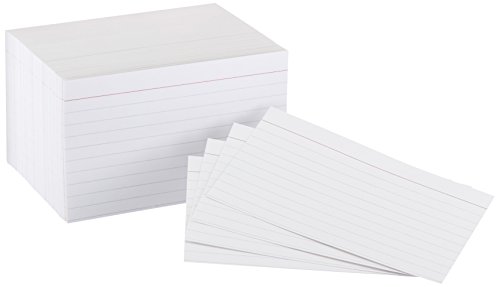
These heavy-weight white cards are designed for durability with a 300-count pack per 100-card bundle. The ruled one-side format supports quick note-taking and organized study sessions. The paper quality emphasizes strength for repeated handling, making them suitable for frequent writing, lists, and study aids.
Features include top-quality heavy commercial stock and precision-cut edges for uniform sizing. This reduces fraying at the edges when flipping through sections or binding with rings. The cards fit standard filing and storage solutions, helping you keep multiple subjects neatly separated.
Ideal uses include flashcard creation, class notes, and quick to-do lists. The 3 x 5 size remains practical for pockets and backpacks, making it easy to carry a concise set of notes between classes or meetings. For learners who prefer crisp, legible writing, these cards offer reliable surface quality.
Oxford Heavyweight Ruled Index Cards

These heavyweight 3″ x 5″ index cards are built to withstand heavy marker use, gel pens, inks, and highlighters. They are a dependable option for students and professionals who need durable note-taking materials that resist bleed-through and show clean handwriting.
The standard 3″ x 5″ size makes them versatile for studying on the go, quick reference notes, or creating compact flashcards. One-sided ruled layout supports fast, legible note-taking, and the sturdy stock helps manage frequent handling in busy environments.
Oxford Index Cards, Blank Notecards
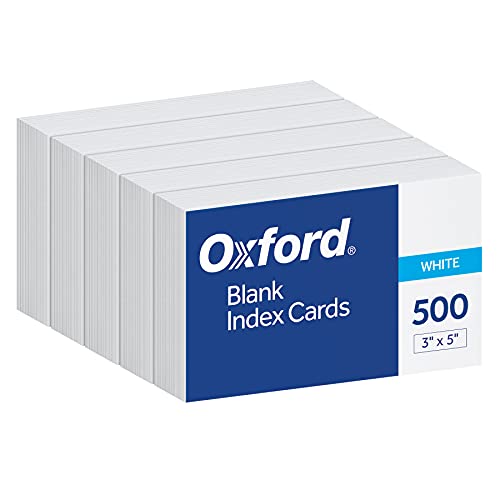
Blank 3 x 5 index cards offer flexible note-taking options for a broad range of tasks. With 500 cards in a bulk pack, they’re suitable for classrooms, households, and teams that routinely require flash cards or to-do lists. Blank surfaces enable sketches, diagrams, and mind-mapping alongside traditional text notes.
The classic 3 x 5 size balances portability with enough writing space for concise explanations. The blank back side provides room for quick drawings or charts, making these cards a versatile choice for both students and professionals who favor freeform organization and color-coding with writing instruments.
MSKKSM Colored Index Cards 3×5 Neon

This set includes neon colored 3 x 5 index cards designed to enhance visual organization. The six colors (red, orange, yellow, green, blue, purple) help create color-coded study systems or prioritized task lists. Each color grouping supports quick categorization and recall during study sessions or busy workdays.
Single-side ruled with a 7mm spacing ensures neat handwriting, while the reverse side remains blank for sketches, diagrams, or quick charts. The 300-count package offers ample supply for classroom use, group projects, or long-term personal study routines.
Oxford Index Cards, Lined Front, Blank Back

This product pairs ruled lines on the front with a blank back, offering a flexible format for various study needs. The 500-count pack (five packs of 100) makes it suitable for large classes, tutoring environments, or households that frequently require organized note-taking and flashcards.
The front-side rule supports consistency in handwriting, while the back side invites diagrams, drawings, or annotated illustrations. This dual-surface design supports multi-modal study approaches, enabling both structured notes and freehand sketches in one card type.
Buying Guide: Key Purchase Considerations
Choosing the right 3×5 cards involves evaluating paper weight, durability, surface finish, and layout. Here are important factors to compare and how they impact use cases.
- Card weight and finish: Heavier stock resists bleed-through when using markers and highlighters. Smooth finishes yield cleaner writing, while slightly textured surfaces can help with pencil and gel pen control.
- Ruled vs. blank: Ruled cards support fast, legible writing for notes and flashcards. Blank backs enable diagrams, charts, or mind maps, which is useful for complex concepts.
- Color options: Colored or neon cards support color-coded study systems, aiding memory and organization. Consider whether you need a multi-color set or a single-color option.
- Pack size: Larger packs reduce per-card cost and ensure consistent availability for ongoing use in classes or offices. Bulk packs are ideal for teachers and study groups.
- Durability needs: Heavier-weight cards are better for frequent handling or use with handwritten marking. If you frequently flip through notes or carry them in bags, durability matters.
- Surface versatility: A mix of ruled and blank sides can cover multiple tasks in one card type, reducing the need to switch between different formats.
- Environmental considerations: Look for recycled contents or post-consumer fibers if sustainability matters to you. Ensure the product meets your local storage and filing needs.
- Price-to-value balance: Compare pack sizes, weight, and features to determine long-term value. Sometimes a mid-weight ruled card with a 300-count pack offers the best balance for students.
In practice, your choice should align with how you study or organize. If you primarily memorize, ruled cards with a good writing surface may be best. If you frequently diagram concepts, blank backs or dual-sided options can streamline your process. For families and classrooms, bulk packs with color variety offer flexibility and cost savings over time.
When using these cards, consider pairing them with a small storage solution—such as a ring binder, index card box, or pocket-sized case—to keep categories organized. For teachers or tutors, grouping by subject and color coding can speed up review sessions and allow for quick, effective feedback.