If you’re chasing that iconic jangly 12-string sound, you need strings designed for balanced tension, clear intonation, and lasting tone. This guide highlights five top options used by many players to achieve a bright, chorus-ready chorus effect or lush, shimmering chords. Each pick targets different playing styles and skill levels, from beginners seeking easy tension to seasoned players chasing longer life and tone stability.
Quick comparison of top 12-string electric guitar strings
| Product | Gauge / Type | Best For | Notes |
|---|---|---|---|
| Ernie Ball 12-String Slinky | 8-40, nickel wound | Bright, cutting tone with classic feel | Long life, consistent performance |
| Ernie Ball 12-String Light | 9-46, nickel wound | Balanced all-around tone | Wound G string adds presence |
| D’Addario EXL150 12-string set | Balanced 12-string gauges | Versatile bright tone, good intonation | Premium nickel wound, long-lasting |
| Ernie Ball 12-String Medium | 11-52, nickel wound | Fuller, richer midrange | Balanced with strong fundamentals |
| KORDOS 12 String Electric | 8-40, nickel wound | Classic chorus sound, long life | Vacuum-sealed for freshness |
Ernie Ball 12-String Slinky Nickel Wound Electric Guitar Strings
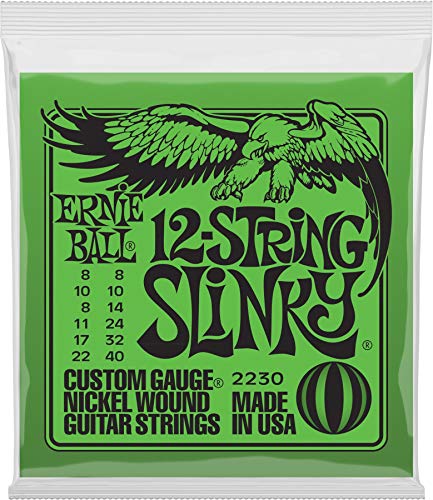
These precision-made strings use nickel-plated steel wire on a hex-shaped core to deliver clear brightness and a signature Slinky feel. The plain strings use tempered high-carbon steel for a bright, well-balanced tone. Best for players who want classic brightness and long string life, with predictable intonation across the fretboard. Caution: higher tension on the neck can be noticeable on very light-duty setups.
Ernie Ball 12-String Light Nickel Wound Electric Guitar Strings

This light gauge set emphasizes balanced overall tone with a wound G string that helps smoothen chord voicings and fingerpicking textures. Ideal for players seeking easy playability with a bright, jangly signature 12-string voice. Limitation: lighter tension can produce a slightly looser feel for aggressive strumming.
D’Addario EXL150 12-String Set

Designed specifically for 12-string electrics, these gauges are carefully balanced (.010/.010, .013/.013, .017/.008, .026w/.012p, .036w/.018p, .046w/.026w) to deliver comfortable playability and a bright, jangly tone with strong intonation across the fretboard. Best for players who want reliable, long-lasting performance and clear articulation across strings.
Ernie Ball 12-String Medium Nickel Wound

This medium gauge set aims for a fuller overall sound with a slightly stiffer attack, which helps articulate complex chord shapes and maintain better sustain on a 12-string. Best for players who want a traditional, robust tone and more stable string tension across the neck. Limitation: heavier gauges may demand more finger strength and setup tolerance.
KORDOS 12 String Electric Guitar Strings

KORDOS emphasizes a vacuum-sealed package for guaranteed freshness and longer life. The 8-40 gauge is engineered for an iconic chorus effect with a balanced tension that remains comfortable for extended playing. Best for players chasing reliable longevity and consistent tone from first strum. Caution: vacuum-sealing helps with shelf life but does not replace routine maintenance on guitars with older hardware.
Stringjoy BAL1024 12 String Signatures

Stringjoy offers a balanced light gauge that aims for an even tension across all strings, reducing detuning and ensuring smooth playability. These strings focus on consistency of tone and intonation with careful quality control. Best for players who want predictable response and easy bending, especially in complex chord shapes. Limitation: some players report a slightly brighter edge compared with uncoated options.
Elixir 12 String Light with NANOWEB

Elixir NANOWEB coated strings are designed for the longest-lasting bright tone and smooth feel. They resist corrosion and humidity, helping maintain tone over time. Best for players who want reliability and minimal tone change between changes. Caution: coated strings may feel slightly slicker and may cost more than uncoated sets.
D’Addario XL 6-String Set (Not 12-string, listed for reference)
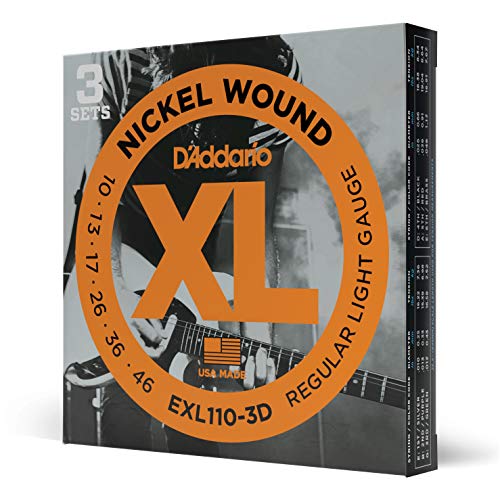
Note: The 6-string XL set is included for comparison only and not a 12-string set. It illustrates D’Addario’s consistent intonation and durable construction, which some players appreciate when pairing with other 12-string sets for stage tuning or experimentation. Avoid confusion by selecting only the 12-string-specific products when shopping for a 12-string instrument.
Buying Guide: How to choose the right 12-string electric guitar strings
- Gauge and tension: Lighter gauges are easier on the fingers and suitable for beginners or intricate chord work, while medium to heavier gauges offer fuller tone and longer sustain. For classic jangly 12-string tones, a balanced set like 8-40 or 9-46 is common.
- Winding and construction: Nickel-wound rounds with hex-core wires provide bright tone and precise intonation. Look for long-life designs if you play frequently or perform live.
- Coated vs uncoated: Coated strings last longer and resist corrosion but can feel slick and may tone down initially. Uncoated strings offer peak brightness but shorter life.
- Intonation stability: Sets with careful core-to-wrap design help keep chords in tune across the fretboard. If your guitar tends to go out of tune, prioritize quality control and balanced tension.
- Chorus-friendly performance: If you want classic 12-string shimmer, choose strings marketed for bright, jangly tones and smooth upper-register response.
- Maintenance: Regular cleaning and proper winding around the tuning pegs helps longevity. Consider a vacuum-sealed option like KORDOS for preserved freshness on long waits between changes.
Frequently asked questions
- What makes 12-string guitar strings different from 6-string sets?
They use paired courses with lighter top strings and a longer scale taste, designed for a chorus-like shimmer and richer chord textures. - Are coated strings worth it for a 12-string?
Coated strings last longer and resist corrosion, but may have a slightly different feel initially and can cost more. - How often should I change 12-string strings?
Frequency depends on playing style, climate, and sweat; players in humid environments may change more often to maintain tone and intonation. - Which string gauge is best for beginners on a 12-string?
Lighter gauges (8-40 or 9-46) are generally easier to press and play, reducing finger fatigue while learning chord shapes. - Can I mix string brands on a 12-string guitar?
It’s possible, but for best intonation and balanced tone across the neck, many players prefer a matched set from the same brand. - What should I consider for tuning stability?
Choose sets marketed for precise intonation and even tension across all strings. Quality-wound core structures help maintain pitch stability.