The best 1/2-inch propane regulator depends on the required pressure, flow capacity, and whether the system needs a second-stage regulator. The Emerson-Fisher R622-BCF is a strong match for buyers seeking a specified 9–13-inch water-column outlet and up to 875,000 BTU capacity. The PMTHMPTS R622-BCF offers similar listed ratings, while the TEENGSE is adjustable for LP or natural gas. The Maxitrol suits buyers who need a 5–12-inch water-column range; Stanbroil is an option when metal construction and a stated operating temperature range matter.
| Product | Best For | Key Detail |
|---|---|---|
| Emerson-Fisher R622-BCF | Residential second-stage systems | 9–13 in. WC; up to 875,000 BTU |
| PMTHMPTS R622-BCF | High-capacity second-stage use | 1/2-inch FNPT; up to 875,000 BTU |
| TEENGSE 102-B | Adjustable LP or natural gas applications | Mode-specific outlet pressure |
| Maxitrol RV48L | LP systems needing 5–12 in. WC | 1/2-inch FPT connections |
| Stanbroil 1/2-inch regulator | Buyers prioritizing metal construction | Operating range 32–225°F |
Emerson-Fisher R622-BCF Second-Stage Regulator
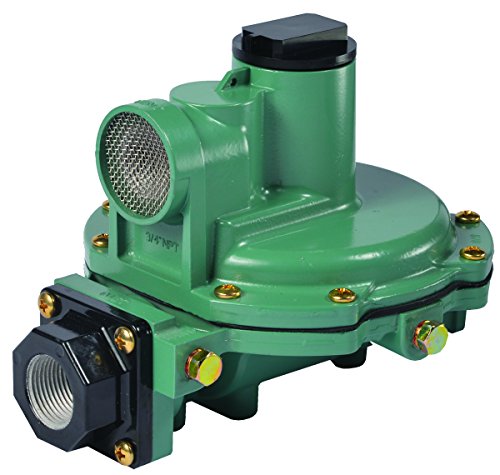
Best for: Residential propane systems that require a second-stage regulator with clearly specified outlet pressure and capacity. The listed 1/2-inch x 1/2-inch NPT connections suit buyers matching those thread sizes.
This model reduces pressure from a first-stage system to a stated 9–13 inches water column and is rated for up to 875,000 BTU. Those specifications make it easier to compare against appliance and system requirements than products with no stated outlet range or capacity.
Limitation: It is identified as a second-stage regulator, so it is not the right choice as a standalone first-stage regulator. Confirm the system’s required pressure, flow, and connection type before purchase.
PMTHMPTS R622-BCF Integral Two-Stage Regulator

Best for: Buyers seeking a 1/2-inch FNPT regulator with a listed high flow capacity. The product features a high-capacity relief valve and filtered vent, and lists a maximum flow of 875,000 BTU.
Its specified outlet pressure is 9–13 inches water column, and the listed operating temperature range is -20°F to 160°F. Choose this if those ratings and the 1/2-inch female NPT connections match the intended installation. Its stated two-stage design distinguishes it from a first-stage-only regulator.
Limitation: Confirm how the “integral two-stage” design fits the system layout and verify the required inlet and outlet specifications with a qualified gas professional.
TEENGSE Adjustable 1/2-Inch NPT Gas Regulator

Best for: Buyers who need an adjustable regulator specified for either LP or natural gas. The product lists 1/2-inch FPT inlet and outlet threads and includes adapters and thread tape.
For LP, the listed outlet is 2.45–2.55 kPa, or about 10 inches water column, at a stated flow of 30 L/min. For natural gas, the listed outlet is 0.95–1.05 kPa, or about 4 inches water column, at 50 L/min. The instructions say the regulator is initially set for LP and describe switching the mode and adjusting the top screw.
Limitation: Its maximum working inlet pressure is listed as 1/2 psi; the product instructions warn against exceeding that. Choose it only when the system’s inlet pressure and flow requirements align.
Maxitrol RV48L LP Pressure Regulator

Best for: Propane applications where the required outlet pressure falls within 5–12 inches water column. The listing specifies LP gas, 1/2 psi inlet pressure, and 1/2-inch FPT inlet and outlet threads.
This is a useful comparison choice for buyers who need a stated outlet range rather than a single target pressure. Check the regulator opening and pipe dimensions carefully: the product information notes that the opening is about 13/16 inches for 1/2-inch gas pipe, referring to the pipe’s outside dimension.
Limitation: The stated gas type is propane, so it should not be selected for natural gas service based on these specifications. Verify pressure and connection measurements before ordering.
Stanbroil 1/2-Inch Gas Pressure Regulator

Best for: Buyers comparing a metal regulator for liquefied propane or natural gas who want a stated operating temperature range. Stanbroil lists a range of 32°F to 225°F and describes the regulator as made of metal.
The listing emphasizes that a regulator controls gas flow to support appliance or equipment performance. This product may suit a buyer whose setup matches its connection size and temperature range, but the supplied details do not state an outlet pressure or flow capacity.
Limitation: Because outlet pressure, maximum inlet pressure, and flow capacity are not provided in the listed features, verify these requirements with the manufacturer or installer before choosing it.
Buying Guide: How to Choose a 1/2-Inch Propane Regulator
Does the system need a first-stage or second-stage regulator?
A first-stage regulator reduces tank pressure to feed a second-stage regulator. A second-stage regulator then provides lower pressure for appliances. The R622-BCF products above are identified as second-stage or two-stage models, while regulator stage should be checked against the system design. Do not assume that every 1/2-inch regulator performs the same role.
Which outlet pressure and capacity should you compare?
Match the regulator’s outlet pressure and flow capacity to the appliance and system specifications. For example, 9–13 inches water column is not interchangeable with 4 inches water column or a 4–12 PSI first-stage output. BTU ratings and flow rates also need to meet the system’s demand. When the product listing omits these figures, seek confirmation before purchase.
How should you verify the connection?
“1/2 inch” alone may not tell you whether a fitting is male or female, or whether it is NPT or FPT. Check both inlet and outlet thread descriptions and compare the regulator with the actual pipe or fitting. The Maxitrol listing specifically notes that pipe nominal size and measured outside diameter are different.
Can one regulator serve propane and natural gas?
Only choose a dual-fuel or adjustable model when its instructions and specifications match the gas type, inlet pressure, and outlet pressure required. The TEENGSE listing gives separate LP and natural-gas settings; the Maxitrol listing specifies propane. Do not switch gas types or settings without following product instructions and applicable professional guidance.
What safety details matter before installation?
Confirm pressure limits, vent requirements, flow needs, and temperature range. A regulator is a critical gas-control component, and a matching thread size does not establish that it is suitable for a particular appliance. Have a qualified gas professional verify selection and installation, and follow local requirements and the product’s instructions.
Frequently Asked Questions
Is every 1/2-inch propane regulator interchangeable?
No. Regulators can differ in stage, pressure range, flow capacity, gas type, and thread configuration. Match all of these details to the system.
What does inches water column mean?
It is a unit used to describe low gas pressure. Compare the regulator’s stated inches-water-column output with the appliance specification.
Can I use a second-stage regulator as a first-stage regulator?
Not unless the manufacturer specifies that use. A second-stage regulator is designed for a different place in a pressure-reduction system.
What if a product listing does not state outlet pressure?
Do not assume its pressure is suitable. Obtain the specification from the manufacturer or choose a model with documented ratings that match the system.
Should a propane regulator be installed by a professional?
Professional verification is a prudent choice for gas-system components. Correct regulator selection and installation depend on system pressure, appliance demand, connections, and applicable requirements.