When shopping for male-to-male NPT adapters, you want durable materials, precise threads, and compatibility with your piping system. This guide highlights five top options suited for professionals and DIYers alike. Each product is evaluated for ease of connection, corrosion resistance, and typical use scenarios. Best for quick pipe-fitting changes, repairs, and assemblies where two male ends must join a larger system without leaks.
Buyer Quick Reference
| Product | Material | Ends | Best For | Notes |
|---|---|---|---|---|
| ALKARAMA 2 pcs 2″ NPT x 2″ NPT | Polypropylene | 2″ NPT Male — 2″ NPT Male | Noncorrosive, light-duty plastics systems | Pack includes 2 connectors |
| CX WONDERLAND 2PCS Brass Nipple Fitting 1/4″ NPT x 1/8″ NPT | Brass | 1/4″ NPT Male — 1/8″ NPT Male | Compact, leak-resistance in small lines | Durable brass, good sealing |
| Sanpaint 2 Pack 3/4″ GHT to 3/4″ NPT Male | Brass | GHT End — 3/4″ NPT Male | Garden-to-pipe conversions | Includes 2 adapters |
| Sanpaint 2 Pack 3/4″ GHT to 1/2″ NPT | Brass | GHT End — 1/2″ NPT Male | Hose to pipe fittings, versatile | Two adapters per pack |
| Dnkoua 2-Pack 316 Stainless Reducing Hex Nipple | 316 Stainless Steel | 1/2″ NPT Male — 1/4″ NPT Male | Corrosion-resistant, high-pressure systems | Thick-walled, robust reducer |
ALKARAMA 2 pcs 2″ NPT x 2″ NPT Double Male Connector

Material and construction: polypropylene offers high impact resistance and corrosion resistance, suitable for non-high-pressure, non-metallic piping systems. This double male connector is a direct NPT-to-NPT adapter. Best for light-duty applications, quick field repairs, and plastic piping networks. A caution: polypropylene is not ideal for high-temperature or high-pressure metal piping environments, so avoid heavy-duty hydraulic or steam systems. Selected for users prioritizing chemical resistance and affordability in PVC-compatible setups.
CX WONDERLAND Brass Nipple Fitting 1/4″ NPT x 1/8″ NPT Male

Construction and suitability: brass offers good durability and leak resistance for potable water lines, compressed air, and other general-purpose piping. This two-end NPT adapter is compact and suitable for tight spaces. Best for small-diameter lines where a quick adaptation between sizes is needed. A limitation: 1/8″ NPT is a smaller thread, so ensure compatibility with your fittings to avoid cross-threading or inadequate seals.
Sanpaint 2 Pack 3/4″ GHT to 3/4″ NPT Male
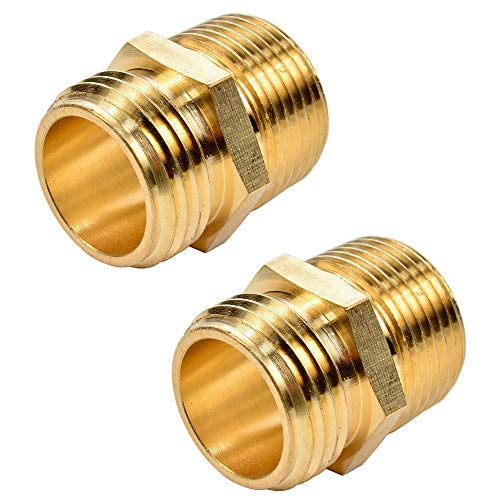
Application and compatibility: this adapter connects a standard garden hose thread to a 3/4″ NPT male, enabling hose-to-pipe adaptations in irrigation or utility lines. Best for outdoor plumbing tasks, lawn irrigation, and temporary setups. Better for garden and landscape projects than for pressurized indoor plumbing, as GHT threads are non-NPT and designed for hoses. Caution: ensure the male NPT end threads match your pipe fittings to avoid cross-threading and leaks.
Sanpaint 2 Pack 3/4″ GHT to 1/2″ NPT Male

Use case and reliability: connects a 3/4″ GHT hose thread to a 1/2″ NPT male, enabling hose-to-pittings transitions in light to medium-duty setups. Best for drip irrigation, small outdoor projects, and temporary connections where quick disassembly is advantageous. Limitations: GHT-to-NPT adapters may introduce more potential leak points if not properly sealed; use appropriate thread sealant or Teflon tape as required by your system.
Dnkoua 2-Pack 316 Stainless Reducing Hex Nipple

Performance and durability: crafted from 316 stainless steel, this reducer nipple handles corrosion resistance and robust environments. It transitions from 1/2″ NPT to 1/4″ NPT, making it ideal for hydraulic, water, oil, or gas applications in harsher conditions. Best for high-rigidity needs and outdoor or industrial settings. A potential limitation: stainless steel components can be heavier and more expensive than brass or plastic options, so balance material choice with system pressure and temperature requirements.
Buying Guide: Key Purchase Considerations
- Material compatibility: Choose polypropylene for light-duty non-metal piping, brass for general-purpose water lines, or stainless steel for corrosive or high-pressure environments.
- End types and compatibility: Ensure both ends are compatible with your system. NPT to NPT is straightforward for metal piping; hose-thread (GHT) ends require corresponding hose components.
- Pressure and temperature: Plastic adapters perform best at lower pressures and temperatures. Metal adapters are better for higher pressure and varying temperatures.
- Seal integrity: Applications involving liquids require proper thread sealing (Teflon tape, pipe dope) or gaskets to prevent leaks. Some adapters include precision threads to minimize leakage risk.
- Corrosion resistance: For outdoor or moist environments, stainless steel or brass offer better corrosion resistance than certain plastics.
- Size and thread standards: Confirm both thread size (NPT) and the thread pitch. Mismatched threads can cause leaks or damage fittings.
- Application type: Determine if you need a straight NPT-to-NPT connection or a transition between NPT and hose threads (GHT). This affects which adapter is the best fit.
FAQ
- What is an NPT adapter used for? – An NPT adapter converts or joins threaded pipe connections, enabling compatibility between different pipe sizes or types within a system.
- Can I use Teflon tape on NPT threads? – Yes, Teflon tape or pipe thread sealant helps create a tight seal on conventional NPT threads.
- Is brass better than plastic for water lines? – Brass is generally more durable and suitable for higher pressures, while plastic adapters are lighter and non-corrosive, better for certain low-pressure applications.
- Do I need a reducer nipple? – Reducers are needed when joining pipes or fittings of different diameters, ensuring proper threading and a secure seal.
- Are GHT ends compatible with NPT fittings? – GHT (garden hose) threads are different from NPT threads. Use adapters intended for GHT-to-NPT transitions if required by your setup.
- How do I prevent leaks at threaded joints? – Clean threads, apply sealant or tape as appropriate, and tighten to the manufacturer’s recommended torque. Avoid overtightening which can damage threads.