If you need reliable automatic water level control for wells, livestock troughs, or storage tanks, a well tank float valve is essential. These valves automatically regulate water fill, prevent overflow, and help maintain pressure within the designed range. This guide highlights five top options, clarifying who each is best for and why. It’s ideal for homeowners, farmers, and small-business operators who want simple, dependable water management without manual adjustments.
| Product | Best For | Key Benefit | Limitations |
|---|---|---|---|
| Replace for F93B-1C Air Volume Controls | Residential well tanks | Maintains air volume and prevents air binding | Brass internal parts require moderate care to prevent corrosion over years |
| Merrill MFG Air Volume Control | Deep-well pump systems | Balances air volume with deep-well tanks | Includes 1-1/4″ pipe body size; ensure compatibility |
| 3/4″ Stainless Steel Float Valve | Commercial/agricultural uses | Corrosion-resistant, precise float control | Higher cost due to stainless steel |
| 2Pcs Brass Float Valve 1/2″ | Livestock troughs and ponds | Solid brass; adjustable water level | Requires correct pressure range (30-50 psi) for full function |
| Mueller Industries 109-814 Float Valve | General water tanks | Dual inlet options; robust mechanical support | May need adapters for some installations |
Replace for F93B-1C Air Volume Controls for Deep Wells

Best for residential well tanks needing air-volume management. This brass-and-thermoplastic design prevents air binding by maintaining proper air volume. Float operation triggers the air valve as water level drops, allowing air to bleed out as the tank refills. It’s designed to keep the tank within its designated pressure range for efficient operation. The brass interior minimizes corrosion risk, while the plastic body adds durability against mechanical damage. Choose this for straightforward, dependable air-volume control in home storage tanks.
Who it’s best for: homeowners installing or upgrading a residential well storage system that relies on consistent air balance. Caution: ensure the inlet/outlet sizing matches your plumbing (1-1/4″ MNPT and 1/4″ PTF SAE as listed) to avoid fit issues.
Merrill MFG Air Volume Control for Deep Wells

Best for deep-well pump systems that require stable air balancing in galvanized tanks. It uses a 1-1/4″ body with an included 1/4″ tap for access to a gauge, and brass internal parts minimize corrosion. This valve helps maintain proper air volume as water is drawn and refilled, supporting efficient well-tank performance. Choose this if your setup involves deeper wells and you want a dedicated air-volume control with corrosion-resistant internals.
Best for: deep-well configurations where reliable air-volume regulation is critical. Limitation: verify your thread and gauge tap compatibility before purchasing.
3/4″ Stainless Steel Float Valve

Best for applications demanding corrosion resistance and precise auto-fill performance. This valve features premium 304 stainless steel construction, a 6-inch adjustable float for precise shut-off, and a 90-degree elbow with a sealing plug to minimize splashing. It’s suitable for commercial tanks, livestock troughs, and irrigation systems where durability and long life are priorities. Choose this when you need a robust, splash-reduced fill valve that holds up under harsher environments.
Limitation: higher upfront cost typical with stainless steel, but long-term value against corrosion.
2Pcs Brass Float Valve 1/2 Inch

Best for small-scale livestock or pond setups needing adjustable auto-refill. These valves are made of solid brass with a durable plastic ball, designed to resist corrosion and wear. They include easy level adjustment via a metal wing nut and operate between 30-50 psi. Best for: mid-size troughs or ponds where a compact 1/2″ valve is sufficient. Caution: ensure your system pressure stays within the recommended range to avoid incomplete shut-off.
Mueller 109-814 Float Valves
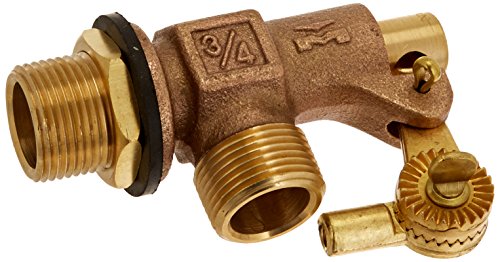
Best for general-purpose water tanks requiring solid construction and reliable support. The Mueller 109-814 features dual inlet threads for flexible connections, high-tenacity serrated arms, and a machined flange to bolster support against tank walls. It’s suitable for a wide range of tanks, from livestock to industrial settings. Choose this when you want a versatile valve with strong mounting and robust threading. Limitation: installation may require compatible adapters depending on existing plumbing.
Buying Guide: Key Purchase Considerations
- Application environment: Choose corrosion-resistant materials (brass or stainless steel) for outdoor or agricultural use, where moisture and chemical exposure are higher.
- Flow and pressure range: Confirm the valve’s operating pressure and flow to match your system. A mismatch can lead to incomplete shut-off or frequent re-fills.
- Inlet and outlet sizing: Verify thread sizes (such as 1/2″, 3/4″, 1-1/4″ MNPT) and gauge taps to ensure compatibility with your existing plumbing and gauges.
- Float adjustment range: A longer or adjustable float improves control for larger tanks or troughs; ensure there is an accessible adjustment mechanism.
- Durability vs. cost: Stainless steel valves offer long life in tough environments but cost more upfront. Brass is a solid all-round choice with good durability.
- Installation considerations: Some valves require mounting features (flanges, adapters, or elbows). Check compatibility with your tank wall and space.
Frequently Asked Questions
- What is a float valve and how does it work?
A float valve automatically controls water fill by using a buoyant float that rises with water level and shuts off the valve when the desired level is reached.
- Which material lasts longest in outdoor livestock settings?
Stainless steel and brass valves typically offer the best balance of durability and corrosion resistance in outdoor or farm environments.
- Do these valves require electricity?
No. Float valves operate mechanically connected to the water supply and do not require power.
- Can I use a float valve in a deep-well tank?
Yes, but choose one designed for deeper systems and ensure compatibility with your tank’s pressure and inlet size.
- How do I adjust the water level?
Many models have adjustable floats or wing-nut mechanisms to fine-tune the shut-off level. Follow manufacturer instructions for precise settings.
- Are there limits on water pressure?
Yes. Float valves specify a working pressure range; exceeding it can cause leaks or improper shut-off.