Bearded dragon keepers should prioritize reliable basking lamps that deliver consistent heat and UV exposure. This guide highlights top options suited for different setups, from compact cages to larger terrariums. The best picks include clamp-style heaters, dome fixtures, and two-pack sets designed to create distinct hot and cool zones. Each entry notes who it’s best for and why it stands out, plus a practical caution to help you choose confidently.
| Product | Best For | Key Benefit |
|---|---|---|
| Fluker’s Repta-Clamp Lamp | Smaller to medium tanks, beginners | Strong heat with easy secure mounting |
| Dual Reptile Light Fixture with Switches | Bearded dragons needing separate heat and UVB control | Independent switches for precise setup |
| ReptiKing Basking Light (2-Pack) | Two-area thermoregulation in mid to large tanks | Two bulbs provide robust basking zones |
| ReptiKing Reptile Light Fixture (5.5″ Dome) | Small to medium terrariums needing focused glow | Deep reflector for enhanced UVA output |
| BOEESPAT Reptile Lamp Fixture 5.5″ Deep Dome | Versatile use with multiple bulb types | High UVB/UVA reflectivity and independent switch |
Fluker’s Repta-Clamp Lamp, 150W Max
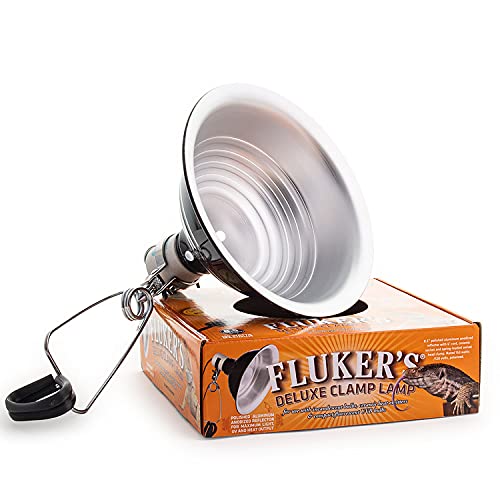
The Fluker’s Repta-Clamp Lamp offers a compact 8.5-inch clamp with a UL/CUL-approved heat source. It supports up to 150-watt incandescent bulbs or ceramic heat emitters. Best for small-to-medium terrariums where space is limited and a sturdy clamp is needed. This unit is ideal for bearded dragons that require a focused basking spot while maintaining easy mounting and simple on/off operation. A limitation is that higher wattage requires careful placement to avoid overheating smaller enclosures.
Dual Reptile Light Fixture with Switches

This fixture provides two independent switches, letting you separately control heat lamps and UVB bulbs. It supports up to 160W per socket, making it suitable for ceramic heat bulbs and UVB bulbs alike. It’s best for bearded dragons that benefit from distinct heat and UVB cycles or when you want to fine-tune basking zones without swapping bulbs. A potential drawback is the requirement for multiple bulbs to reach full spectrum coverage in larger habitats.
ReptiKing Basking Light (2-Pack) 100W

This two-pack provides intensified basking options with 100W bulbs designed to create a clear hot zone in terrariums. The bulbs simulate direct sunlight UVA output to support natural behaviors and growth. It’s best for bearded dragons needing reliable dual-zone heating, though buyers should verify compatibility with existing fixtures to avoid over-wattage in compact enclosures.
ReptiKing Reptile Light Fixture (5.5″ Dome)

The 5.5-inch dome focuses heat with a deep aluminum reflector, boosting UVA output for improved basking efficiency. It’s best for small-to-mid-sized terrariums where precise, directed light is preferred. The inline on/off switch and long cord offer convenient operation. A limitation is that the smaller dome may cover a narrower basking area, requiring careful positioning for larger reptiles or tanks.
Fluker’s Incandescent Basking Spotlight

Fluker’s 100-watt spotlight provides focused heat and light for basking zones. It is straightforward to install and directs heat toward a defined area, making it suitable for beginners who want simple setup. A caution is that focusing too narrowly can create uneven temperatures if placement isn’t precise across the basking site.
BOEESPAT Reptile Lamp Fixture 5.5 Inch Deep Dome

This deep dome fixture supports up to 250 watts and works with E26 base bulbs, including UVA/UVB basking bulbs and ceramic heat lamps. It features high UV reflectivity aluminum interior and a long independent-switch power cord. It’s best for larger tanks requiring strong, broad-spectrum warmth. A limitation is the high wattage capacity, which necessitates careful control to prevent overheating in small enclosures.
ReptiKing Reptile Heat Bulb Lamp (2-Pack) 100W

These 100W basking bulbs are designed to promote daytime activity and thermoregulation. They support the creation of a distinct basking zone while allowing integration with additional heat sources for round-the-day cycles. Best for bearded dragons that benefit from a strong daytime heat source. A caution is ensuring compatibility with existing fixtures to avoid exceeding fixture wattage limits.
Buying Guide
What wattage should you choose for a bearded dragon basking lamp?
- Small terrariums (under 40 gallons): 50–100W bulbs are typically sufficient for a focused basking spot.
- Medium to large terrariums: 100–150W or two bulbs can help create a robust hot zone across a larger area.
Lamp type considerations
- Clamp lamps are versatile for tight spaces and easy repositioning, ideal for beginners.
- Domes offer controlled distribution and UVA output; choose larger domes for bigger tanks.
- Two-pack or dual-bulb setups help maintain consistent day-night cycles and heat distribution.
Installation and safety tips
- Place basking lamps above or at the edge of the basking spot to avoid direct contact with the reptile.
- Use thermostats or pulse protectors to prevent overheating and maintain stable temperatures.
- Regularly check bulb brightness and replace as needed to ensure consistent heat output.
FAQ
- Q: How close should a basking lamp be to a bearded dragon?
- A: Position the lamp to create a defined hot zone while avoiding direct contact with the animal. Refer to fixture guidance and monitor the basking temperature with a reliable thermometer.
- Q: Is it better to use two smaller bulbs or one large bulb?
- A: Two bulbs can offer more even heat distribution and zoned thermoregulation, which is often preferable for larger enclosures.
- Q: Do I need UVB灯 bulbs in addition to basking bulbs?
- A: Yes, UVB bulbs support vitamin D synthesis and overall health in bearded dragons. Many fixtures are designed to work with UVB along with heat sources.
- Q: What safety features should I look for?
- A: Independent switches, secure clamps, rated heat resistance materials, and compatibility with a thermostat or dimmer help ensure safe operation.
- Q: Can I mix brands in the same terrarium?
- A: It’s acceptable if each component’s wattage and UV output are appropriate for the enclosure and kept within safety guidelines.