Answering the question of which quinacridone violet oil paints offer the best pigment load, lightfastness, and color clarity, these top picks suit painters seeking vibrant, durable violets. This guide highlights five reliable brands and helps you decide who should choose each option—from studio professionals to dedicated hobbyists. The buyer’s notes below explain why each product was selected and what to watch for when composing color palettes. A quick summary table follows to compare key points at a glance.
Product Comparisons At a Glance
| Product | Brand | Best For | Notes |
|---|---|---|---|
| M. Graham Artist Oil Paint Quinacridone Violet | M. Graham & Co. | Vibrant color lovers seeking solvent-free, high-pigment oils | Walnut oil base; strong pigment load; preserves clarity over time |
| Gamblin Artist Oil Quin Violet | Gamblin | Controlled, clean violets with strong coverage | Warmer than some violets; more intense than Ultra Violet |
| Gamblin 1980 Oil Quin Violet | Gamblin | Classic studio color with reliable consistency | Historical line; consistent pigment distribution |
| Gamblin Artist Oil Color Quinacridone Violet 150 ml | Gamblin | Large-volume painter needing vivid, pigment-rich violet | Pure pigments; refined linseed oil; retains tint |
| Williamsburg Quinacridone Violet | Williamsburg | High-quality, hand-made oils with strong lightfastness | Rich pigmentation; excellent lightfastness |
| Utrecht Artists’ Oil Paint Quinacridone Violet | Utrecht | Reliable student to professional grade | 37 ml tube; clear quinacridone violet |
M. Graham Artist Oil Paint Quinacridone Violet
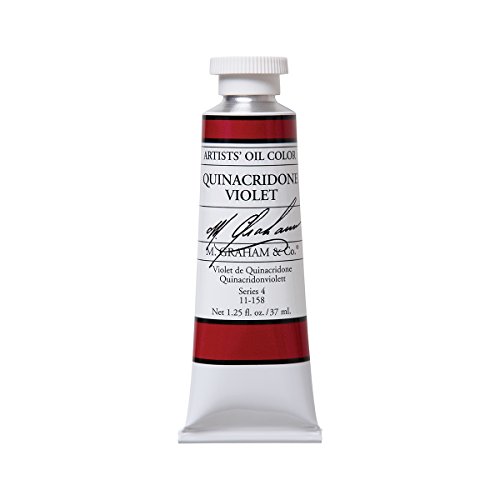
Best for artists seeking a solvent-free option with a walnut-oil base and high pigment load. This paint is prized for color strength and clarity, resisting the yellowing often associated with drying oils. The pigment load supports strong coverage in thin glazes or bold impasto. Best for studio painters who prefer a more natural drying medium and a vibrant violet that remains true over time.
Who it’s best for: Professional studios and serious painters who value pigment richness and a solvent-free formula. Why selected: It combines a robust violet with clarity and long-term stability.
Limitation: Walnut oil bases can darken slightly in very slow-drying environments; expect subtle tonal shifts as the paint ages.
Gamblin Artist Oil Quin Violet

Best for color accuracy and a clean, pure quin violet with strong coverage. This option is warmer than some violets and sits between purples and magentas in tonal range. Ideal for artists who want a reliable, studio-grade color that can be dialed into cooler mixtures or used to create rich depths in shadows.
Who it’s best for: Painters who prefer a clean pigment footprint and predictable mixing behavior. Why selected: Distinct warmth relative to Ultra Violet, offering versatile mixing potential.
Limitation: Might appear slightly less cool than some other quinacridone violets when used in cool, blue-dominant palettes.
Gamblin 1980 Oil Quin Violet

Best for traditional studios that prioritize a long-standing formulation and consistent color behavior. This quin violet is part of a lineage known for dependable results across oil painting techniques. It supports glazing and layering while maintaining color integrity.
Who it’s best for: Artists who favor a proven, classic oil color with predictable handling. Why selected: Represents a reliable, historically grounded option within Gamblin’s line.
Limitation: Some users may prefer newer formulations with higher pigment loads for very intense color in a single layer.
Gamblin Artist Oil Color Quinacridone Violet (150 ml)

Best for painters needing a large tube with pigment-rich color and strong lightfastness. The color is designed to retain its tint and vibrancy across layers, thanks to high-quality pigments and refined linseed oil. This option suits studio environments and artists who work with extended sessions or large canvases.
Who it’s best for: Those who require a generous supply for large works or frequent use without frequent restocks. Why selected: Combines pigment strength with durable color stability in a larger volume.
Limitation: Bulk packaging means higher upfront cost, and color depth can vary slightly depending on linseed oil handling in your studio.
Williamsburg Quinacridone Violet

Best for artists who value handmade oil colors with excellent lightfastness. Williamsburg colors are known for depth and saturation, making them a strong choice for detailed work and nuanced glazing. The palette tends to provide rich violets when layered over drying oils.
Who it’s best for: Studio painters seeking premium, hand-made oils and long-lasting color. Why selected: Strong lightfastness and richly pigmented violet offer reliable performance in complex compositions.
Limitation: Availability can fluctuate; some users may find slight variations between batches due to hand-made formulation.
Utrecht Artists’ Oil Paint Quinacridone Violet

Best for students and professionals seeking dependable color at an accessible price. Utrecht’s quinacridone violet provides straightforward handling, reliable pigment load, and clear color identity. It’s a balanced option for mixed-media artists and beginners expanding color palettes.
Who it’s best for: Students and budget-conscious artists who still require quality pigment and predictable results. Why selected: A solid, entry-to-mid-level choice with consistent performance.
Limitation: May not achieve the same intensity as premium, high-pigment lines in very saturated, large-scale works.
Buying Guide: How To Choose The Right Quinacridone Violet Oil Paint
What pigment strength do you need?
Higher pigment load yields more vibrant color with fewer applications. If you paint large areas or require strong color right away, prioritize brands noted for pigment strength.
What drying medium do you prefer?
Oil base matters: walnut oil, linseed oil, or proprietary blends affect drying time, color warmth, and aging behavior. Your studio environment can influence these effects.
Lightfastness and color stability
Long-term color integrity matters for gallery work and archival pieces. Look for brands known for lightfast pigments and stable tint strength across glazing layers.
Volume needs and budget
If you work on large canvases, a 150 ml tube reduces restocking frequency. For studio practice or beginners, 37 ml tubes are often sufficient with predictable performance.
Tone and temperature of violet
Quinacridone violets can vary from cooler blue-dominant to warmer magenta-influenced purples. Your palette goals determine which hue aligns best with other colors in your work.
FAQ
- What makes quinacridone violet different from other purples? Quinacridone violet typically offers strong color purity, high chroma, and good lightfastness, often with a transparent to semi-opaque quality depending on the brand.
- Are there solvent-free quinacridone violets? Yes, some brands market solvent-free oil paints that use alternative oils, such as walnut oil, to reduce solvents while maintaining pigment strength.
- Which brand is best for glazing? Brands with high tint strength and stable drying times, such as Gamblin and Williamsburg, are often favored for glazing layers without color shift.
- How do I know which violet to choose for beginners? Utrecht or similar mid-range options offer reliable handling and cost-effectiveness, making them suitable for learnersbuilding a palette.
- Can quinacridone violet be mixed with warm and cool tones? Yes. Quinacridone violet blends well with both warm and cool primaries, allowing a full range of purples and magentas in compositions.
- Is a large tube worth it for a beginner? A large tube is cost-effective over time and convenient for ongoing projects, but a beginner can start with 37 ml tubes to test color behavior.