Answering the top buyer’s question: which self-latching door locks combine reliability, ease of installation, and durable construction? This guide highlights five strong options suited for bathrooms, bedrooms, gates, cabinets, and more. Each pick prioritizes automatic locking, solid materials, and simple mounting. The listed products target different user needs—from quick DIY installs to compact designs for tight spaces—and indicate who benefits most from each style.
Summary of selected products:
| Product | Best For | Material | Notes |
|---|---|---|---|
| FATLODA 2 Pack Barrel Bolt Latch | Bathrooms, bedrooms, lockers | Stainless steel | Thickened panel, brushed finish |
| INIRET 4 Packs Self-Closing Latches | Wooden doors, cabinets | Aluminum alloy | Automatic self-latching |
| Dixiao 304 Stainless Steel Round Hidden Recessed Cup Door Lock | Interior doors, closets | 304 stainless steel | Low-profile, four bolt options |
| Watris Veiyi Spring Loaded Latch | Gates, sheds, windows | Zinc alloy | Spring-loaded, self-closing |
| Topbuti Latch Guard Clasp Front Door Locks (2 Pack) | Swing-in doors, child safety | Aluminium alloy | Reinforcement latch guards |
FATLODA 2 Pack Barrel Bolt Latch

Best for: quick-install security on interior doors, chests, and storage spaces. This heavy-duty sliding lock uses a thickened stainless steel panel, brushed finish, and a bold bolt to resist casual force. It is positioned as a practical upgrade over standard door bolts, aiming for reliable everyday privacy in bathrooms, bedrooms, and lockers.
Why chosen: Stronger than typical sliding locks, easy installation with a power driver, and designed for durability through corrosion-resistant finishing. The kit includes screws for mounting, supporting a straightforward DIY setup.
Limitations: While robust, this latch is a non-rekeying mechanical lock—useful for privacy, not high-security entry control. Best for interior applications where simple, quick locking is sufficient.
INIRET 4 Packs Self-Closing Latches

Best for: wooden doors, windows, and cabinets where automatic locking is beneficial. The design features a tilt-port mechanism with a built-in spring, enabling the latch to engage automatically as the door closes.
Why chosen: One-piece die-cast forging and aluminum alloy construction offer longevity and weather resistance. The self-latching action reduces the need for manual locking and increases convenience in frequently used spaces.
Limitations: Some installations may require precise positioning; verify door thickness compatibility before mounting. Not ideal for doors requiring high-security locking or key access.
Dixiao 304 Stainless Steel Round Hidden Recessed Cup Door Lock

Best for: interior doors where a low-profile lock is preferred, such as closet doors, bedrooms, and bathrooms. The set uses 304 stainless steel to resist humidity and corrosion, with four bolt options to match door thickness.
Why chosen: Rust-free performance and a flush look that minimizes protrusions. The kit includes multiple bolts to accommodate various door thicknesses, making it versatile for different installations.
Limitations: recessed cups require careful alignment; ensure the chosen bolts fit your door thickness and profile for a clean finish.
Watris Veiyi Spring Loaded Latch
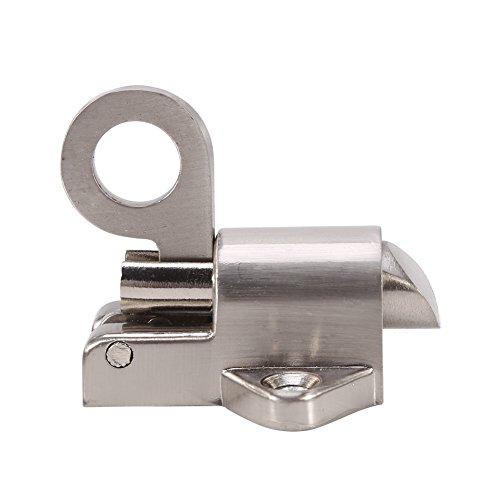
Best for: gates, sheds, and exterior-facing enclosures where a self-closing action helps secure openings with limited access. The latch is spring-loaded for automatic reset and locking on close.
Why chosen: Built from zinc alloy for durability and resistance to rust, with straightforward installation that makes it suitable for outdoor-adjacent uses where weather exposure is a concern.
Limitations: Zinc alloy offers good durability but may not match heavy-duty commercial hardware in extreme environments. Check door alignment to ensure smooth latching.
Topbuti Latch Guard Clasp Front Door Locks

Best for: swing-in doors where child safety and extra privacy are priorities. The latch guard clasp provides reinforcement and an extended bar for additional security against forced entry and tampering.
Why chosen: Reinforcement style designed to work with most inward-swing doors, with a legible fit over the door edge to engage the catch. It helps prevent small children from opening doors abruptly.
Limitations: Requires proper alignment with the door jamb; installation complexity may vary depending on door construction and frame geometry.
Buying Guide
What to consider before buying
- Door type and swing: Inward vs outward doors influence whether you need a latch guard, a self-closing bolt, or a low-profile recessed lock.
- Material durability: Stainless steel and aluminum alloys offer corrosion resistance, making them suitable for humid bathrooms or outdoor use.
- Locking mechanism: Self-closing and automatic latching reduce gaps and provide faster access control, but evaluate if you need a lock that can be rekeyed or only privacy-locking.
- Installation effort: Some designs require precise alignment or pilot holes; consider professional help if mounting on hollow-core vs solid-core doors.
- Security level: For high-security needs, pair self-latching hardware with additional hardware like deadbolts or strike plates; simple privacy latches deter casual intrusion.
Materials and compatibility
- Stainless steel (304/316) offers excellent corrosion resistance and strength for interior and exterior use.
- Aluminum alloy is lighter, often sufficient for cabinet doors and interior applications.
- Zinc alloy provides durability and cost efficiency for general-purpose latches in sheds, gates, and interior doors.
Installation tips
- Follow manufacturer screw recommendations and use the included hardware when available.
- Use a center punch to mark screw positions and pre-drill pilot holes to prevent door frame splitting.
- Test latching with the door in different states (open, half-closed, fully closed) to ensure reliable engagement.
Which one should you choose?
- Best for quick DIY privacy on interior doors: FATLODA Barrel Bolt Latch.
- Better for wooden doors and cabinets needing automatic engagement: INIRET Self-Closing Latches.
- Choose this if you want a low-profile, recessed look: Dixiao Recessed Cup Door Lock.
- Best for outdoor-adjacent or garden use: Watris Veiyi Spring Loaded Latch.
- Best for swing-in doors with child safety in mind: Topbuti Latch Guard Clasp.
FAQ
- What is a self-latching door lock?
A self-latching lock automatically engages when the door is closed, providing privacy without manual locking. - Are these locks suitable for exterior doors?
Some models are designed for enclosed or indoor-use spaces; outdoor suitability depends on material and weather exposure. Check corrosion resistance before use outside. - Do I need professional installation?
Not always. Many models are DIY-friendly, but precise alignment is crucial for reliable latching on some designs. - Can I install multiple locks on a single door?
Yes, but ensure the door structure can support multiple fixtures and that the additional hardware does not interfere with door operation. - What is the difference between a latch and a bolt?
A latch typically engages automatically or with a simple action, whereas a bolt often requires manual movement to secure the door. - Is a hidden or recessed lock better for aesthetics?
Recessed designs offer a low-profile look but may require more careful installation to ensure proper alignment.