Answering the search for practical solar system classroom displays, this guide highlights five clear, visually compelling options. These picks suit different learning environments—k-12 classrooms, science corners, and home study nooks—whether you need a durable wall poster, an interactive model, or reusable cutouts. Each product is evaluated for best use case, ease of setup, and what makes it stand out for teaching astronomy to young learners.
The following summary table helps compare core features and ideal uses at a glance.
| Product | Best For | Format | Key Benefit |
|---|---|---|---|
| Science Can Solar System for Kids | Interactive learning in classrooms | Interactive projector model | Quiz mode and bilingual options promote engagement |
| Sumind Solar System Poster Large | Wall displays and backdrops | Large poster banner | Wide, panoramic view for visuals |
| Fun Express Inflatable Solar System | Hands-on decor and demonstration | Inflatable 3D pieces | Realistic color and scale for classroom displays |
| Zonon Classroom Space Decor Solar System Poster | Decorative, educational wall art | Poster set | Clear, labeled planet details |
| BeYumi 45Pcs Solar System Cutouts | Bulletin boards and learning corners | Cardstock cutouts | Reusable, easy to arrange |
Science Can Solar System for Kids – Interactive Model
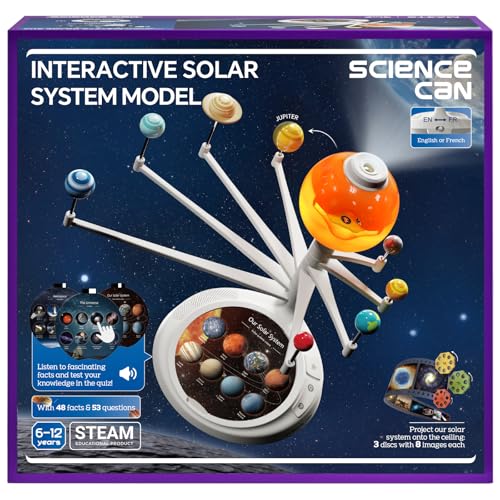
The Science Can Solar System for Kids offers an interactive talking model designed for ages 6–12. It includes 3 knowledge cards with 48 facts and supports English and French options. A built-in interactive quiz mode features 53 questions to reinforce astronomy concepts. This is best for classrooms seeking a hands-on, language-inclusive learning tool that turns a space topic into an engaging activity. A limitation is the reliance on a single projector-based setup, which may require a dim room for projection clarity.
Who it’s best for and why selected
- Best for hands-on learners who benefit from verbal explanations and bilingual support.
- Ideal for small group stations or STEM centers focusing on early space education.
Sumind Solar System Poster Large

This Sumind poster provides a panoramic 70.9 by 15.7 inches display, designed for classroom walls or backdrops. It’s a sturdy, waterproof material suited for busy learning spaces and frequent handling. Installation is straightforward with 60 glue points included. The wide format supports quick, global overviews of the solar system, making it a strong visual anchor for lessons. A potential drawback is that it may require additional framing or protection in high-traffic areas to avoid creasing.
Who it’s best for and why selected
- Best for: classrooms needing a large, visual solar system centerpiece.
- Why chosen: durable, eye-catching, and quick to deploy for full-room demonstrations.
Fun Express Inflatable Solar System Model Kit

The Fun Express inflatable model kit includes 10 durable pieces representing all eight planets, Pluto, and the Sun, in scientifically colored designs. The set acts as a hands-on, cross-curricular decor option for science displays and space-themed events. It’s especially effective for demonstrations and student demonstrations of scale and orbit concepts. A caveat is that inflatable pieces may require storage space and careful handling to prevent punctures.
Who it’s best for and why selected
- Best for: interactive demonstrations and temporary classroom setups.
- Why chosen: engaging, movable pieces help illustrate planetary differences and orbital concepts.
Zonon Solar System Poster Set for Classrooms
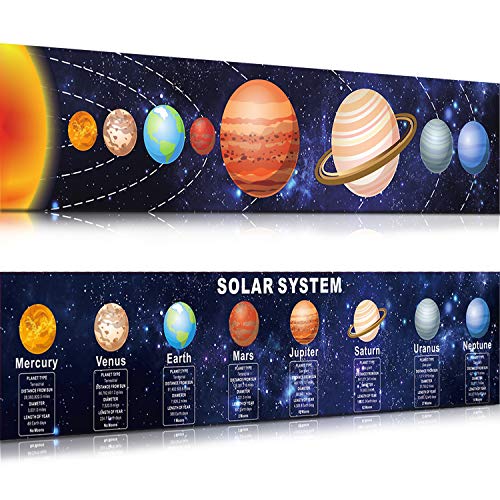
The Zonon solar system posters present a detailed set of eight planets with factual captions. They’re designed to support middle and high school visuals, offering clear labeling, which helps students recognize planet types, distances, diameters, and lunar counts. The set supports easy classroom decoration and can complement larger displays or bulletin boards. A limitation is that posters rely on static visuals, which may be less engaging for younger students without additional activities.
Who it’s best for and why selected
- Best for: supplementing written and visual astronomy lessons in middle to high school settings.
- Why chosen: clear, readable information that aligns with standard science curricula.
BeYumi 45Pcs Solar System Cutouts

This BeYumi set provides 45 cardstock cutouts depicting the nine planets with pieces designed for reuse in classroom walls and bulletin boards. The kit includes adhesive dots for easy mounting, supporting flexible display layouts. It’s best for quick, modular decor at back-to-school time or space-themed projects. A limitation is that cutouts require ongoing maintenance to keep them securely attached on busy bulletin boards.
Who it’s best for and why selected
- Best for: customizable display corners and recurring classroom projects.
- Why chosen: versatile, reusable pieces that simplify space-themed decor planning.
Buying Guide: Key Considerations For A Solar System Classroom Display
What should you prioritize when choosing a solar system classroom display? Consider room size, durability, and how your students learn best.
- Learning style alignment: If your students benefit from hands-on activities, interactive models and inflatable kits can boost engagement; for visual learners, large posters and cutouts work well.
- Durability and reuse: Posters and cutouts should stand up to frequent handling. Look for laminate or sturdy card stock for long-term use in classrooms.
- Space and placement: Measure wall space for posters or consider ceiling projection for projection-based models. Ensure the display won’t obstruct movement or safety.
- Language accessibility: Bilingual or multilingual options help diverse classrooms; consider materials with clear labels and captions.
- Maintenance: Reusable pieces (cutouts, posters) are easier to refresh for new units; inflatable or electronic models may require storage or power considerations.
- Educational alignment: Look for materials that clearly tie to standard astronomy concepts—planets, orbits, distances, and celestial bodies—to streamline lesson planning.
Frequently Asked Questions
- What type of solar system display is best for small classrooms? A compact interactive model or a single large poster often fits best in small spaces while still enabling group exploration.
- Are inflatable solar system models suitable for permanent classroom displays? They are better for temporary decor or demonstrations, as they require space and careful handling.
- Which option supports multilingual learners? Models or kits offering English and French options, or clearly labeled posters, help dual-language classrooms.
- How can I maximize engagement with a solar system display? Combine a large poster with a hands-on activity station, quizzes, and periodic demonstrations using model pieces.
- What maintenance is typical for classroom solar system displays? Posters and cutouts may need occasional replacement or repositioning; inflatable items require patching or storage care.
- Can these displays align with science standards? Yes, most options present core solar system concepts such as planets, units of distance, and orbital cycles in accessible formats.