Short answer: for customers seeking reliable nitro RC fuel, the TORCO gallon option is ideal for larger hobbyists and frequent flyers; VP Racing fuels dominate for ready-to-use, performance-focused RC cars and trucks. This guide highlights five options that balance power, lubrication, and practicality, helping you choose the right fuel type for your specific RC vehicle and driving style.
| Product | Brand | Best For | Notes |
|---|---|---|---|
| Torco RC Fuel 15% Nitro Airplane 1 Gallon | TORCO | Casual flyers and larger-scale RC airplanes needing longer run times | Gallon size minimizes refills; improves lubrication |
| VP Racing Fuels 4496107 20% Nitro Race Car 9% Oil – Quart | VP Racing | 1/8-scale street & trail RC cars needing a balanced blend | Convenient quart for storage and transport |
| VP Racing PowerMaster Car 20% Nitro 9% Synthetic Castor Oil – 2 Quart | VP Racing | High-performance 1/8-scale racing or mixed terrain | Two-quart package; strong lubrication and power |
| VP Racing Fuels 4496187 RC Pro Race 30 Motorsport Fuel – Quart | VP Racing | High-RPM racing with advanced lubrication | Dye-free to improve mileage and bottom-end power |
| VP Racing Fuels 4496107 20% Nitro Race Car 9% Oil – Quart (1 Pack) | VP Racing | Standard 20% Nitro builds; frequent racers | Popular choice for champions and clubs |
Torco Nitro Airplane Fuel With 15% Nitro

Best for: hobbyists who operate larger RC airplanes and want longer run times. This gallon-sized option reduces frequent purchases and offers improved lubrication for smoother operation. Consider as a primary choice when airframes require steadier power over extended flights. Caution: not all models are tuned for higher nitro percentages; ensure compatibility with your engine before use.
VP Racing Fuels 20% Nitro Race Car (Quart)
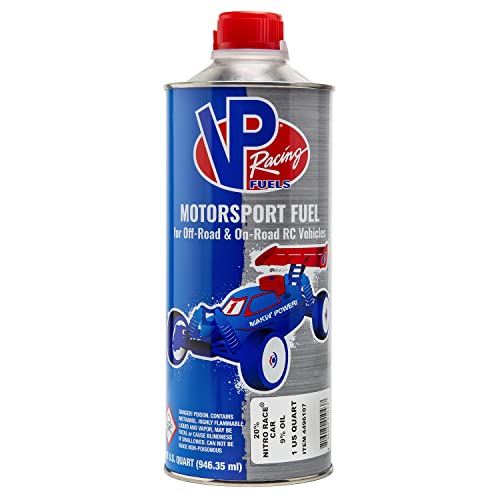
Best for: on-the-go racers needing a ready-to-use quart can for 1/8-scale street and trail RC vehicles. The formulation emphasizes premium components and compatibility with a wide range of 20% nitro engines. Caution: suited for 20% nitro engines; do not mix with fuels outside recommended nitro content.
VP Racing PowerMaster Car 20% Nitro 9% Synthetic Castor Oil
Best for: enthusiasts seeking robust performance and lubrication for demanding off-road and on-road RC racing. This two-quart pack provides sustained power and reliability across multiple races. Limitation: heavier containers require storage considerations and more space in pits.
VP Racing Fuels 20% Nitro Race Car 9% Oil – Quart
Best for: club racers who value a familiar, dependable 20% nitro blend. This option mirrors the standard setup for many competition teams and aligns with common 20% nitro engine configurations. Caution: ensure your engine and glow plug are compatible with this nitro percentage.
Buying Guide: How to Choose the Right Nitro RC Fuel
What engine size and nitro percentage matter?
Most RC engines specify a nitro fuel percentage; common options are 15%, 20%, and higher. Higher nitro yields more power but requires precise fuel-to-air ratio and proper tuning. For beginners, a balanced 15-20% blend that matches your engine’s recommendations is ideal.
Is gallon or quart better for you?
A gallon is best for frequent flyers and large aircraft or fleets, reducing refill interruptions. Quarts suit casual or club racers who race less often or need easier transport and storage.
Lubrication and oil content
NC synthetic castor oils and other lubricants protect exhaust valves and seals during extended runs. Fuels labeled with synthetic castor oil or high lubrication levels are favorable for high-RPM engines and tough terrain. Avoid engines that require low-lubricant formulas unless specifically recommended.
Compatibility and model alignment
Always verify that the fuel’s nitro content matches your vehicle’s specification. Some engines tolerate only up to 20% nitro, while others may perform best with higher blends. Matching the fuel to the engine profile reduces tuning headaches and improves reliability.
Storage, handling, and safety considerations
Store fuels in sealed containers away from heat or direct sunlight. Ensure you have a clean, ventilated area for mixing and handling. Keep fuels away from children and pets and follow local regulations for fuel storage in garages or workshops.
Other practical tips
- When mixing fuels, maintain consistency to avoid engine tuning issues.
- Transport fuels in appropriate, clearly labeled containers.
- Perform routine maintenance after runs to maximize performance and engine life.
Short FAQ
- What is the typical nitro percentage used in 1/8-scale RC racing? Answer: Many 1/8-scale cars use 20% nitro or higher, depending on engine design and manufacturer recommendations.
- Can I mix nitro percentages from different brands? Answer: Mixing fuels can alter performance and tuning; use fuels within the engine’s recommended range and from the same brand when possible.
- Is a larger gallon bottle worth it for occasional flying? Answer: Not usually; a gallon is best for frequent users or fleets. For occasional hobbyists, quart bottles are often sufficient.
- How important is lubrication in nitro engines? Answer: Lubrication reduces wear and improves longevity, especially at high RPMs and when running for long periods.
- Should I choose dye-free fuels? Answer: Dye-free fuels can improve mileage and bottom-end power in some engines, but verify compatibility with your specific model.
- What should I do if my engine runs lean or rich after switching fuels? Answer: Re-tune the air-fuel ratio and verify spark plug temperature, then adjust nitro balance as needed.