Answer: For reliable sealing around windows and doors, choose low-expansion foams that prevent frame bowing while delivering solid insulation. This guide highlights five top products best suited for homeowners, contractors, and DIY enthusiasts focused on energy efficiency and airtight installations. The selections favor low-expansion, anti-bow formulas with good cure strength and ease of use in typical home environments. Below is a quick comparison table of the featured products to help buyers decide at a glance.
| Product | Best For | Key Benefit |
|---|---|---|
| TYTAN Professional Window & Door Foam Sealant (12×24 oz) | Residential and commercial door/window projects needing high R-value | Low expansion with no bowing; water resistance; eco-friendly |
| Great Stuff Smart Dispenser Gaps & Cracks | Quick gaps/crevices in drafts-prone areas | No-drip formula; clean application; stops at touch |
| Loctite Tite Foam Window & Door | New installations and remodeling with movement considerations | High density, flexible seal; no bowing |
| Red Devil Spray Foam & Fill | Window and door openings with bowing concerns | Low-pressure; multi-directional dispensing |
| Kraken Bond Window & Door Expanding Foam Sealant (12×24 oz) | Professional sealing with gun-use control | Low expansion; professional-grade yield; trim-ready |
TYTAN Professional Window & Door Foam Sealant (12×24 oz)

Best for: Projects needing strong insulation with minimal frame stress. This kit integrates low-expansion technology to avoid bowing, making it ideal for standard window or door installations in both new construction and retrofit work. It is designed to perform across a wide temperature range, enabling year-round use.
Why selected: The product emphasizes minimal expansion and a low-pressure formula, reducing risk to frames while still delivering a solid seal. Its all-weather performance supports diverse climates, from freezing winters to hot summers.
Caution: Although formulated to limit expansion, care should still be taken to apply in controlled bursts to avoid overfilling narrow gaps.
Great Stuff Smart Dispenser Gaps & Cracks

Best for: Quick sealing of obvious drafts and cracks around openings. This foam is designed to stop where you stop, minimizing mess and drips for fast repairs or small projects.
Why selected: It emphasizes clean application with a “gap and crack attacker” approach, helping homeowners who want straightforward air-sealing without heavy cleanup. It’s especially useful for DIY fixes in dry indoor conditions.
Caution: The product’s descriptive claims focus on ease and stopping drafts; for larger, structural gaps, an additional sealant may be needed.
TYTAN Professional Window & Door Insulating Foam Sealant
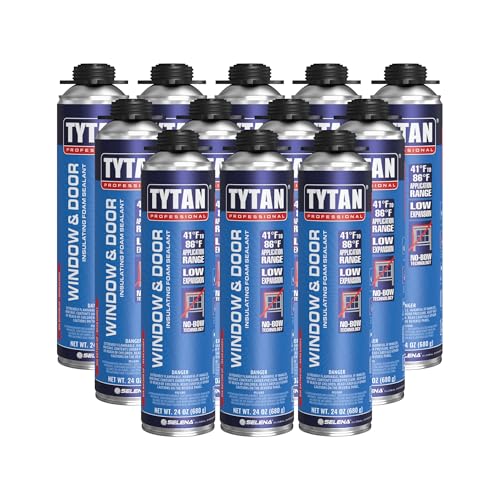
Best for: Projects needing high R-value per inch and water resistance in humid or wet environments. This formula claims superior insulation properties and eco-friendly formulation with no CFCs or HCFCs.
Why selected: It includes no-bow technology and verifies performance with recognized standards, making it suitable for both residential and commercial sealing tasks where long-term performance matters.
Caution: The product is bulkier; ensure access to appropriate application equipment and space for handling large cans.
Loctite Tite Foam Window & Door White Insulating Foam Sealant

Best for: Remodeling projects that involve building movement or structural shifts. This high-density foam provides strong durability and a flexible seal that can adapt to yearly building movement without cracking.
Why selected: The product is known for high-density packing and the ability to withstand settling and expansion in a controlled manner, reducing the risk of future gaps.
Caution: Application requires careful handling to avoid overfilling heavy gaps, which can lead to wasted material and extra cleanup.
Great Stuff 197711, Yellow

Best for: Readily accessible windows and doors where a ready-to-use can with a straw applicator is convenient. It’s suitable for sealing around rough openings and immediate drafts.
Why selected: This option comes with a straw applicator, enabling precise placement, which helps in straightforward sealing jobs for homeowners and small contractors.
Caution: It is a general-purpose foam; for high-performance thermal sealing or heavy-duty commercial installations, a product with verified R-value per inch might be preferable.
Red Devil Spray Foam & Fill Window & Door Sealant

Best for: Applications where a low-pressure, multi-directional dispensing capability is desired. Ideal for irregular gaps around frames and corners.
Why selected: It’s specifically designed to fill and insulate around windows and doors to reduce energy loss while minimizing bowing risk due to its low-pressure formulation.
Caution: For very large gaps, multiple passes may be required to achieve proper sealing and insulation without overfilling.
Buying Guide: Key Considerations For Window And Door Foam Sealing
What is the difference between low expansion and high expansion foams?
Low-expansion foams minimize the risk of bowing window or door frames, offering controlled filling for airtight seals. High-expansion foams fill larger gaps but can create stress on frames if used improperly. Choose low-expansion formulas for delicate frames or when sealing around delicate hardware.
Which features matter most for doors and windows?
- Water resistance and weather tolerance for outdoor use
- Anti-bow technology to protect frames
- No-CFC/HCFC eco-friendly formulations
- Ease of application and clean-up (straw applicators, smart dispensers)
- R-value per inch for insulation efficiency
How to apply foam safely and effectively?
Follow manufacturer instructions. Use protective gear, apply in short bursts, and avoid overfilling gaps. Start from the bottom up and allow foam to cure before trimming excess material. For larger openings, use multiple passes to prevent deformation of frames.
Is professional-grade foam necessary for all projects?
For simple draft-proofing or small gaps, consumer-grade foams are often sufficient. For commercial or high-performance applications, products with higher R-values, UL or AAMA verifications, and professional-grade tools may be preferable.
What about cleanup and trim?
Most foams cure hard and can be trimmed with a utility knife. Some products offer cleaner discharges and less mess; consider a product designed for cleaner application if you frequently work indoors or in finished spaces.
Summary of recommended choices
- Best for frame protection and high insulation: TYTAN Professional Window & Door Insulating Foam Sealant
- Best for quick, clean gaps and cracks: Great Stuff Smart Dispenser Gaps & Cracks
- Best for remodeling with movement: Loctite Tite Foam Window & Door
- Best for professional gun-use control: Kraken Bond Window & Door Expanding Foam Sealant
- Best all-around ready-to-use option: Red Devil Spray Foam & Fill Window & Door Sealant
Frequently Asked Questions
- What is the safest foam for indoor use near living areas?
Look for low-to-no odor formulas with no CFCs/HCFCs and good cure properties for indoor environments. - Can expanding foam bow window frames?
Low-expansion formulations are designed to minimize bowing; avoid high-expansion products in tight frame spaces. - Do I need to wear protective gear when applying foam?
Yes. Wear gloves and eye protection and work in a well-ventilated area. - Can foam be painted after curing?
Most foams can be trimmed and painted to match surrounding surfaces; check product data for paint compatibility. - Is heating or sunlight a concern for cured foam?
Cured foam tolerates normal indoor temperatures, but prolonged exposure to direct sun and extreme heat can affect appearance; trim and seal as needed.