Choosing the right 11-52 gauge guitar strings can enhance tone, playability, and longevity whether you play electric or acoustic. This guide highlights five top options, covering premium electric sets, phosphor bronze acoustics, and traditional 80/20 bronze acoustics. Each selection prioritizes tuning stability, tone balance, and overall playability to help players find a reliable fit for studio sessions or live gigs.
The following table provides a quick overview of the five chosen products, including their brand, guitar type, and core features. This helps you compare at a glance before diving into individual product details.
| Product | Brand | Guitar Type | Key Features |
|---|---|---|---|
| D’Addario NYXL1152 | D’Addario | Electric | Premium NYXL construction; enhanced mid-range; improved tuning stability |
| Ernie Ball Earthwood Light Phosphor Bronze 11-52 | Ernie Ball | Acoustic | Warm, rich tone; comfortable playability; phosphor bronze on high-carbon core |
| Elixir 11-52 Phosphor Bronze NANOWEB | Elixir | Acoustic | Longest-lasting tone; NANOWEB coating; smooth feel |
| D’Addario EJ13 Custom Light 11-52 | D’Addario | Acoustic | Precision wound 80/20 bronze; bright projection; original acoustic string |
| Elixir 11-52 80/20 Bronze NANOWEB | Elixir | Acoustic | Bright, focused tone; NANOWEB longevity; stable, corrosion-resistant |
D’Addario NYXL1152 Electric Strings 11-52

The NYXL1152 set from D’Addario combines premium nickel-plated steel for a powerful, balanced tone with enhanced mid-range response. Built to stay in tune more reliably than standard sets, these strings are designed for players who want to push their guitar tone without sacrificing tuning stability. The tighter core and wrap wire are engineered to deliver more presence in the 1–3.5 kHz range, helping you cut through a mix with crisp, articulate sustain. These strings are not coated, which some players prefer for brightness and feel, and they still perform well under regular playing conditions.
Ernie Ball Earthwood Light Phosphor Bronze 11-52

Ernie Ball Earthwood phosphor bronze acoustic strings deliver a warm, articulate tone with strong projection. The light gauge offers easy playability, making them a popular choice for players seeking comfortable fretting and expressive dynamics. Wound with phosphor bronze around a high-carbon steel core, these strings balance brightness and warmth across the 11-52 range, suitable for blues, folk, and singer-songwriter performances where clarity and nuance matter most.
Elixir 11-52 Phosphor Bronze NANOWEB Acoustic
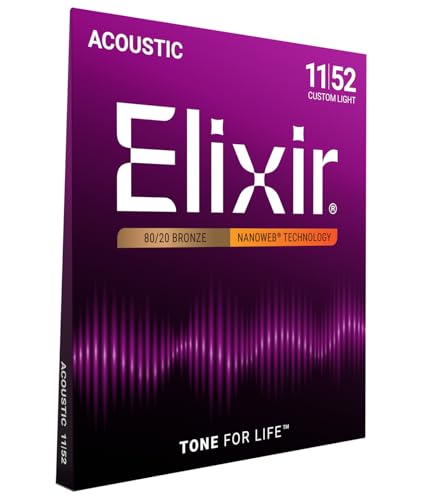
Elixir’s phosphor bronze NANOWEB strings offer extended life without sacrificing tone. The NANOWEB coating provides a smooth feel and reduces sweat, humidity, and corrosion, helping maintain a bright, full-bodied acoustic voice. This set is popular among players who perform live or record regularly and want consistent tone and longevity across long sessions.
D’Addario EJ13 Custom Light 11-52 Acoustic
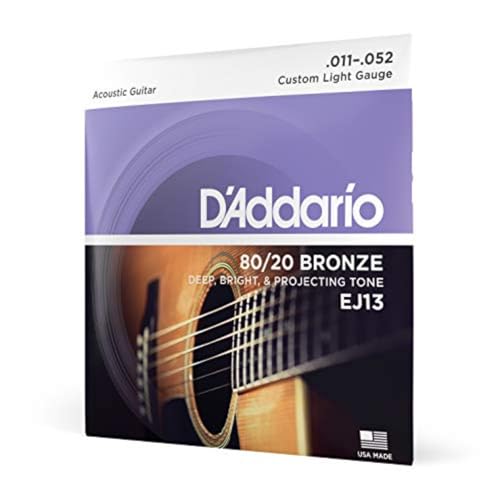
D’Addario EJ13 strings feature 80/20 bronze wrap wire, delivering a bold, bright acoustic voice with crisp projection. The strings are precision wound over a hex-core, a construction that contributes to stable intonation and reliable response across the fretboard. This set is rooted in classic acoustic design, favored by players who want a traditional bright tone with clear articulation in chords and melodies.
D’Addario XS Phosphor Bronze 11-52 (Coated)

D’Addario XS Phosphor Bronze coated strings combine extended life with a warm, balanced tone. The ultra-thin XS coating helps maintain brightness and avoids tonal dampening, while a NY Steel core and Fusion Twist technology provide strong tuning stability and enhanced break strength. These strings are designed for players who want longevity without sacrificing playability and tone balance.
Ernie Ball Earthwood Light 80/20 11-52

Ernie Ball Earthwood 80/20 bronze strings offer a bright, balanced acoustic tone with clear projection. The light gauge ensures easy fretting and comfortable playability, making them suitable for players who perform intricate chord shapes or fast strumming. The 80/20 bronze formulation has a classic brightness that many traditional acoustic players favor for genre versatility.
Buying Guide: Key Considerations For 11-52 Strings
- Guitar type: Electric sets (like NYXL) emphasize stability and mid-range punch, while acoustic sets (phosphor bronze or 80/20 bronze) focus on warmth, brightness, and projection. Choose based on your guitar and playing style.
- Coating vs. uncoated: Coated strings (such as NANOWEB) last longer but may feel slicker or slightly less bright at first. Uncoated strings provide a bright tone and snappy feel but wear faster, especially with aggressive picking.
- Tuning stability: If you frequently bend notes or use alternate tunings, look for strings marketed for stay-in-tune performance (e.g., NYXL series or coated long-life options).
- Gauge balance: 11-52 covers a standard light-to-medium setup. For players seeking easier fretting, consider a light to custom light set; for more tension and volume, mid-heavy sets may be preferred.
- Core and wrap wire: Higher-core or premium wrap wires can influence feel and tone. For bright, articulate response, look at sets designed to emphasize treble and mids.
- Playing environment: Coated strings resist corrosion from sweat and humidity, making them suitable for stage and practice in varied climates. Consider life expectancy versus initial brightness.
- Maintenance: Regular wiping after playing and proper storage extend string life. If you use a tremolo or aggressive trem picks, durability becomes critical.
- Brand ecosystem: Some brands offer complementary sets across electric and acoustic lines, aiding players who own multiple guitars and want consistent feel and tension.
Across these options, the common themes are reliable tone, ease of playability, and improved longevity in modern materials. Electric NYXLs deliver crunchy presence and tuning stability, while acoustic sets emphasize warmth, projection, and life-span enhancements through coatings and alloy choices. When selecting, consider how often you play, your playing style, and whether you prefer brightness or warmth as your tonal baseline.