Discover effective, fast-acting options to combat little black ants and other common household ants. This guide highlights trusted liquid bait systems, ant killers, and ready-to-use solutions designed to disrupt colonies and reduce activity within days. Each product below targets ants where they live and forage, helping homeowners regain control without constant reapplication.
| Product | Brand | Highlight |
|---|---|---|
| TERRO Ant Killer Bait Stations T300B | Terro | Liquid bait that targets colonies |
| Combat Indoor and Outdoor Ant Killing Gel | Combat | Direct gel reach in cracks and crevices |
| Ortho Orthene Ant Killer Ant Bait | Ortho | Kills queen and colony, multiple placement zones |
| Raid Max Liquid Ant Bait | Raid | Ready-to-use bait for indoors and outdoors |
| TERRO Liquid Ant Baits T1813B | Terro | Outdoor ready-to-use traps with fast results |
Terro Liquid Ant Bait Stations T300B

Terro’s T300B bait stations use liquid bait to attract and kill a variety of common household ants, including little black ants, acrobat, ghost, and sugar-foraging species. The system is designed to reach both visible workers and hidden foragers by delivering bait back to the colony. Users often notice reduced ant activity within days as workers transport bait to the nest, disrupting the colony’s food supply and reproduction cycle.
Key attributes include easy placement along baseboards and near entry points, with stations designed for indoor use. The liquid format tends to appeal to foraging ants, encouraging rapid colony-wide impact. For households dealing with recurring infestations, TERRO’s approach combines psychology (bait visibility) and biology (colony kill) for a comprehensive solution.
Combat Indoor And Outdoor Ant Killing Gel

This gel targets ants at the source by placing a concentrated bait in cracks, crevices, and along ant trails. It’s designed to disrupt foraging patterns and is capable of eliminating the entire colony when accessed by multiple workers. The gel format allows precise placement in areas ants frequently travel, reducing the chance of spillage and making it a practical choice for kitchens, pantries, and bathrooms.
Expected results typically occur within 3–5 days as ants consume the gel and carry it back to the nest. The product is suitable for both indoor and borderline outdoor use where ants regularly invade, offering a compact, low-odor solution with a strong kill mechanism.
Ortho Orthene Ant Killer Ant Bait
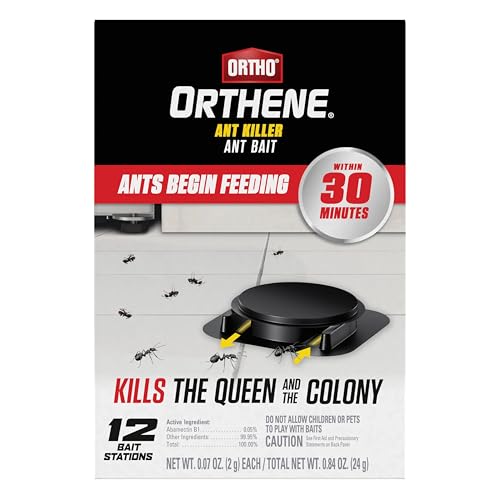
Ortho Orthene Ant Killer Bait focuses on attacking ants at the source by attracting workers to bait stations that are shared with the entire colony. By targeting the queen and nest, the bait aims to reduce visible ant activity within 3–7 days. For best results, place bait stations along walls, baseboards, and near entryways where ants commonly forage. This approach supports long-term control by diminishing the reproductive center of the colony.
The product line emphasizes placement flexibility in kitchens, cabinets, and under sinks. Users should monitor bait stations and replenish as needed to maintain an effective presence. The bait’s slow-acting mechanism is designed to minimize alarm but maximize colony impact over time.
Raid Max Liquid Ant Bait

Raid Max Liquid Ant Bait is a ready-to-use solution for indoor and outdoor ant control. The liquid bait is designed to be consumed by foraging ants and transported back to the colony, expanding the reach to workers, larvae, and the queen. This creates a colony-wide effect that reduces ant presence and prevents re-infestation.
The kit includes multiple bait stations for flexible deployment in entry points, near garbage areas, and along baseboards. While effective against several common household ants, it is advisable to rotate placement in high-traffic zones to avoid bait aversion and to cover multiple nesting sites for best results.
TERRO Liquid Ant Baits T1813B (Outdoor)

Terro’s outdoor-ready liquid baits attract multiple ant species, including little black ants, acrobat, and other sugar-loving foragers. The baits are carried back to the colony, enabling colony-wide control with visible results within a few days. The outdoor format helps address ants that nest near foundations, patios, and garden borders, reducing intrusions into living spaces.
Outdoor placement typically involves areas along walls, near entry points, and at the perimeter of the home. The stations blend with exterior surroundings and are designed to minimize exposure to rain and sun, maintaining bait effectiveness for extended periods.
Buying Guide
Choosing the right ant control product involves considering the colony lifestyle, target species, and application environment. Here are key purchase considerations and comparisons to help you decide:
- Target species: Most baits work on multiple sugar-feeding ants, including little black ants. If you consistently see a single species, select a product with proven efficacy against that ant type.
- Indoor vs outdoor: Outdoor-ready baits help with perimeter defense, while indoor baits address foraging trails inside living spaces. Some products offer both capabilities, providing flexibility across seasons.
- Formulation: Liquid baits attract foragers effectively and travel via the colony; gels provide precise placement in cracks and crevices; ready-to-use baits save time on prep. Choose based on placement ease and infestation pattern.
- Placement strategy: Place near entry points, along baseboards, under sinks, and in cabinets. Rotate locations to target multiple nesting sites and reduce bait resistance among foragers.
- Speed versus safety: Liquid and gel baits often show faster colony impact than sprays, but consider pet and child safety when deploying bait stations in high-traffic areas.
- Replacement and monitoring: Keep spare bait stations or refills on hand. Regularly inspect stations and replenish bait to maintain ongoing pressure on colonies.
- Environmental considerations: Choose products with minimal odor and low residue for sensitive spaces like kitchens. Outdoor formulas should be weather-resistant and shielded from direct rain when possible.
For best results, implement a multi-faceted approach: deploy bait stations at multiple points, keep areas clean of food residues, seal obvious entry points, and monitor activity to identify which stations attract the most foragers. Cross-reference the product features with your infestation pattern to tailor a comprehensive ant-control plan.